Deck railing replacement means renewing railing components that are no longer suitable for isolated repairs, rather than simply tightening a connection or replacing one damaged part. It may be worth considering when looseness, deterioration, or structural weakness affects several areas, but the right choice depends on an assessment of the railing and the deck around it.
For homeowners in Mississauga and the broader GTA, the practical first step is not to assume that every damaged railing needs complete replacement. A professional review can help determine whether securing or repairing the existing railing is appropriate, or whether broader replacement offers better long-term value.
Key Takeaways
- Deck railing replacement is necessary when multiple components are damaged or deterioration is widespread.
- Professional assessments can help determine whether repair or replacement is the best option.
- Consider the overall condition of the deck and surrounding areas during the evaluation process.
- Document any issues thoroughly before seeking professional help to ensure a comprehensive assessment.
- Immediate Fence Repair offers expert evaluations and services for deck maintenance and railing solutions.
Quick summary

- Repair may suit an isolated, clearly defined problem that does not affect the wider railing system.
- Replacement deserves consideration when multiple components are damaged, deterioration is widespread, or looseness keeps returning.
- An assessment should examine connections, posts, supports, nearby deck boards, and the extent of the affected area.
- Ask what work is included, which materials are proposed, how preparation will be handled, and what the quote covers.
What deck railing replacement means
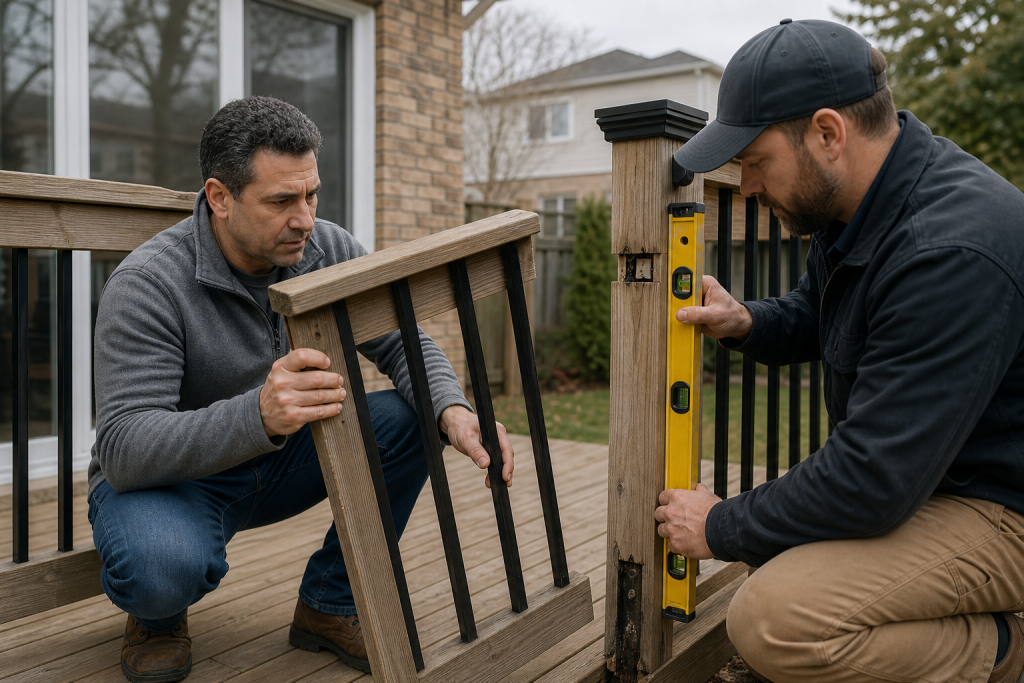
In practical homeowner terms, deck railing replacement involves removing and renewing some or all of the railing elements that provide the deck’s edge protection and finished appearance. The exact scope depends on what the inspection finds. It could involve a limited section, several connected components, or a more extensive part of the railing system.
That differs from routine maintenance, which may involve cleaning, staining, painting, or small upkeep tasks. It also differs from deck railing repair, where the existing system remains in place and a contractor addresses a specific problem, such as a loose connection, damaged component, or unsecured support.
A visible problem does not always reveal its full cause. A loose section may need securing, but repeated movement could indicate an issue with more than one connection or with the surrounding deck structure. Immediate Fence Repair’s deck maintenance information identifies loose boards, railing issues, and structural weaknesses as matters that should be assessed before repair work proceeds.
Deck railing repair or replacement: how to choose

The decision should be based on the extent of damage, the condition of connected components, and whether a repair is likely to address the underlying problem. Replacement is not automatically better, and repair is not always more economical if problems are widespread or recurring.
| Consideration | Repair may be suitable | Replacement may deserve consideration |
|---|---|---|
| Damage | One isolated component or connection is affected. | Several parts are damaged or deterioration extends across the railing. |
| Movement | A connection can be secured without evidence of wider weakness. | Looseness returns or affects multiple sections. |
| Condition | Posts, supports, and nearby deck areas remain in workable condition. | Related components show weakness, damage, or significant deterioration. |
| Appearance | A small repair can reasonably match the existing railing. | Piecemeal repairs would leave an inconsistent or visibly compromised result. |
| Long-term value | The repair addresses the cause and leaves the rest of the system sound. | A series of repairs may be less practical than renewing the affected scope. |
Before deciding, consider professional securing deck railings as part of a broader inspection. The choice between repair and replacement often depends on the extent of the damage, as explained in this guidance on repair or replacement.
Conditions that may point to replacement
Some conditions do not prove that full replacement is necessary, but they are useful reasons to request a detailed assessment. Note whether the railing moves, whether the issue is confined to one location, and whether similar problems appear elsewhere.
Repeated looseness
If a railing becomes loose again after a previous adjustment or repair, ask the contractor to investigate the surrounding connections and supports rather than treating only the visible symptom. Recurring movement can make a narrow repair less practical, particularly when several sections are affected.
Multiple damaged components
Cracked, broken, heavily worn, or otherwise damaged components in more than one location may indicate that the scope extends beyond a single replacement part. The assessment should identify which elements are affected and whether the remaining sections are suitable to retain.
Deterioration across connected areas
Moisture exposure, weather, age, and general wear can affect more than the handrail or one visible section. If posts, supports, fasteners, nearby boards, or other connected elements show deterioration, replacing only the most obvious piece may not resolve the broader concern.
A railing that no longer suits the deck’s condition
Sometimes the railing problem is linked to the condition or layout of the deck itself. A contractor should explain whether the railing can be addressed independently or whether nearby deck work needs to be included in the scope.
What a deck railing assessment should cover
A useful assessment should explain what is affected, why the problem is occurring, and what work is included in the proposed solution.
- Connections and supports: Ask which connections are loose or damaged and whether posts and supporting areas remain sound.
- Railing components: Confirm whether the issue involves one part, a section, or multiple connected elements.
- Nearby deck condition: Ask whether deck boards, framing, or adjacent areas show concerns that could affect the railing work.
- Extent of work: Request a clear description of what will be removed, repaired, retained, or replaced.
- Materials and appearance: Discuss the proposed material, finish, style, and how the renewed section will relate to the existing deck.
- Preparation: Confirm whether removal, surface preparation, disposal, and preliminary repairs are included.
- Maintenance: Ask how the railing and surrounding deck should be cleaned, protected, and checked afterwards.
- Quote details: Ensure the written quote identifies labour, materials, preparation, applicable repairs, and exclusions.
If the deck has signs of water-related deterioration, consider how adjoining waterproofing or drainage concerns could affect the work. This balcony waterproofing overview for Ontario may help you identify questions about moisture management.
Questions to ask before booking replacement
- Is the problem isolated, or does it affect the wider railing system?
- Can the existing railing be secured or repaired effectively?
- Which posts, connections, boards, or supports need attention?
- What exact portion of the railing would be replaced?
- Does the condition of the deck change the recommended scope?
- Which materials and finishes are available?
- What preparation, removal, and cleanup are included?
- What maintenance will the railing and deck require afterward?
- Does the quote include every recommended repair, or are some items separate?
Take photographs of loose areas, damaged components, and the railing’s connection to the deck before requesting an assessment. Include the approximate location, how long the problem has been present, whether it has worsened, and whether previous repairs were attempted.
Planning the work in Mississauga and the GTA
For a Mississauga property, the best starting point is an on-site assessment rather than choosing a scope from a photograph alone. The contractor should review the railing in context, discuss whether repair or replacement is appropriate, and provide a project-specific quote.
Confirm the service scope, proposed materials, preparation work, and any property-specific requirements before approving the job. Project duration, pricing, and final scope depend on the deck’s condition and size, so they should be confirmed directly.
How Immediate Fence Repair can help evaluate your options
Immediate Fence Repair is a Mississauga-based fence and deck company serving homeowners and businesses across the GTA. Its verified deck services include maintenance, deck designing, deck building, and deck railing repairs.
The company’s deck maintenance service describes an inspection-led approach that considers loose boards, structural weaknesses, railing issues, repairs, and securing railings. Its general service information also states that the team can help assess whether a deck should be repaired or replaced based on the extent of damage and longer-term practicality.
That makes an assessment the appropriate next step if you are unsure whether you need deck railing repair or broader replacement. Ask for the existing railing’s condition to be explained clearly, then compare the recommended scope and quote with the questions above.
Frequently asked questions
Can one damaged section of a deck railing be repaired instead of replacing the entire railing?
Yes, a limited repair may be appropriate when the damage is isolated and the surrounding connections, posts, supports, and deck area remain in workable condition. An assessment should confirm whether the repaired section can be properly secured and whether the remaining railing is sound enough to retain.
Should deck railing replacement be assessed together with deck boards or structural concerns?
Yes. The railing is connected to the deck, so nearby loose boards, damaged supports, or other structural concerns may affect the recommended work. Reviewing these areas together can help prevent a narrow repair from overlooking a related problem.
What information should I provide when requesting an assessment?
Provide the property location, photographs of affected areas, a description of the movement or damage, the approximate age of the deck if known, and details of previous repairs. Mention whether you want to preserve the existing appearance or are considering a broader design change.
Conclusion: choose based on the extent of damage
Deck railing replacement is most worth considering when deterioration, damage, or weakness extends beyond one isolated issue, or when repeated repairs are unlikely to address the wider condition. A single loose connection or damaged component may be repairable, but that decision should follow an inspection of the railing and the deck around it.
Before booking, document the problem, ask what the assessment will cover, and request a quote that separates repairs, replacement work, preparation, materials, and maintenance recommendations. For a local evaluation, contact Immediate Fence Repair in Mississauga.