If your wooden fence is leaning, cracked, loose, or showing signs of water damage, the first decision is not always whether to replace the entire fence. The right starting point is to identify whether the damage is limited to a board, post, gate, lattice section, or small run of fencing. If deterioration or instability appears throughout the fence, a broader replacement assessment may make more sense.
For homeowners looking for wooden fence repair in Mississauga, useful preparation includes a careful visual inspection, clear photos, and an honest description of the affected areas. Immediate Fence Repair is based in Mississauga and provides wooden fence repair, post repair, gate repair, lattice repair, cedar fence repair, and related fence services across the GTA.
Key Takeaways
- Inspect posts and overall alignment before focusing only on board damage.
- Localized damage may suit targeted repair, while widespread deterioration calls for broader evaluation.
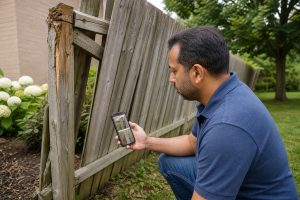
- Photograph leaning sections, cracked or loose boards, gates, lattice, posts, and visible gaps.
- Include the material, approximate age if known, affected sections, Mississauga location, and access details when requesting an assessment.
- Documenting visible damage helps determine whether to repair or replace your wooden fence.
Quick summary

- Inspect posts and overall alignment before focusing only on board damage.
- Localized damage may suit targeted repair, while widespread deterioration calls for broader evaluation.
- Photograph leaning sections, cracked or loose boards, gates, lattice, posts, and visible gaps.
- Include the material, approximate age if known, affected sections, Mississauga location, and access details when requesting an assessment.
Repair or replace: start with the fence’s overall condition
A repair decision should consider the fence as a system rather than one isolated symptom. A few damaged boards on an otherwise aligned run present a different situation from a fence with several leaning sections, recurring failures, and deterioration across multiple components.
| What you observe | Useful next question |
|---|---|
| One or two cracked, loose, or missing boards | Is the surrounding frame still aligned and in usable condition? |
| One leaning section or visibly damaged post | Is the problem limited to one support, or does the whole run move or lean? |
| Damaged lattice, gate, or cedar section | Can the affected component be addressed separately, or is nearby deterioration also present? |
| Widespread deterioration, repeated damage, or instability | Would a replacement assessment provide a more practical direction? |
This is a screening framework, not a structural diagnosis. A contractor needs to assess the actual condition before confirming whether targeted repair, section replacement, or a new fence is appropriate. For further context, see when fence replacement may be more appropriate than repair.
Common wooden fence problems that may need repair

Wooden fences can be affected by weather damage, water damage, and ordinary wear and tear. The visible symptom does not always reveal the full extent of the problem, so note both the damaged component and the condition of the surrounding fence.
Loose, cracked, or damaged boards and panels
Individual boards may crack, loosen, shift, or pull away from the fence line. Missing fasteners and uneven spacing are also worth documenting, particularly when the problem is concentrated in one or two sections.
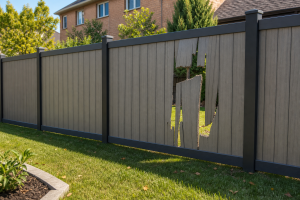
Localized board damage may be a candidate for targeted wooden fence repair if the surrounding structure is in suitable condition. Several damaged panels in a row, however, can indicate that a larger section deserves inspection. Photograph the affected boards from close range, then take a wider image showing how they relate to the rest of the fence.
Wood fence post repair and leaning sections
Posts deserve attention because they influence the alignment and support of the fence. Look for a section that leans, moves noticeably, sits lower than adjacent sections, or creates an uneven fence line. Do not try to determine the required structural method from appearance alone.
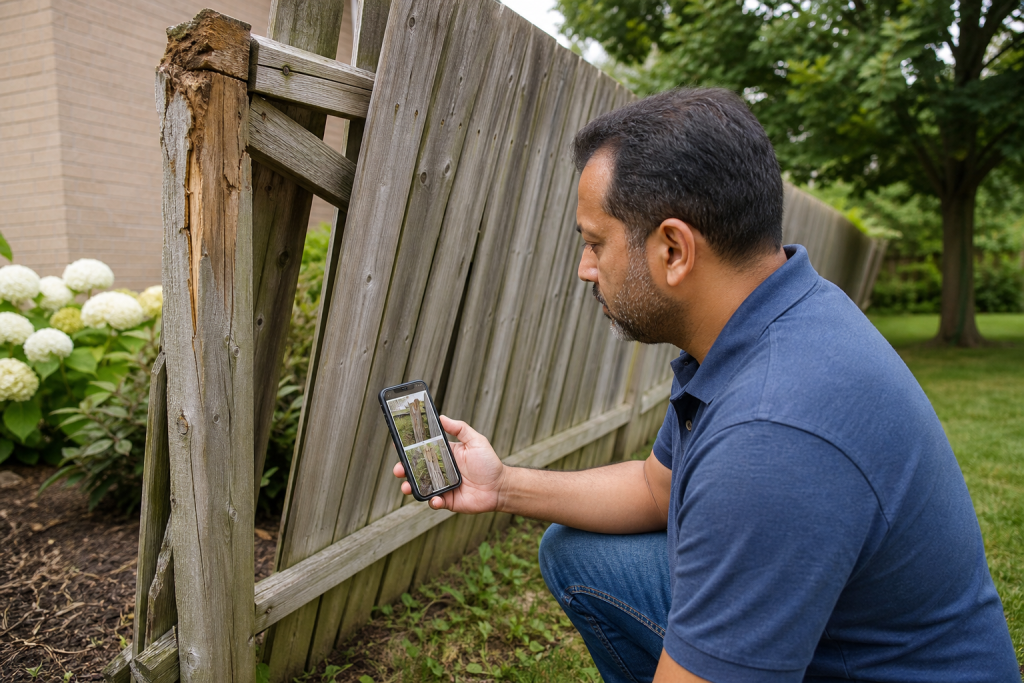
One visibly affected post does not automatically mean the entire fence must be replaced. The surrounding posts, rails, boards, and connections may also need review. When requesting wood fence post repair, send both a close photo of the post and a wider photo showing the full leaning section.
Lattice, cedar, and wooden fence gate damage
Lattice can crack, loosen, or separate from the main fence, while cedar sections may show weathering or other deterioration. A gate may sag, drag, sit unevenly, or stop closing properly. These components can sometimes be considered separately, but their condition should be reviewed alongside nearby posts and boards.
Include photos of hinges, latches, gaps, cracked pieces, and the area where the gate meets the fence. If the project includes a new or replacement wooden fence gate, describe how it is used and whether the priority is access, privacy, appearance, or security.
Weather, water, and everyday wear
Immediate Fence Repair identifies weather damage, water damage, and wear and tear as common reasons wooden fences need attention. Useful observations include staining, visibly deteriorated areas, loose components, cracked boards, and places where water may collect or where the fence repeatedly fails.
Keep the description factual rather than trying to diagnose hidden damage. For example, explain that a board feels loose or that a section has changed position, but leave conclusions about the cause and required repair to an assessment.
A Mississauga homeowner’s wooden fence inspection checklist
Walk the fence from both sides where access allows, and record what you can see without dismantling or forcing any component.
- Overall alignment: Note leaning, uneven runs, shifted sections, or visible movement.
- Boards and panels: Look for cracks, loose boards, missing boards, damaged edges, and unusual gaps.
- Posts: Photograph visibly damaged, leaning, loose, or uneven posts.
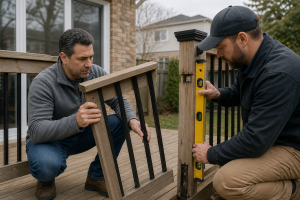
- Fasteners and connections: Record missing or visibly loose nails, screws, rails, hinges, or other connections.
- Gate: Check whether it drags, sags, closes unevenly, or leaves an unusual gap.
- Lattice and cedar sections: Note cracked, loose, deteriorated, or missing pieces.
- Bottom edge: Photograph unusually large or uneven gaps at the bottom.
- Extent of damage: Estimate the number of affected sections and whether the damage is concentrated or widespread.
The purpose of this inspection is to document visible conditions, not to confirm structural safety or determine the exact repair method. Keep children and pets away from visibly unstable areas until the condition has been assessed.
What to include when requesting a repair assessment
Include your Mississauga location, fence material, approximate age if known, and whether the fence is residential or part of a commercial property. Describe affected sections from a fixed reference point, such as “the rear-left corner” or “the gate beside the driveway.”
Add the visible symptoms, when you first noticed them, and whether the issue appeared after a storm or another event. Mention access limitations, neighbouring boundaries, and whether the gate or fence must remain usable during the work.
Send a wide image, photos from each accessible side, and close-ups of boards, posts, fasteners, lattice, or gate hardware. Immediate Fence Repair provides callback and appointment-request options, so organized information can make the initial conversation more productive.
When to discuss replacement instead of another repair
Ask for a broader replacement evaluation when damage appears across many sections, the fence has repeated failures, several posts or runs are unstable, or deterioration is no longer confined to one component. These signs do not prove replacement is necessary, but they indicate that repairing one visible symptom may not address the wider problem.
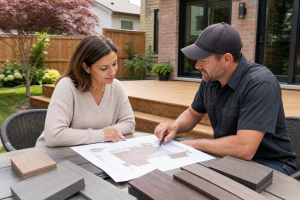
Replacement may also be worth discussing when you want to change the fence’s purpose or appearance, such as moving to a privacy, semi-privacy, or horizontal design. A new wood fence installation assessment can compare the existing condition with the result you want.
If you are weighing whether a new wood fence installation is the better option, bring the same photos and measurements you would prepare for a repair request.
If replacement is being considered: wood styles and alternatives
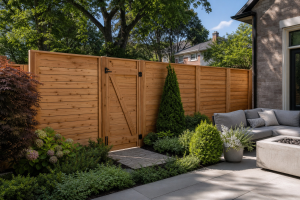
Replacement is not only a structural decision. It can also clarify how much privacy, visual openness, security, and design continuity you want. Immediate Fence Repair presents semi-privacy wooden fencing with or without lattice, fully private wooden fencing, and horizontal board-to-board designs.
If you are comparing wood with composite, consider the desired appearance, the existing property, maintenance expectations, and the condition of the surrounding fence line. The company also provides composite fence repairs and installation, while planning composite fence installation for a Mississauga property can help frame the comparison.
Frequently asked questions about wooden fence repair in Mississauga
Can one damaged wood fence post be repaired without replacing the whole fence?
It may be possible to address one post or section without replacing the entire fence, but surrounding posts, boards, rails, and alignment should also be assessed. A close photo is useful, but a wider photo provides important context.
Can damaged fence lattice or a wooden gate be repaired separately?
Lattice and gates can be evaluated as individual components, although their connections to the surrounding fence still matter. Include close-ups of cracked or loose pieces, hinges, latches, gaps, and adjacent posts.
What photos should I send when requesting a wooden fence repair assessment in Mississauga?
Send a wide image of the affected run, photos from each accessible side, close-ups of damaged boards or posts, and images of the gate, lattice, or bottom edge where relevant. Add the location, material, approximate age if known, and a short description of what changed.
Make the next decision from the damage you can document
Start with the condition of the whole fence. A few damaged boards, one gate, a lattice section, or a single affected post may justify a targeted repair assessment. Widespread deterioration, repeated failures, or instability across several sections calls for a broader discussion about repair, section replacement, or a new fence.
For wooden fence repair in Mississauga, document the visible damage, prepare clear photos, and describe the material and affected areas. Immediate Fence Repair serves Mississauga and the GTA and offers callback and appointment-request options for fence repair and related assessments.