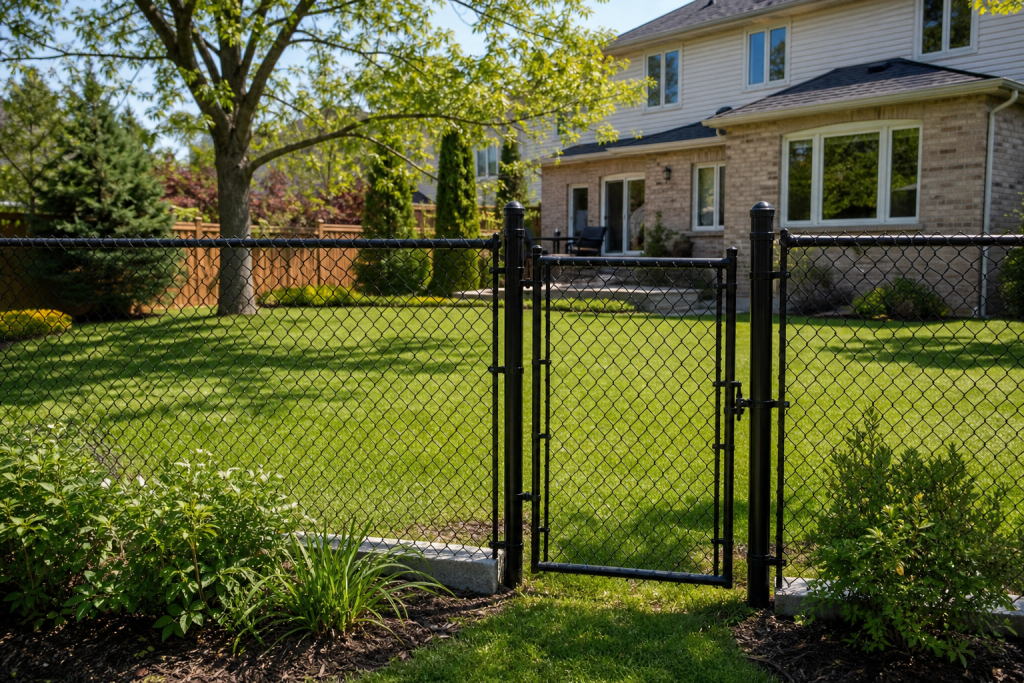
Chain link fencing can be a practical choice when you need a clearly defined boundary, visibility across a property, or a straightforward enclosure for residential or commercial use. However, the right project is not decided by the fence material alone. Privacy expectations, gates, existing damage, access, site conditions, and local requirements all affect the scope.
If you are comparing chain link fencing in Mississauga, start by defining what the fence must accomplish. The decisions below will help you determine whether chain link suits your property and prepare for a more useful conversation with a fencing contractor.
1. Define what the fence needs to do
A chain link fence may serve very different purposes. A homeowner may want to mark a property boundary, contain a yard, manage access, or create a practical enclosure. A business or property manager may need to control movement around a site, protect an area, or define a larger perimeter.
Write down the primary purpose before discussing designs. If the main goal is visibility and boundary definition, an open fence may fit well. If the priority is visual separation from neighbours, street traffic, or an adjacent business, privacy may become the deciding factor instead.
Also identify what the fence should not interfere with. Consider views from windows, access to bins or equipment, landscaping, neighbouring properties, and the way people move through the space. A clear purpose gives the contractor a better starting point than a request for a fence based only on a rough length.
2. Balance visibility, privacy, and appearance

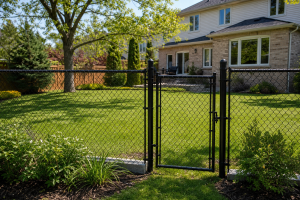
One of the central chain link fence tradeoffs is the relationship between visibility and privacy. Open sightlines can make it easier to see across a yard or managed property and may give the boundary a lighter visual presence. That can be useful where visibility, supervision, or a simple appearance matters.
Privacy-focused projects require a more careful discussion. If you want to reduce views into the yard or screen an outdoor area, ask whether the proposed chain link approach can meet that expectation or whether another fencing style would be a better fit. Do not assume that a standard open design will provide privacy simply because it establishes a boundary.
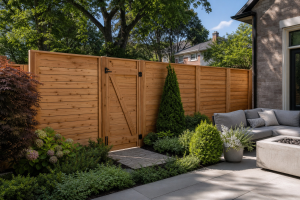
Appearance matters as well. Discuss how the fence will sit beside the home, landscaping, driveway, commercial building, or neighbouring fences. Ask the contractor to explain the available material and finish choices for your project rather than assuming a particular coating, colour, mesh, or post specification is available.
3. Compare residential and commercial requirements
A residential chain link fence and a commercial chainlink fencing project may use the same broad category of material, but the planning conversation can be different. At a home, the focus may be on the yard, pets, privacy expectations, a gate, and how the fence complements the property.
For a business or managed property, discuss the area being enclosed, vehicle and pedestrian movement, access control, equipment, neighbouring operations, and how the fence will be used each day. Clarify whether work must be coordinated around customers, tenants, staff, deliveries, or operating hours. These details can affect the practical scope even before materials are discussed.
Draw a simple site plan showing the perimeter, buildings, driveways, walkways, and desired access points. A useful chain-link project scope should account for how the fence functions on the property, not just how many linear metres appear on a measurement.
Immediate Fence Repair lists both chainlink fencing and commercial chainlink fencing among its services. That makes it appropriate to ask about the distinction between a residential project and a business or commercial property when requesting an assessment.
4. Decide whether you need repair, replacement, or new installation
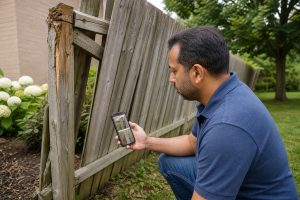
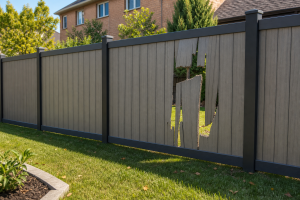
If an existing fence is leaning, loose, damaged, or no longer serving its purpose, avoid deciding immediately that the entire system must be replaced. The problem may be limited to particular sections, posts, connections, or gates, although only an assessment can determine the appropriate scope.
Photograph each damaged area from more than one angle. Note whether the issue is isolated or repeated along the boundary, whether a gate still operates as expected, and whether nearby sections appear stable. This information helps a contractor understand the problem before visiting.
Replacement may be worth discussing when damage is widespread, the existing layout no longer suits the property, or repairs would not address the underlying project goal. New installation may be the better conversation when there is no suitable fence or when the boundary, access points, and intended use are changing.
Ask for the reasoning behind the recommended scope. A clear explanation should identify what is being repaired or replaced, what remains in place, and which conditions could change the work after inspection.
5. Plan gates, access, and daily use
Gates are part of the fence system, not an afterthought. Before requesting a quote, identify whether you need pedestrian access, vehicle access, or both. Mark the preferred locations and consider how people, vehicles, bins, lawn equipment, deliveries, or business operations will move through them.
Think about frequency of use and clearance. A gate used several times a day may need a different practical discussion from one used occasionally. If access is tight, describe nearby walls, structures, slopes, landscaping, parked vehicles, or other obstacles that could affect installation or operation.
Ask how gate locations, opening direction, hardware, and any required adjustments are included in the quote. An estimate that covers the fence line but leaves access points unclear may not represent the full project scope.
6. Confirm boundaries, site conditions, and local requirements
Before work begins, confirm where the fence is intended to go. If the boundary is shared, near a neighbour’s property, or different from an existing fence line, resolve the location before approving construction. Do not rely on a visual assumption when the position could affect another property or an existing structure.
Share information about slopes, retaining features, trees, gardens, sheds, decks, driveways, utility areas, and restricted access. These conditions may affect how the project is planned and how materials and workers reach the work area.
Ask the contractor what site information they need and what is excluded from the quote. Also verify applicable City of Mississauga requirements before construction. Requirements can depend on the property and project circumstances, so obtain current municipal guidance rather than relying on a general online statement or an older example.
7. Discuss materials, appearance, and future maintenance
Ask which chain link materials and finishes are suitable for your property, what choices are actually available, and how each option affects the appearance and expected upkeep of the fence. The answer should be tied to your site and purpose, not presented as a universal best choice.
Maintenance expectations should be clear before approval. Ask what you should inspect periodically, how damage will be handled, and whether gates and connected sections require different attention. A fence may need future repairs after impact, weather, movement, or ordinary wear, so understand how those issues would be assessed.
For an existing fence, ask whether the contractor can provide repair or post-repair work as part of the assessment. Immediate Fence Repair lists fence repair, fence post repair, and related wood and composite fencing services in addition to chainlink fencing, so you can discuss whether the current problem calls for a targeted repair or a broader replacement conversation.
Pre-quote checklist for chain link fencing in Mississauga
Prepare the following information before contacting a fencing contractor:
- The fence purpose, such as boundary definition, enclosure, privacy, security, or business site control.
- Whether the project is residential or commercial.
- Approximate fence length, if known, plus a sketch or marked-up aerial image.
- Photos of the proposed fence line, existing fence, damaged areas, gates, and access routes.
- The number and approximate locations of pedestrian or vehicle gates.
- Access constraints, nearby structures, landscaping, slopes, driveways, or shared boundaries.
- Your expectations for visibility, privacy, appearance, and future maintenance.
- Whether you are considering repair, replacement, or a completely new installation.
- Any timing, coordination, tenant, neighbour, or business-operation considerations.
It is also useful to compare the contractor’s proposed scope, exclusions, communication process, and change procedure. These points are part of choosing a fence company in Mississauga, not just evaluating the material itself.
Questions to ask a fencing contractor before approving work
- What problem is the recommended scope intended to solve?
- Should the existing fence be repaired, partly replaced, or fully replaced, and why?
- Which material and finish choices are available for this property?
- How are gates, hardware, access, and site preparation included?
- What assumptions have been made about the boundary and fence length?
- What work is excluded from the quote?
- How could concealed site conditions change the scope?
- What maintenance should I plan for after installation?
- How are changes, additional work, and follow-up repairs handled?
- What information or municipal confirmation should be obtained before construction?
What to discuss with a Mississauga chain link fencing provider
A useful assessment conversation should connect your property’s purpose to a defined scope. Bring your photos, sketch, gate requirements, privacy expectations, and any concerns about an existing fence. Ask the provider to explain the recommended approach in terms you can compare, including what will be installed, repaired, retained, or excluded.
Immediate Fence Repair is based at 25 Agnes St #309 in Mississauga and lists chainlink fencing, commercial chainlink fencing, fence repair, and fence post repair among its services. The company provides callback and appointment-request options, so prospective customers can use the project details above to begin a more focused discussion.
Frequently asked questions
Is chain link fencing a good choice if I need privacy in my Mississauga yard?
It may not be the best fit if strong visual privacy is your main requirement. Chain link is often considered for boundary definition and visibility, so explain your privacy goal before choosing it. A contractor can discuss whether the proposed design can meet that goal or whether another fencing approach is more suitable.
What information should I prepare before requesting a chain link fence quote?
Prepare the approximate fence length, photos, a simple site sketch, desired gate locations, access constraints, the purpose of the fence, and whether the project is residential or commercial. Also note existing damage, privacy expectations, nearby structures, and any municipal questions. This gives the contractor a clearer basis for an assessment.
Can an existing chain link fence be assessed for repair instead of replacement?
Yes, you can request an assessment that considers repair as well as replacement. Identify damaged sections, posts, gates, and areas that appear stable. The contractor can then evaluate whether the issue is limited or whether a wider replacement would better address the fence’s condition and intended use.
Choose the fence scope before choosing the contractor
The best chain link fencing decision starts with the property’s purpose, not a generic material comparison. Define the required level of privacy and visibility, distinguish residential from commercial use, identify gates and access needs, inspect existing damage, and confirm boundary and municipal considerations before approving work.
For chain link fencing in Mississauga, prepare those details and ask for a quote that clearly explains the recommended scope, materials, access points, exclusions, and future maintenance. To discuss a residential or commercial chainlink fencing project, contact Immediate Fence Repair through its website to request a callback or appointment.