What Are Decorative Fence Panels, and Where Do They Fit?
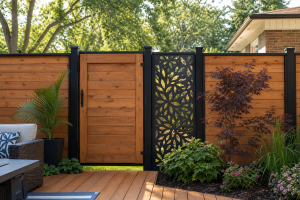
Decorative fence panels are design-focused sections used within or alongside a fence or outdoor screen to add visual interest, define separate areas, or create a more considered boundary around a property. They may contribute to partial screening, but their exact function depends on the panel’s construction, placement, and relationship to the rest of the fence.
That distinction matters when planning a new fence in Mississauga or deciding whether to repair an existing one. A decorative panel is not automatically a full privacy barrier, safety fence, security system, or noise wall. It is one design element that should be selected according to the property’s practical needs as well as its appearance.
What are decorative fence panels?
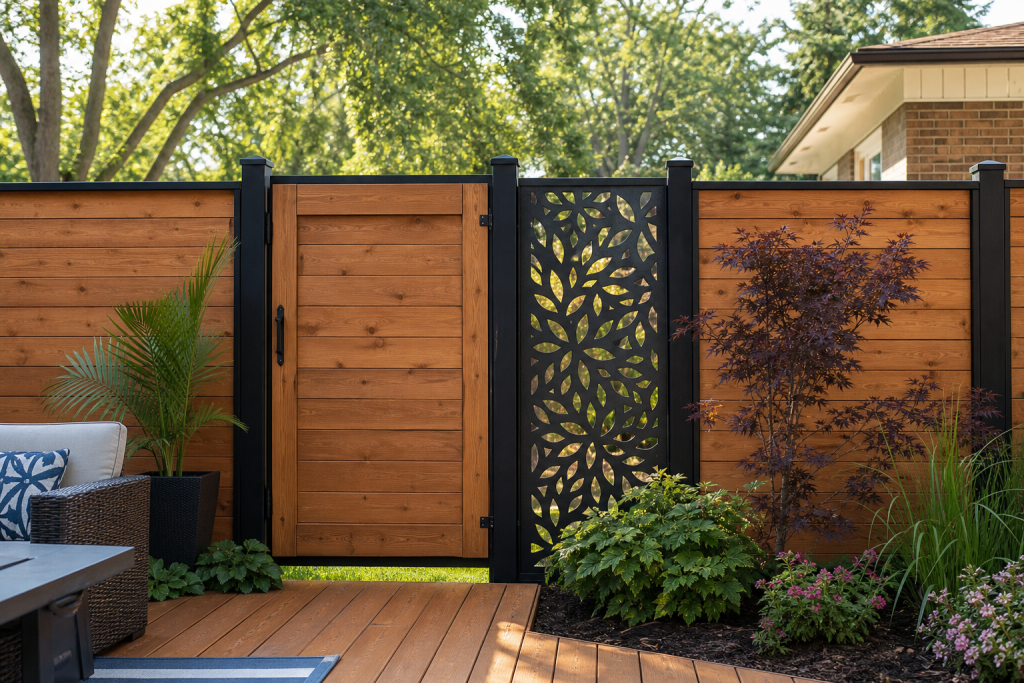
A decorative fence panel is a fence or screening section chosen partly for its appearance. It can introduce a pattern, shape, material contrast, or visual focal point into a boundary that might otherwise be plain. Depending on the design, it may form one section of a larger fence, create a transition between areas, or serve as part of an outdoor screen.
The term does not describe one universal product or performance level. A decorative panel may be relatively open or visually enclosed, and it may be coordinated with wood, composite, or another broader fence design. Its purpose should therefore be judged in context rather than from the word “decorative” alone.
Where decorative panels fit in a fence design

Homeowners often consider decorative panels when a fence needs to do more than mark a property boundary. A carefully placed feature can help separate a patio from a lawn, frame an entrance, break up a long run of fencing, or make a transition between the fence and another outdoor feature more intentional.
Decorative elements can support curb appeal by giving a fence a more tailored appearance. However, the visual result depends on the surrounding posts, rails, boards, gate, property layout, and style of the home. A panel selected in isolation may not suit the proportions or condition of the existing fence.
How decorative panels compare with common fence styles
Decorative panels are best understood as a design direction rather than a replacement for every type of fencing. The right comparison is between the result you want and the role each fence style is intended to play.
Decorative panels and semi-privacy fencing
A semi-privacy fence balances separation with some visual openness. Decorative features can complement this approach by adding interest without making the boundary feel completely enclosed.
Decorative panels and full-privacy fencing
Full-privacy fencing is designed around a more enclosed visual boundary. A decorative section may be incorporated as an accent, transition, or gate feature, but it should not be assumed to provide the same degree of enclosure as surrounding privacy sections.
Decorative panels and horizontal board designs
Horizontal board-to-board fencing creates a strong linear pattern and a contemporary visual direction. A decorative feature can be coordinated with that pattern, used to create contrast, or placed near an entrance. The feature should work with the fence’s lines, proportions, and material.
Decorative panels and wood fence installation
Wood offers flexibility for tailored fence designs, including semi-privacy, full-privacy, horizontal, and custom gate arrangements. If you are considering a new wood fence, plan the panel alongside the structure, spacing, gate location, and desired visual boundary. Read about planning a new wood fence installation in Mississauga.
Decorative panels and composite fence installation
Composite fencing provides another material direction for a coordinated fence design. Its appearance, site conditions, and the rest of the proposed fence should be considered together. Review the planning factors for composite fence installation before choosing a decorative element.
How gates and noise walls relate to decorative panels
A custom wooden fence gate is an access feature, while a decorative panel is primarily a design or screening element. They can look coordinated, but they do different jobs. Gate width, swing, hardware, posts, and alignment affect how the entrance functions.
A cedar noise wall is also a specialized fence design rather than a decorative panel. It may suit a particular screening or separation objective, but decorative appearance alone does not establish noise-reduction performance. These options can be discussed together, but they remain separate decisions.
What to consider before choosing decorative fence panels
- Desired openness: Decide whether you want an open visual effect, partial separation, or a more enclosed boundary.
- Placement: Consider whether the feature belongs along the property line, beside a patio or deck, near a gate, or between outdoor areas.
- Material direction: Choose an approach that works with the existing fence, home, deck, and expected maintenance needs.
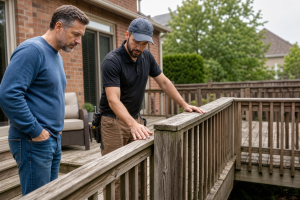
- Existing condition: Check posts, boards, rails, lattice, gates, and connections before changing the fence layout.
- Overall style: Match patterns, proportions, and lines with the broader fence.
- Practical requirements: Confirm whether separate safety, security, access, or site-specific requirements apply.
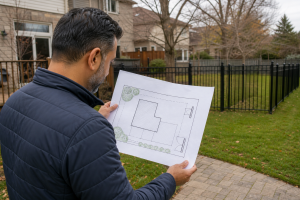
Photographs of the existing fence, intended location, and nearby outdoor features can provide useful context during an initial discussion. They can help distinguish a mainly cosmetic project from one that is partly structural.
Should you repair, install, or replace the fence?
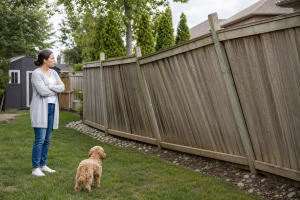
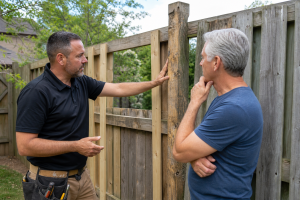
A decorative-panel project may reveal a repair need. Loose or damaged boards, leaning posts, deteriorated cedar sections, broken lattice, damaged gates, or failing composite components can affect whether a new feature can be added neatly and appropriately.
Repair may be suitable when the existing structure can support the desired result and damage is limited to specific components. Replacement or new installation may make more sense when the fence’s condition, layout, or material no longer suits the intended design. The right scope depends on the existing work and desired result.
Decorative panels are not automatically safety or security fencing
Decorative appearance does not establish that a panel is suitable for safety, security, access control, or another regulated purpose. Openness, height, construction, placement, and the surrounding property may all matter.
Before proceeding, check applicable property, condominium, municipal, pool, or project-specific requirements. If the fence has an important safety or security role, describe that role clearly during the assessment.
When to request a local assessment
Professional input is useful when you are unsure whether the existing fence is structurally sound, want to combine wood and composite elements, need to coordinate a gate, or are balancing appearance with privacy. It is also helpful when posts, lattice, cedar sections, gates, or other components are damaged.
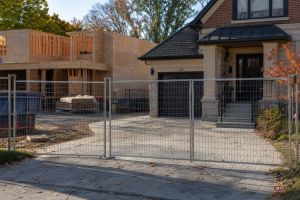
Immediate Fence Repair is based in Mississauga and serves homeowners and businesses across the GTA. Services include fence repair, fence post repair, wooden fence repair, new wood fence installation, composite fence installation, chainlink fencing, custom wooden fence gates, cedar noise walls, and residential fencing.
Frequently asked questions
Can decorative fence panels provide complete privacy?
Not automatically. Privacy depends on construction, spacing, height, placement, and how the panel connects with the rest of the fence. If complete visual enclosure is the priority, discuss a full-privacy design.
Can decorative panels be added to an existing wooden fence?
They may be, but the existing posts, rails, boards, gate, and connections should be checked first. The fence’s condition and layout may determine whether an addition, repair, or replacement is most appropriate.
Are decorative fence panels suitable for security or safety purposes?
A decorative feature should not be treated as safety or security fencing without a site-specific assessment. Its appearance does not confirm that it provides the characteristics required for a particular purpose.
Should I repair my existing fence before adding a decorative feature?
If the fence has loose boards, damaged posts, broken lattice, gate problems, or deteriorated sections, repair may need to come first. Addressing the supporting structure helps avoid placing a new feature over an unresolved problem.
Conclusion: choosing the right role for decorative panels
Decorative fence panels are design-focused elements that can add character, visual separation, and a more tailored appearance to an outdoor boundary. They may complement semi-privacy, full-privacy, horizontal, wood, or composite fencing, but they do not automatically deliver a particular level of privacy, safety, security, or noise reduction.
Consider your main goal, inspect the supporting fence, and confirm site-specific requirements before selecting a panel. The project may call for a new design, repair, replacement, or a combination.
For help assessing a fence or planning a decorative feature in Mississauga or the GTA, request a callback or book an appointment with Immediate Fence Repair to discuss design, repair, installation, or replacement options.