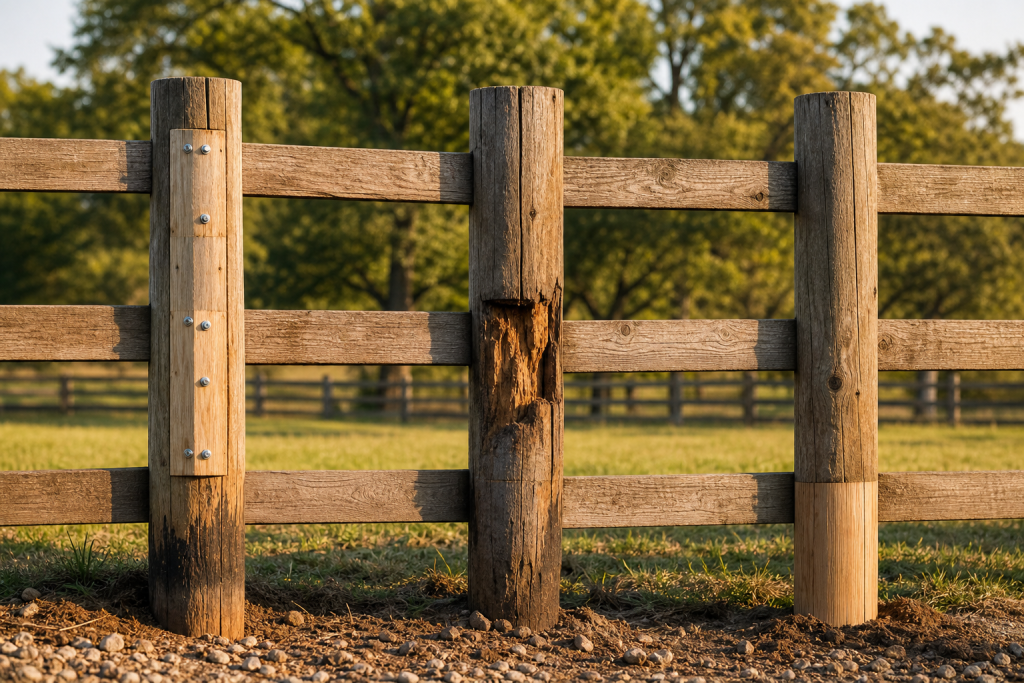
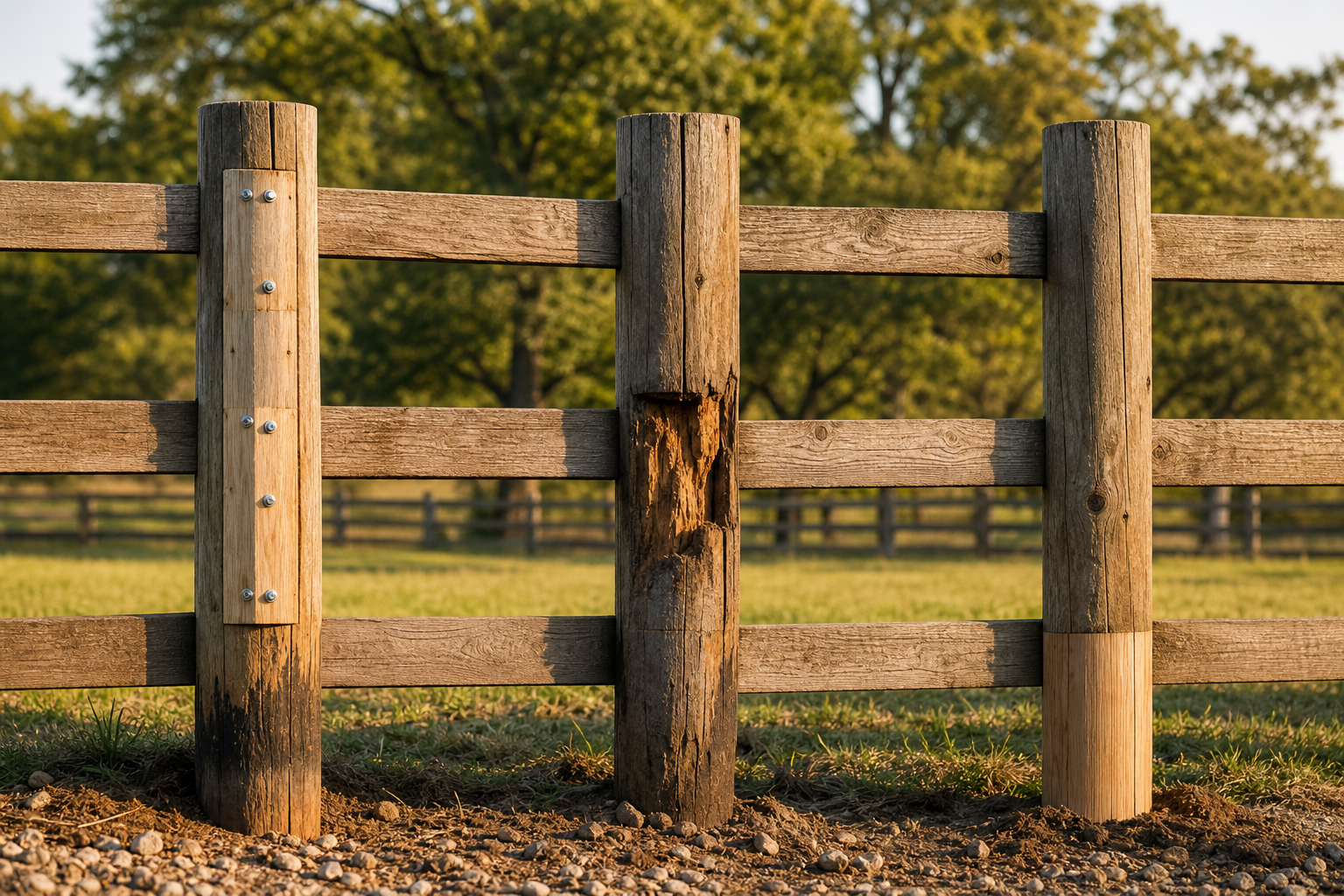
Wood fence post repair compared: splice, partial or full replacement
If a wooden fence post is leaning, rotted at the soil line, or has been struck by an object, you need to choose the right fix quickly. This article compares three common approaches—external post menders or splices, partial repairs such as sistering or cut-and-scarf joints, and full post replacement. You will get a short on-site inspection checklist that tells you when repair is reasonable, an honest appraisal of pros and cons for each method, and practical hiring criteria for Mississauga and Greater Toronto Area homeowners.
Quick decision checklist: repair now or replace
Before you decide, run these quick checks. They take five to ten minutes and will tell you whether a repair is worth trying or whether you should plan to replace the post.
- Push and rock the post at the soil line. If the post moves and the wood at the ground feels soft or crumbles, the post has likely lost its structural core and replacement is the safer choice, not a patch. This simple on-site probe is recommended in homeowner decision guides and is an accepted quick test for repairability, especially before cleanup or insurance documentation. For a plain-language walk through of this method, see a homeowner decision framework that describes the push and probe checks in context (GTA Homeowner Guide).
- Probe the wood. Use a screwdriver or awl to test the post at the ground level and 6 to 12 inches above it. If decay penetrates roughly half of the post thickness or more, repair is generally not advisable because the remaining sound wood cannot reliably carry the load. A commonly used rule of thumb across repair resources is the 50 percent threshold; if more than half the section is soft, plan replacement.
- Inspect the footing. If a post is bowed but the concrete footing is intact and the post above ground is sound, a splice or mender may restore strength without full excavation. If the footing is cracked, or the post was set directly in poorly draining soil, plan for replacement and an improved installation technique.
When you need extra confidence, photograph the damage before moving anything, especially if you may file an insurance claim later. Photographing before cleanup preserves evidence and helps contractors estimate work from photos.
Method 1: external post mender or splice
What it is and when to use it
An external post mender is a metal bracket that bolts to the remaining sound portion of a post and extends down to a new short buried stake or into fresh concrete. The bracket acts as an external splint that transfers the fence load back into the ground while leaving most of the original post in place. This approach is best when rot or damage is limited to the lower few inches of the post and when at least half the post cross section remains sound.
External menders are a common option when you want a quick, lower-cost fix without digging out an intact concrete footing. Practical repair guides describe how brackets and splices are used as external splints and when they are appropriate for a site (Engineer Fix).
Pros and cons
- Pros: Faster and cheaper than full replacement, keeps rails and attachments largely undisturbed, often repairable in one visit.
- Cons: Less definitive than replacement, depends on the amount of sound wood remaining, and can fail sooner if the underlying moisture problem is not fixed.
Expected longevity and DIY level
Longevity depends on site conditions and how well the bracket is fitted and sealed. A quality mender installed correctly can extend a post life by several years, but it rarely equals the decades-long reliability of a correctly installed pressure-treated post set in new concrete. Some homeowners with basic carpentry skills can install a mender, but gate posts and long runs usually justify hiring a pro to ensure alignment and load transfer are correct.
Method 2: partial repair (sistering, cut-and-scarf)
How it works
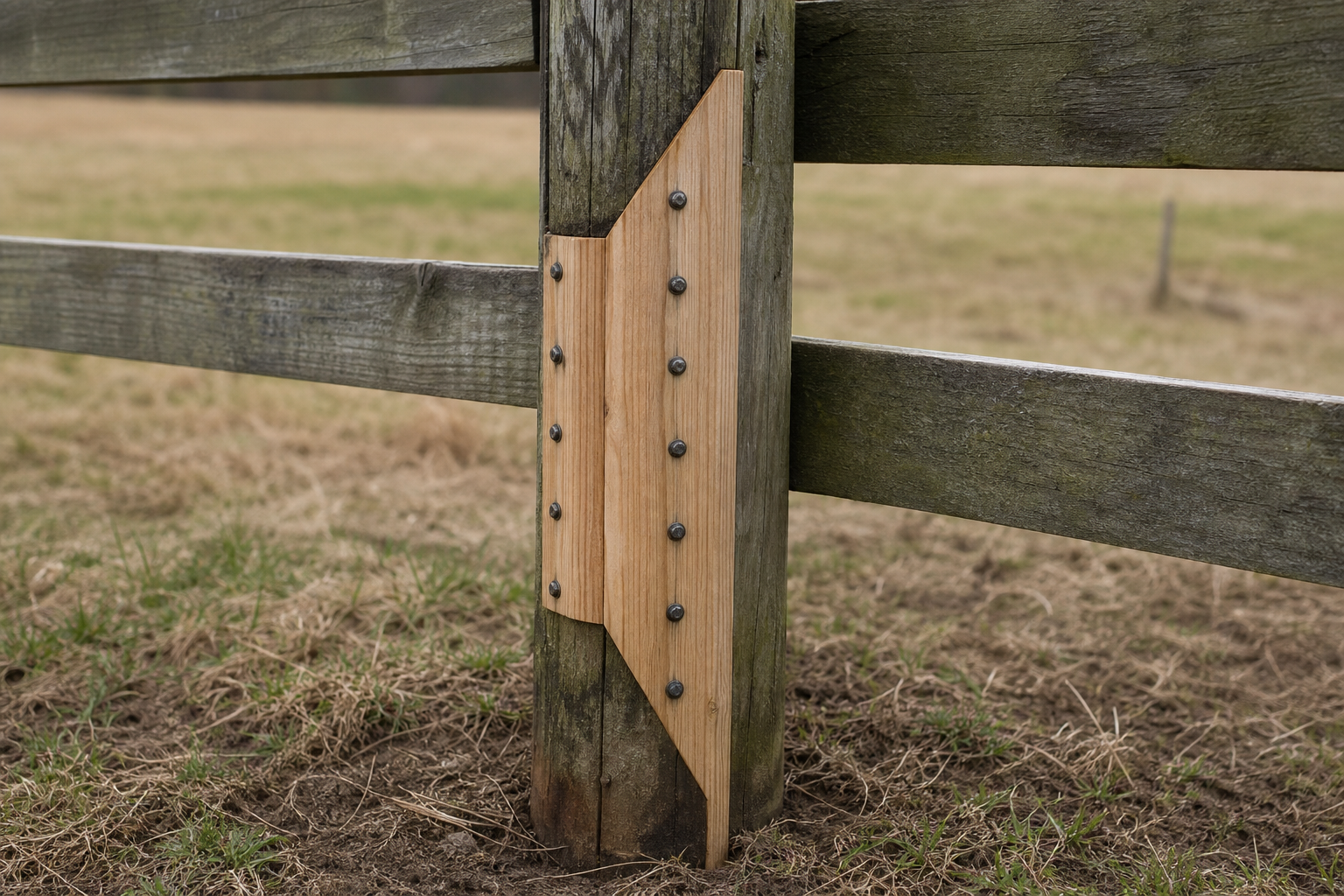
Partial repairs add new timber to the existing post. Sistering attaches a new length of post alongside the old one, bolted through to share the load. Cut-and-scarf replaces only the rotted section via a shaped splice joint that is glued and bolted to the remaining post. These methods preserve the existing footing and attachments when the core of the post is still sound above the rot zone.
When it works well
Partial repair is effective when decay is confined to a short section and when you can access enough intact wood to form a strong structural splice. It is a good middle ground for posts set in solid concrete where excavating the footing would be disruptive. Correct timber size, pressure-treated replacement pieces, and a proper fastening pattern are important to avoid premature splitting or bending under load.
Limitations and durability
Partial repairs will not perform well if soil drainage remains poor or the decay extends deeper than anticipated. Proper selection of replacement timber and correct fastening matter. Pressure-treated posts and stainless or hot-dipped galvanized fasteners improve durability. If the underlying cause of failure is wet soil, consider addressing drainage as part of the repair to avoid repeating the work. Practical selection and sizing guidance is covered in installation references that fencing pros use (FenceFast).
Method 3: full post replacement and best installation practice
Why it is the definitive solution
Full replacement removes the damaged post and its footing and installs a new pressure-treated post in fresh concrete at the correct depth. This restores structural integrity completely and eliminates hidden decay. When life expectancy and long-term stability matter, replacement is the most definitive approach and it avoids future callbacks caused by residual rot or compromised footings.
Best practices for installation
Use pressure-treated wood or a durable species sized for your fence load and exposure. Set the post deep enough and in a concrete or compacted aggregate footing per best practice guides, and avoid shallow settings that save time but shorten service life. Soil drainage affects material choice and expected durability; in poorly drained clay, oversize materials or drainage improvements are recommended. Official Canadian guidance on fence posts, materials and installation provides useful reference measures for depth and materials (BC Ministry of Agriculture).
When replacement is needed, a professional crew usually removes the old concrete footing, prepares the hole to the recommended depth, and installs the new post with a properly sized concrete collar or compacted aggregate base. This controlled installation is why replacement delivers the longest useful life.
On-site inspection: three quick tests to decide
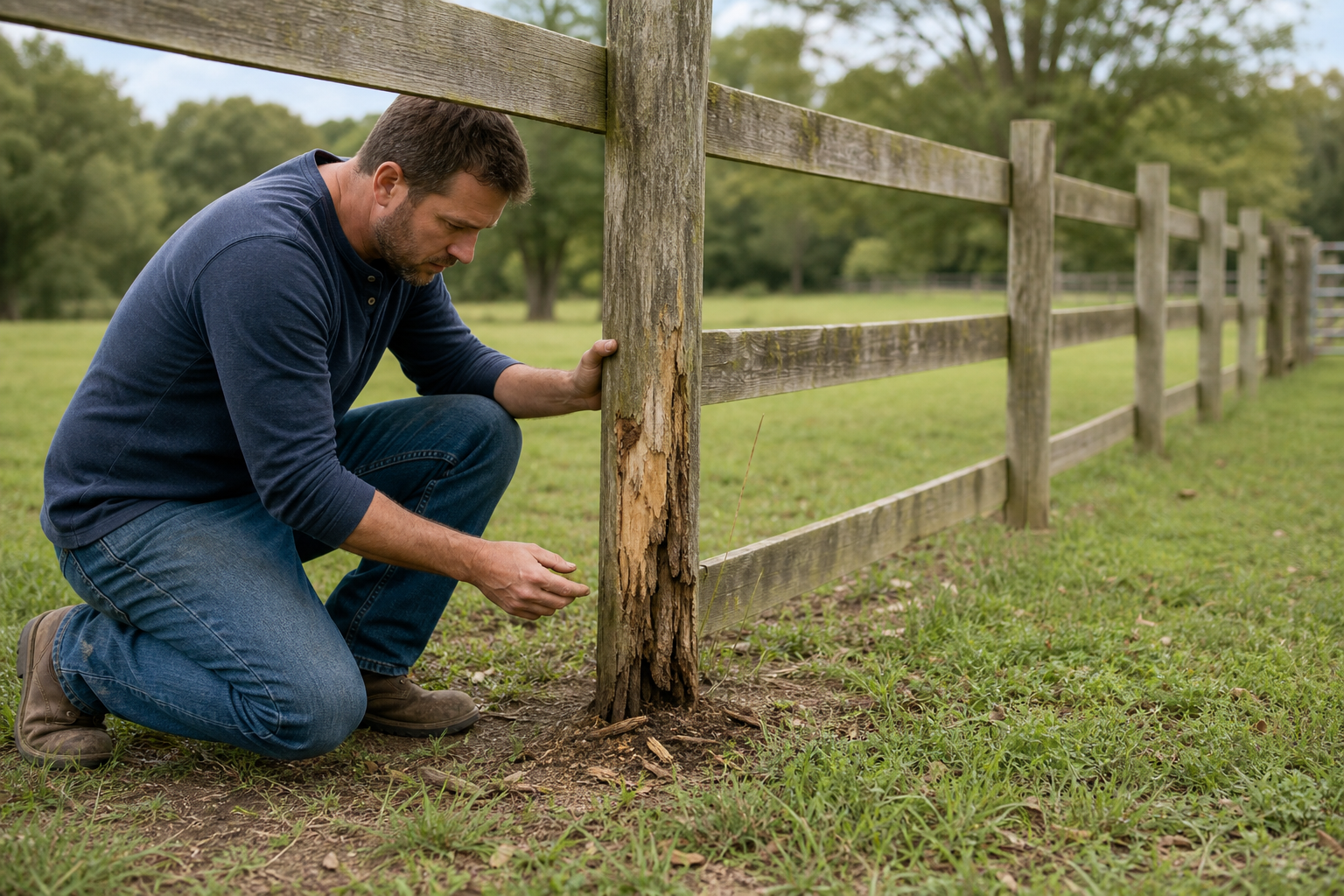
Use these three simple, safe tests to estimate whether a post is repairable.
- Rock test. Grasp the post near the ground and try to rock it. Movement combined with soft wood at the ground indicates the post has failed and likely needs replacement.
- Screwdriver probe. Push a long screwdriver or awl into the wood at the soil line and above it. If the tool sinks easily and you find soft, crumbly fibers, estimate whether more than half the post cross section is affected. If so, replacement is recommended.
- Footing check. Inspect any surrounding concrete or gravel. Cracked or shifting concrete often means the footing failed and replacement will be needed to reset the post in a new, stable footing.
These checks are described in homeowner decision resources and repair how-to guides that help determine repairability. When in doubt, photograph the condition and get a contractor assessment (Engineer Fix rot repair).
How to choose a Mississauga contractor for wood fence post repair
When you decide to hire a pro, evaluate candidates with these criteria.
- Written quote and scope, including the method proposed, materials, and whether concrete footings will be replaced.
- Materials and installation methods, for example pressure-treated posts and concrete footings for replacements, or stainless fasteners for high-moisture exposure.
- Turnaround and scheduling. Faster response is valuable after storm damage. Local teams that offer callback requests and appointment booking can reduce downtime.
- Local reputation. Read recent reviews and ask for references from Mississauga or GTA jobs so you can confirm similar work was completed successfully.
- Guarantees and insurance. Ask whether the contractor provides a workmanship guarantee and whether they carry liability insurance.
If you are looking for a local team with fast response times, a satisfaction guarantee, and end-to-end fence and deck services in the Greater Toronto Area, consider contacting Immediate Fence Repair for an on-site assessment and quote: Immediate Fence Repair.
What affects cost and timeline: key decision factors
Expect quotes to vary because of these variables.
- Repair method chosen, from simple mender to full replacement.
- Extent of hidden damage and whether concrete footings must be removed.
- Gate posts or posts carrying heavy loads require sturdier installations and more labour.
- Soil conditions and access, for example tight backyards or poor drainage increase time and cost.
- Permits or communal fencing rules in your municipality or homeowner association if applicable.
Next steps: document damage, stabilise short term and book an assessment
1. Photograph the post and surrounding area before you move debris. These photos help with insurance claims and with getting accurate remote estimates.
2. Stabilise temporarily if needed. You can brace a leaning panel with timber props or a simple external brace to keep the fence upright until repair crews arrive. Avoid relying on makeshift fixes for long periods, especially for gate posts that carry load.
3. Request an on-site assessment. For Mississauga and GTA homeowners who want a local appointment and a fast turnaround, request a callback or book an assessment with a local provider that offers fence post repair and replacement services. For an on-site inspection and written quote, visit Immediate Fence Repair.
Frequently asked questions
How can I tell whether a wood fence post can be repaired or must be replaced
Do the rock test and screwdriver probe near the soil line. If the post rocks and the wood at ground level is soft or crumbly, replacement is usually required. If decay is limited and more than roughly half the post cross section remains sound, a splice or partial repair can be effective. Photographs before cleanup also help professionals confirm the diagnosis.
What is a post mender and when is it the right solution
A post mender is a metal bracket that bolts to the remaining sound wood and transfers load to the ground. It is appropriate when rot is limited and the remaining wood is structurally competent, or when you need a fast fix without removing an intact concrete footing.
When is partial repair (sistering or scarfing) a good option
Partial repair is advised when rot is confined to a short segment and the post above the rot is sound. It preserves existing footings and attachments and can be more economical than full replacement, but it depends on good material choice and correct fastening.
What installation methods give the longest life for a replacement post
Installing a pressure-treated post to the correct depth in fresh concrete or compacted aggregate, combined with proper drainage and corrosion-resistant fasteners, gives the longest service life. Soil drainage matters for material choice and expected lifespan, so consider drainage improvements where necessary.
How should I document fence damage for an insurance claim
Photograph the damage from multiple angles before you move debris. Note the date and time, record weather conditions if relevant, and keep any correspondence or quotes from contractors. These steps help demonstrate the cause and extent of damage when you file a claim.
For locally focused assessments and prompt scheduling across the Greater Toronto Area, visit Immediate Fence Repair to request a callback or book an on-site inspection.