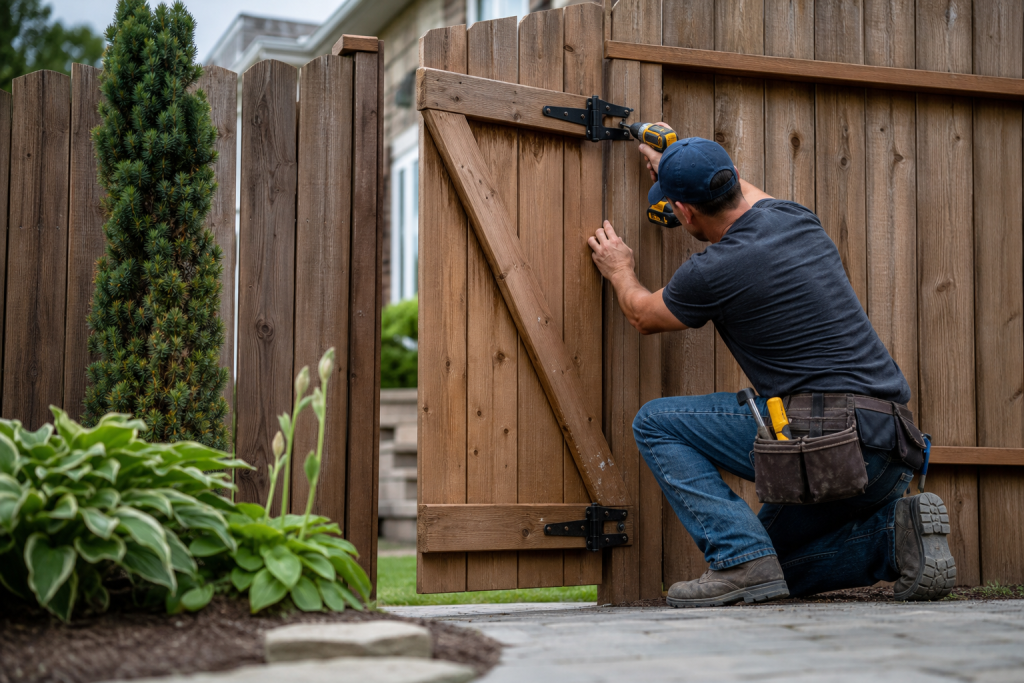
If you are searching for fence gate repair Mississauga, a short on-site inspection can tell you most of what you need to know. This article gives an 8-step, 15-minute checklist you can run through now to identify the likely problem, try safe temporary fixes, use a practical repair-versus-replace rule, and collect the exact information a Mississauga contractor needs to give an accurate quote.
8-step, 15-minute inspection checklist you can do now
- Safety first: Wear gloves and sturdy shoes. If the gate is heavy, badly leaning, or near a fence collapse, do not try to hold it alone.
- Try the gate swing and latch: Open and close the gate slowly. Note whether it drags on the ground, fails to latch, or rubs along one edge consistently.
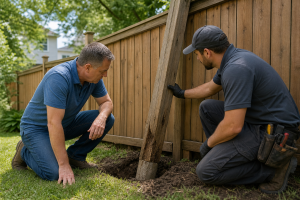
- Wiggle the posts: Grasp each post near ground level and try to move it. If it shifts or rocks, the post is loose or the footing has failed, a common cause of sagging gates. This is the primary check recommended by professional sources.
- Inspect end grain and rot: Look for soft, crumbly wood at the base of posts or gate frame, or dark staining at end grain. Soft end grain indicates rot rather than a simple loose post.
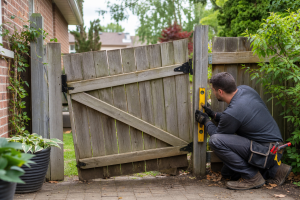
- Check hinge and latch hardware: Look for rusted, broken, or missing screws, bent straps, or seized pins. Try lifting the gate slightly; if it lifts at the hinge without resistance, hardware may be worn or loose.
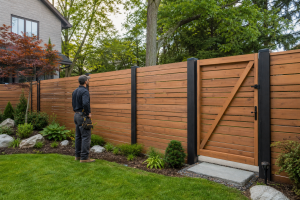
- Measure for square: Stand back and check whether the gate sits square in the opening or is twisted. An out-of-square frame will bind even if posts are solid.
- Look for frost-heave signs: In the Greater Toronto Area, seasonal soil movement can lift posts. Check for uneven gaps under the gate or raised soil against posts. Local winter guides note frost-heave as a frequent cause of post movement.
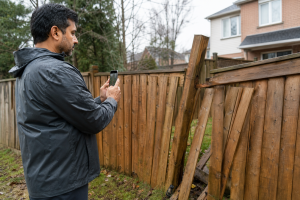
- Photograph and note dimensions: Take clear photos of the whole gate, posts, close-ups of hardware, and the area where it rubs. Measure gate width and the distance from the top of the gate to the top of the post if practical. These photos help a contractor give a better remote estimate.
How to diagnose the root cause: posts, frame, hardware, or frost
When you finish the checklist, most problems fall into one of four categories. The tests above help you assign the likely cause before you call a professional.
- Loose or rotted posts: If posts wobble when you push or pull, the footing or the post end is the issue. This is the single most common reason gates sag, and it usually needs post reset or replacement rather than hinge work alone.
- Frame out of square: A gate that looks twisted or tilts at one corner is likely out of square. If posts are solid but the gate binds, re-squaring the frame and adjusting hardware can fix it.
- Worn or seized hardware: Rusted screws, bent straps, or rounded hinge bolts cause play. Hardware problems are often the simplest fix, but check for associated wood damage that may hide additional issues.
- Frost-heave and soil movement: Frost-heave can lift footings seasonally in Mississauga. Many winter-related failures are preventable with correct below-frost-line post depth and suitable materials; if posts are heaved, a proper reset to correct depth is recommended.
Temporary fixes you can try safely and when to stop

If the inspection shows only minor hardware issues or a slightly out-of-square gate, try these low-risk fixes. Stop and call a professional if the gate is heavy, a post is rotten, or you are unsure of footing stability.
- Tighten fasteners: Use a screwdriver or socket to tighten visible screws and bolts on hinges and the latch. Replace any stripped screws with longer, corrosion-resistant screws if you have them.
- Lubricate moving parts: Apply a penetrating lubricant to hinge pins and latch mechanisms, then work the gate to distribute it. Use a penetrating oil designed for metal moving parts rather than heavy grease.
- Temporary support: Prop a sagging gate with a removable wedge or adjustable prop while you wait for repairs. Do not drive makeshift posts into unstable ground or use supports that create a tripping hazard.
- Swap or tighten hinge pins: If hinge pins are accessible and not rust-fused, tapping them out and replacing with new pins can restore alignment. If pins are seized or hardware is bent, stop and arrange a professional visit.
When to stop and call a professional
Stop DIY work and book a contractor if you find rotten end grain, broken posts, major structural cracks, snapped hardware, or if repairs will require digging, concrete footings, or lifting heavy gate sections. These tasks affect safety and long-term performance and are best handled by experienced fence technicians.
Repair or replace: a practical decision checklist with the 50 percent rule
Use this short decision flow after your inspection. The industry 50 percent rule says that if a repair will cost more than half the price of full replacement, replacement is usually the better choice; this rule helps avoid repeated spending on an ageing structure.
- Is the post rotten or broken? If yes, replacement of the post is typically required. If the rest of the fence and gate are in good condition, a post replacement can extend service life.
- Is the gate frame sound and the hardware fixable? If yes, repairing hardware and re-squaring usually restores function at low cost.
- Is the wood weathered across multiple components? If several sections show rot or significant wear, consider replacement even if a single repair seems possible.
- Estimate repair complexity: Ask for a written quote. If a repair quote exceeds half the expected replacement quote, follow the 50 percent rule and choose replacement. Local winter and repair guides use this approach when assessing common GTA damage.
What a professional gate repair visit includes and what to ask for
A qualified contractor in Mississauga will normally perform these tasks on a site visit. Asking for these items in advance speeds quoting and reduces surprises.
- Visual inspection and a photographed condition report.
- Testing of post stability and confirmation of below-frost-line depth if excavation is needed.
- Recommended scope listed by priority: post reset or replacement, hinge and latch replacement, re-squaring the gate, and any trim or finish work.
- Clear written estimate that lists labour, materials, hardware types, warranty terms, and cleanup.
- Timeline estimate and follow-up care advice.
When you contact a contractor, send the photos and measurements you took and describe the tests you ran. For local support, Immediate Fence Repair serves Mississauga and the GTA and offers callback and booking options on their site. You can also call +1 (437) 990-5158 or use the online booking at Immediate Fence Repair.
Mississauga climate rules that change repair technique

Local conditions matter. Frost-heave and wet summers in the GTA increase the risk of post movement and rot. Correct repairs usually include setting posts to an appropriate below-frost depth and using either pressure-treated wood, composite materials, or concrete footings compatible with local conditions. Industry advice recommends addressing post depth and end-grain protection to reduce repeat failures. For practical prevention tips, see winter maintenance guidance from industry sources.
Simple maintenance to extend gate life after repair
After repair, a small seasonal routine prevents most common failures:
- Annually tighten fasteners and inspect hinges for wear.
- Lubricate hinge pins and latch mechanisms once per year, or after heavy rain or salt exposure.
- Re-stain or paint exposed wood every two to four years to protect end grain and slow rot.
- Keep vegetation and debris away from the base of posts to avoid trapped moisture.
Quick decision flow and local next steps
Summary you can follow after the 15-minute check:
- If posts wobble or show rot: book a professional post replacement or reset.
- If only hardware is worn and wood is sound: attempt the safe fixes above, then book a hardware replacement visit if needed.
- If repair quote is more than half the replacement cost: choose replacement using the 50 percent rule.
To schedule an on-site assessment from a Mississauga team that handles post repair, gate alignment, hardware replacement, and full replacements across the GTA, visit Immediate Fence Repair or call +1 (437) 990-5158 for a callback and booking.
Frequently asked questions
How do I know if my gate post needs replacement or just re-setting
If the post wobbles and the wood near the ground is soft or crumbling, the end grain is likely rotten and the post should be replaced. If the post is solid but the footing is loose, a reset to correct depth may be enough. The post-wiggle test is a reliable first check and is widely recommended by fence professionals.
When is a sagging gate fix cheaper than a full replacement
A sagging gate that has sound wood and only loose hardware or a slightly out-of-square frame is typically cheaper to repair. Use the 50 percent rule: if the repair quote exceeds half the replacement quote, replacement is usually the smarter investment.
Can I lubricate seized hinges myself and what lubricant should I use
Yes, you can safely apply a penetrating lubricant to hinge pins and latch parts and work the gate until movement returns. Use a penetrating oil designed for metal parts rather than heavy grease. Stop if pins are rust-fused or hardware is cracked, and arrange a professional visit.
Does frost-heave mean I should always replace posts with concrete footings
Not always. Correct below-frost-line depth and good drainage often prevent heave. A proper repair may use concrete, gravel footings, or specialized post anchors depending on soil. Discuss local options with your contractor so the repair matches Mississauga frost conditions.
What information should I send a contractor to get an accurate quote
Send clear photos of the whole gate and close-ups of damaged areas, note which tests you ran (post wiggle, hinge lift), gate width, and whether you can provide site access. This lets the contractor prepare materials and give a more accurate estimate.
For fast local assessments, repairs, and professional quotes in Mississauga, contact Immediate Fence Repair to request a callback or to book an appointment online.