A damaged commercial chainlink fence does not automatically need complete replacement. However, approving a quick repair without assessing the entire system can leave loose connections, unstable posts, damaged gates, or alignment problems unresolved.
For property managers and business owners in Mississauga, the practical decision is whether the fence needs routine upkeep, targeted chainlink fence repairs, or a broader replacement assessment. The right answer starts with a detailed inspection and a clearly documented scope of work.
What commercial chainlink maintenance should cover
Commercial chainlink maintenance should be more than a quick look at the fence fabric. A useful visit should identify the condition of the visible fence system, explain recommended maintenance work, and distinguish minor issues from repairs that may affect security, access, safety, or the serviceability of the installation.
Immediate Fence Repair’s commercial service information describes a process that includes consultation, detailed inspection, maintenance work, and a final quality check. Its commercial offering is intended for business properties, so the scope can be discussed around the site’s perimeter, access needs, and operational priorities.
In practical terms, the review should consider:
- Chainlink mesh, including damaged, loose, or displaced sections.
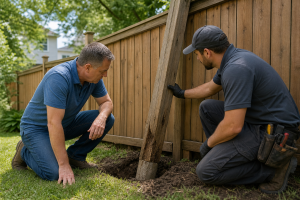
- Posts and the areas where they meet the ground.
- Rails, fittings, ties, tension components, and other visible connections.
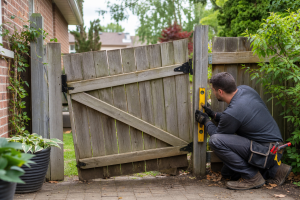
- Gates and access points, including whether they align and operate as intended.
- Fence alignment, gaps, clearances, and sections that appear unstable.
- Visible damage that may require maintenance, repair, or a wider assessment.
A commercial chainlink fence inspection can help turn these observations into a defined work plan rather than an assumption based on one visibly damaged area.
Mistake 1: Checking only the chainlink mesh

The mesh is the most noticeable part of a chainlink fence, but it is only one part of the system. A section can look acceptable while a post is leaning, a connection is loose, or a gate no longer lines up with the surrounding fence.
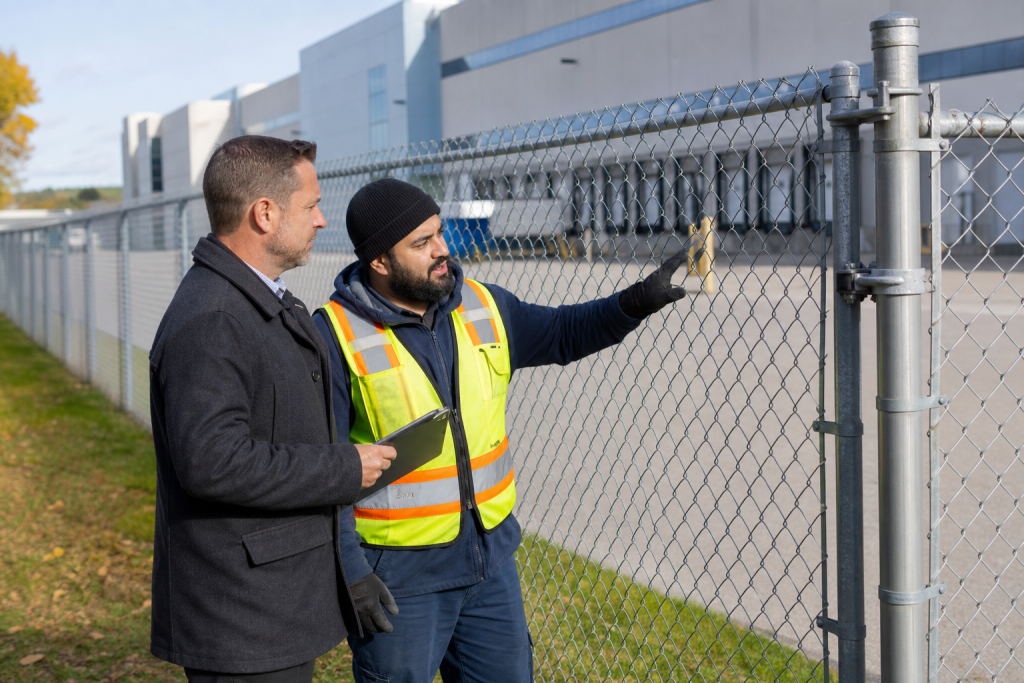
During a walk-around, look along the full perimeter instead of focusing only on the reported problem. Note damaged mesh, gaps, loose rails, displaced fittings, leaning posts, and areas where the fence line changes direction. Check gates separately, because an issue at an access point may affect daily operations even when the adjoining mesh looks intact.
These observations do not establish the cause or the correct remedy. They give a contractor useful information to assess. A thorough chainlink fence maintenance review should connect the visible symptom with the condition of the surrounding components.
Mistake 2: Treating visible damage as a cosmetic issue
Some fence problems are mainly visual, but others can affect the boundary, access control, or safe use of the property. A loose section, open gap, damaged gate, or visibly unstable post deserves assessment rather than being left on a list of future appearance improvements.
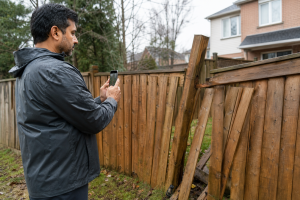
Property managers should record where the issue is located, what appears damaged, and whether it affects a gate, a high-traffic area, or a part of the perimeter that needs to remain secured. Photographs can help communicate the problem, but they should not replace an on-site assessment when the condition is unclear.
There is no universal threshold that determines when a commercial fence problem becomes urgent. The decision depends on the fence’s condition, its role at the property, and the consequences of leaving the issue unresolved. Ask the provider to explain those considerations in the recommendation.
Mistake 3: Approving a repair before comparing repair and replacement options
A targeted repair may make sense when the problem is limited to a defined section or a small number of components. A replacement assessment may be more appropriate when damage extends across multiple connected areas or when the surrounding fence condition raises questions about how long a local repair will remain serviceable.
Before approving work, ask:
- Which exact sections and components need attention?
- Is the recommendation a repair, a section replacement, or a broader replacement assessment?
- Will adjacent posts, rails, fittings, or gates also be inspected?
- Are the proposed materials compatible with the existing fence?
- What condition should the property manager expect after the work?
- What risks or additional work remain outside the current scope?
The goal is not to choose the largest project. It is to understand whether the proposed work addresses the actual condition rather than only the most visible symptom.
Mistake 4: Accepting an unclear maintenance scope
An unclear quote can make it difficult to confirm what was inspected, what will be repaired, and what is excluded. This matters on commercial properties where access, tenant activity, deliveries, and operating hours may affect how the work is planned.
Ask for a scope that identifies the relevant locations and components. It should also explain the proposed materials, labour, access assumptions, site preparation, exclusions, and whether cleanup is included. If the recommendation depends on conditions that cannot be confirmed until work begins, ask how those changes will be communicated and approved.
Do not assume that a general reference to “fence maintenance” includes every part of the perimeter. Project pricing and timing require an assessment of the specific property and requested work, so a useful estimate should make its assumptions clear.
Mistake 5: Skipping the final quality check
The end of the repair is not the end of the decision. A final review should confirm which sections were addressed and whether the completed work matches the approved scope.
Walk the relevant areas with the provider or review the completion information. Confirm that the identified mesh, posts, connections, rails, and gates were addressed as agreed. Where applicable, check alignment, access-point operation, remaining gaps, and visible unfinished work. Also ask whether the provider has noted any unrelated condition that should be monitored later.
Immediate Fence Repair lists a final quality check as part of its commercial chainlink service process. That step gives property managers a clear point at which to discuss outstanding questions instead of discovering them after the crew has left.
Commercial chainlink inspection checklist for Mississauga properties
Use this checklist before requesting an assessment and again when reviewing the provider’s recommendations. It is general planning guidance, not a substitute for a professional inspection.
| Area | What to look for |
|---|---|
| Mesh and rails | Damaged, loose, displaced, or visibly unsupported sections |
| Posts | Leaning, movement, visible damage, or concerns where posts meet the ground |
| Fittings and connections | Loose, missing, displaced, or visibly deteriorated components |
| Gates and access points | Misalignment, gaps, damage, or operation concerns |
| Alignment and clearances | Uneven fence lines, openings, obstructions, or changed clearances |
| Visible damage | Areas affected by impact, wear, or other conditions requiring assessment |
Record the location of each observation and indicate whether it appears to affect security, access, safety, appearance, or general upkeep. This makes the conversation more precise and helps separate immediate work from items that can be planned later.
Questions to ask before approving commercial chainlink fence repairs
A provider’s answers should help you understand the recommendation, not simply accept a price. Consider asking:
- Will the inspection cover the full perimeter or only the reported section?
- Which components were assessed, including posts, gates, rails, fittings, and mesh?
- Why is repair recommended instead of section replacement or a broader replacement assessment?
- What materials will be used, and how will they match or connect to the existing fence?
- What access, clearance, staging, or site-safety arrangements are required?
- What is included in the estimate, and what conditions could change the scope?
- Will completed work receive a final quality check?
- Are there maintenance items that should be scheduled or monitored after the repair?
For properties with multiple tenants, contractors, or operating areas, also explain any access restrictions before the site visit. Clear information at the start can reduce misunderstandings about the work area and the expected completion condition.
Choosing a commercial chainlink provider in Mississauga
Look for a provider that can discuss commercial chainlink fencing in terms of inspection, repair, maintenance, and scope control. A relevant service description should make clear how the provider identifies problems and how the completed work will be reviewed.
Immediate Fence Repair states that it serves commercial clients and offers commercial chainlink fencing services. The company is based at 25 Agnes St #309 in Mississauga, Ontario. Its listed commercial process includes consultation, detailed inspection, maintenance work, and a final quality check.
Those facts do not remove the need to ask property-specific questions. Before hiring any provider, confirm that the proposed work addresses your perimeter, access requirements, materials, documentation needs, and decision between repair and replacement.
If the project overlaps with other site work, coordinate the access plan with those trades as well. For example, a property manager arranging surface work may need to schedule around an epoxy flooring project in Mississauga so contractors do not interfere with one another’s work areas.
Frequently asked questions
How often should a commercial chainlink fence in Mississauga be inspected?
There is no single inspection interval that suits every commercial property. Consider the fence’s condition, use, access points, and importance to the site, then ask a provider to recommend an appropriate review approach. An inspection is also sensible when you notice new damage, movement, gaps, or gate concerns.
Can commercial chainlink maintenance include repairs to damaged sections?
It can, depending on the condition and scope of the work. Immediate Fence Repair states that its fence repair services include damaged sections, post replacement, and comprehensive maintenance. Ask which sections will be repaired, whether related components were assessed, and whether replacement is a better option for any wider damage.
What information should I provide when requesting a commercial chainlink repair quote?
Provide the property location, the approximate affected area, photographs if available, the type of issue observed, and any access or operating restrictions. Mention whether the concern involves mesh, posts, gates, alignment, or another component. Request that the estimate identify the inspection coverage, proposed work, exclusions, and final quality-check process.
Conclusion: Make the maintenance decision from the whole fence condition
The safest way to plan commercial chainlink maintenance in Mississauga is to assess the complete fence system before approving a remedy. Check the mesh, posts, connections, gates, alignment, and visible damage, then compare targeted repair with section replacement or a broader replacement assessment where appropriate.
Once the decision is clear, document the locations, materials, access requirements, exclusions, and final review. A defined scope helps property managers evaluate the finished work and identify any remaining recommendations.
Immediate Fence Repair is based in Mississauga, serves commercial clients, and offers commercial chainlink fencing services that include consultation, inspection, maintenance work, and a final quality check.