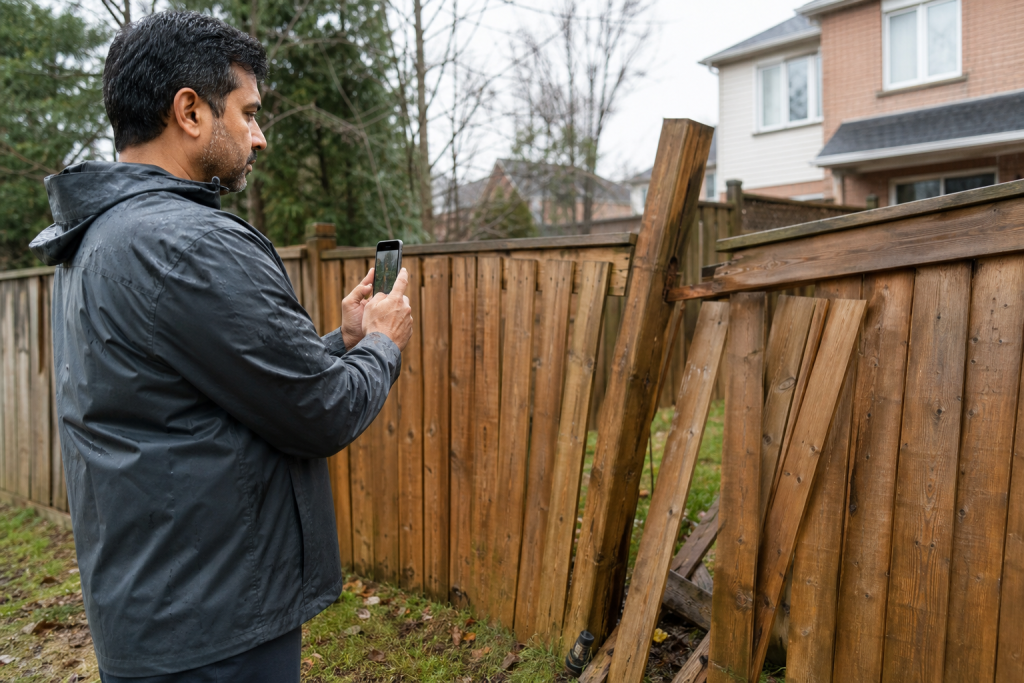
If a storm, fire, theft, or another unexpected event damages your fence, the first question is usually whether home insurance may respond. Fence damage is generally considered under a home or property insurance policy, not a separate fence-specific product. Coverage depends on the cause of loss, policy wording, exclusions, deductible, limits, and valuation method, so a contractor cannot confirm whether your claim will be approved. The Financial Consumer Agency of Canada explains that home insurance may cover some unexpected events, but coverage varies by policy.
Key Takeaways
- Document the cause of damage and check your insurance policy before filing a claim.
- Photograph the entire fence and any damage to support your claim.
- Understand the difference between repair needs and insurance coverage decisions.
- Consult with a contractor for a physical assessment to determine the necessary repairs.
- Be aware of the Ontario limitation period for filing claims after damage occurs.
Quick summary

- Identify and record what caused the damage before deciding whether to claim.
- Check your policy, deductible, exclusions, limits, and any special conditions.
- Photograph the entire fence, close-up damage, surrounding area, and safety hazards before non-urgent repairs.
- Ask your insurer about emergency measures and inspection requirements before authorizing major work.
- Obtain a separate physical assessment to determine whether you need a repair, wood fence post repair, section replacement, or full replacement.
What does a fence insurance claim usually involve?
“Fence insurance claims” is a useful search phrase, but it is not the name of a separate Ontario insurance product. Your insurer will assess whether the loss resulted from an insured event and whether any exclusion, deductible, limit, or policy condition applies.
The contractor and insurer have different roles. An insurer or adjuster decides coverage and the amount payable under the policy. A fence contractor assesses the physical condition of the structure and can prepare an estimate for repair or replacement. A contractor’s estimate supports the claim, but it does not determine eligibility or guarantee reimbursement.
Check the cause of damage and your policy first

Start by writing down what happened, when it happened, and what evidence supports your understanding. A windstorm, fire, or theft may be treated differently from gradual rot, poor maintenance, wear and tear, or damage caused by an event excluded by the policy. The same type of physical damage can therefore produce different insurance outcomes depending on its cause and your contract.
Flood and earthquake coverage may require particular attention. The Financial Consumer Agency of Canada notes that earthquakes and floods are usually not covered by standard home insurance unless additional coverage applies, while events such as fire, windstorm, or theft may be covered in some policies. These are general examples, not a decision about your claim.
Look for the sections addressing covered perils, exclusions, additional coverage, deductibles, policy limits, and settlement or valuation. Replacement-cost coverage and actual-cash-value treatment can produce different results, and some policies may impose conditions about maintenance, reporting, or protecting the property from further damage.
Should you file a claim or pay for the work yourself?
The best choice depends on more than the estimated repair bill. Compare the likely covered amount with your deductible, consider whether the loss is clearly within the policy, and ask the insurer how a claim could affect your premiums or claims history. The Financial Consumer Agency of Canada specifically recommends considering whether a claim is worthwhile when the loss is only slightly greater than the deductible. Review the agency’s guidance on making an insurance claim before deciding.
| Situation | What to consider | Practical next step |
|---|---|---|
| Major damage from a potentially insured event | The likely cost may substantially exceed the deductible, but exclusions and limits still matter. | Document the loss and contact the insurer before authorizing major work. |
| Repair cost close to the deductible | The insurer may pay little after the deductible, and a claim may have future financial implications. | Get a realistic estimate and ask the insurer for guidance before filing. |
| Cause is uncertain or may be excluded | You may need clarification about the cause, policy wording, and available coverage. | Preserve evidence and ask targeted questions rather than assuming coverage. |
| Fence creates an immediate safety or security concern | Temporary steps may be reasonable to prevent injury or further damage. | Make the area safe, photograph the condition first where possible, and confirm instructions with the insurer. |
Document the fence damage before making non-urgent repairs
Good documentation helps your insurer understand the event and helps a contractor scope the physical work. Preserve the original condition whenever it is safe to do so, especially before removing broken sections or discarding damaged materials.
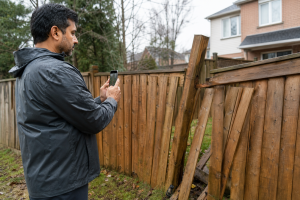
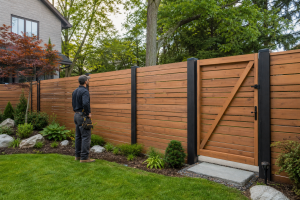
- Take wide photographs showing the fence in relation to the house, yard, neighbouring structures, and property line.
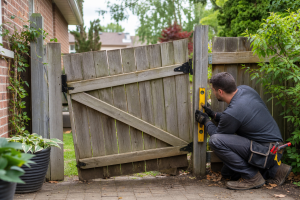
- Take close-up photographs of broken boards, split rails, bent chainlink, damaged gates, leaning posts, and attachment points.
- Record the date, approximate time, suspected cause, weather conditions, and when you first noticed the damage.
- Photograph hazards such as exposed fasteners, unstable posts, fallen sections, or blocked access.
- Collect older photographs, installation records, receipts, maintenance records, and previous repair invoices if available.
- Keep notes about witnesses, neighbouring damage, police reports, emergency work, and conversations with the insurer.
- Obtain a written repair or replacement estimate that identifies materials, labour, affected sections, and assumptions.
Do not create a safety risk to collect evidence. If part of the fence is unstable, keep people and pets away and ask the insurer whether it wants an adjuster or contractor to inspect it before removal.
Assess whether the fence needs repair or replacement
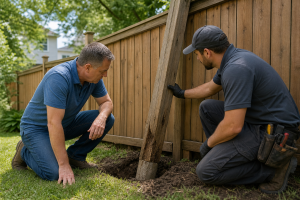
The insurance decision and the construction decision should be kept separate. Physically, an isolated broken board, damaged gate, or loose fitting may be repairable. A leaning or failed post may call for fence repair services such as post repair or replacement, while multiple failed posts, widespread deterioration, or damage across the fence line may make section replacement or full replacement more practical.
Ask the contractor to explain what is damaged below the surface as well as what is visible. A post that appears loose may have compromised footing, and replacing boards without correcting the supporting structure may not solve the problem. For wood fencing, the estimate should distinguish boards, rails, posts, gates, lattice, hardware, and sections that can be retained.
Immediate Fence Repair’s verified services include wooden and composite fence repairs, damaged-section work, fence-post replacement, new wood fence installation, and composite fence installation. The company can assess the physical work and provide an estimate, but the insurer remains responsible for deciding whether the loss is covered and what amount the policy allows.
What to ask your insurer and what to request from a contractor
Questions for your insurer
- Is the reported cause of damage potentially covered under my policy?
- Does a deductible apply, and how would it affect the amount payable?
- Are there exclusions, limits, depreciation rules, or valuation conditions that apply?
- Should I wait for an adjuster or inspection before removing damaged fencing?
- What temporary safety or security measures can I take, and will I need approval?
- What photographs, receipts, estimates, reports, or other documents do you need?
- Is there a preferred process for selecting a contractor or submitting an estimate?
- Are there reporting deadlines or other policy conditions I should follow?
Details to request in a contractor estimate
Ask for a clear description of the affected areas, proposed repair and replacement alternatives, materials, quantities, labour, disposal, temporary measures, and excluded work. If replacement is recommended, ask why repair is not expected to provide a durable result. This gives you and the insurer a clearer basis for comparing options.
Insurance wording can be difficult to compare because policies use different terms for coverage, exclusions, limits, and settlement. A plain-language overview such as moving insurance explained, including what is covered and what is not can illustrate why exact policy wording matters, although it does not determine coverage for a fence or replace advice from your own insurer.
Emergency measures, timing, and the Ontario limitation period
If the damaged fence presents an immediate risk, take reasonable temporary steps to protect people, pets, and property. That might include restricting access or securing a loose gate. Photograph the condition first where practical, keep receipts, and contact the insurer promptly for instructions. Non-urgent demolition or replacement is usually better discussed with the insurer before work begins.
Timing also matters if a claim is disputed. Ontario’s Insurance Act contains a provision stating that certain actions against an insurer under an insurance contract are barred unless started within one year after the loss or damage. The applicable legal context, policy wording, and facts matter, so do not treat this as individualized legal advice. Check your policy and obtain legal advice promptly if there is a disagreement or possible limitation issue. Read the relevant Ontario legislation.
Fence insurance claim checklist
- Make the area safe without destroying evidence.
- Record the date, cause, weather, and circumstances of the damage.
- Photograph the entire fence, each damaged component, and nearby context.
- Locate your policy and check coverage, exclusions, deductible, limits, and valuation wording.
- Estimate likely repair or replacement costs using a written contractor assessment.
- Ask the insurer whether an inspection or approval is required before non-urgent work.
- Preserve damaged materials where safe and keep receipts for temporary measures.
- Save all emails, claim numbers, estimates, photographs, and conversations.
- Compare the likely payable amount with the deductible and ask about possible premium effects.
- Decide on the physical repair or replacement plan after understanding the scope of damage.
Frequently asked questions about fence insurance claims
Does home insurance cover fence damage in Ontario?
It may, depending on the policy and cause of loss. Fire, windstorm, or theft may be covered under some policies, while floods, earthquakes, gradual deterioration, or other causes may be excluded or require additional coverage. Only your insurer can decide your claim.
Should I file a claim if the repair cost is only slightly above my deductible?
Not necessarily. Compare the estimated covered amount with the deductible and consider possible effects on premiums or future claims history. Ask the insurer for information before filing, particularly when the difference is small.
Can I repair my fence before the insurance adjuster visits?
Take reasonable temporary action if there is an immediate safety or security risk, but document the damage first where possible. For non-urgent work, ask the insurer whether it wants an inspection or photographs before repairs begin.
Will a contractor decide whether my fence damage is covered?
No. A contractor can identify physical damage and estimate repair or replacement work. The insurer interprets the policy, assesses the reported loss, and decides coverage.
What should I photograph before making a fence insurance claim?
Photograph the whole fence, close-ups of every damaged area, posts and foundations, gates, surrounding property, debris, and any hazard. Include wider views showing where the fence sits on the property, and keep original files with their dates when possible.
How long do I have to take action after insured fence damage in Ontario?
Follow your policy’s reporting requirements and contact the insurer promptly. Ontario’s Insurance Act includes a one-year provision for certain actions against an insurer, but its application depends on the circumstances. Check the policy and seek legal advice if a claim is disputed or time may be an issue.
Conclusion: make the coverage decision and repair decision separately
A careful fence insurance claim starts with the cause of loss, not the repair invoice. Check the policy, deductible, exclusions, limits, and valuation method, then document the damage before non-urgent work. Ask the insurer what it needs and whether an inspection is required.
At the same time, obtain a separate physical assessment so you understand whether the fence needs board repairs, gate work, wood fence post repair, section replacement, or a new installation. This keeps the contractor’s construction recommendation distinct from the insurer’s coverage decision.
For homeowners and property owners in Mississauga and the broader GTA, Immediate Fence Repair can provide a physical fence assessment or repair estimate for the affected work. The estimate can support your planning and insurer discussions, but reimbursement remains subject to your policy and insurer’s decision.