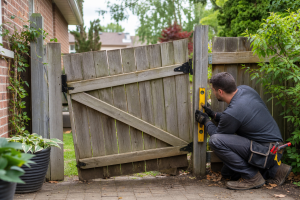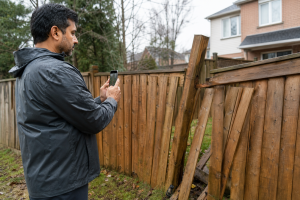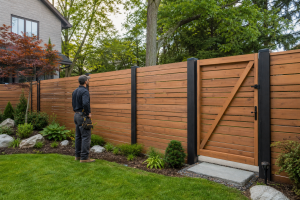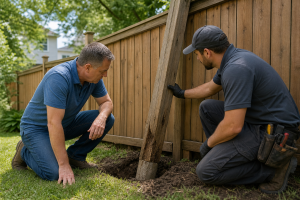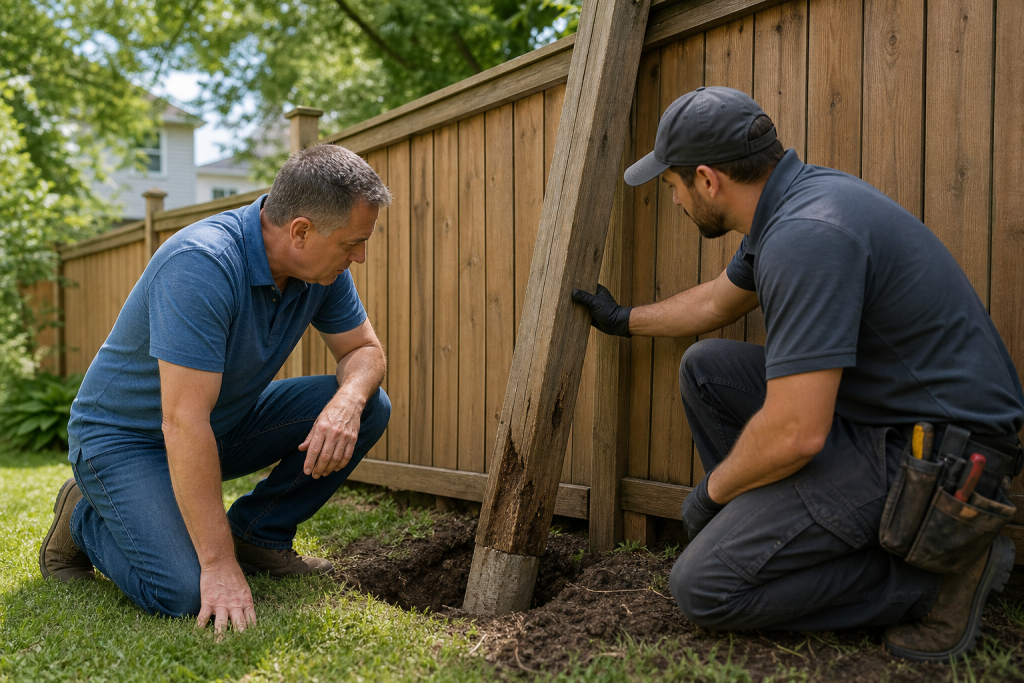
A fence post replacement is a structural repair, not simply a cosmetic update. It usually means removing a post that can no longer support the fence reliably, addressing the surrounding footing when needed, and installing a suitable replacement.
For homeowners in Mississauga and the GTA, the key decision is whether the damage is localized enough for repair or whether instability, decay, impact damage, or footing failure makes replacement the more sensible option.
Key Takeaways
- Replacement may be appropriate when a post is persistently leaning, moving, extensively decayed, badly damaged, or attached to an unstable footing.
- Localized damage may be repairable when enough sound wood remains and the surrounding fence structure is stable.
- A splice, partial repair, or external post mender can sometimes avoid full replacement, but each method depends on the remaining strength of the post and footing.
- Replacing one post may be enough when nearby components are serviceable. Widespread deterioration may require a broader repair or replacement discussion.
- Before approving a quote, ask what caused the failure, how the footing will be handled, what the price includes, and which fence components are covered.
Quick summary

- Replacement may be appropriate when a post is persistently leaning, moving, extensively decayed, badly damaged, or attached to an unstable footing.
- Localized damage may be repairable when enough sound wood remains and the surrounding fence structure is stable.
- A splice, partial repair, or external post mender can sometimes avoid full replacement, but each method depends on the remaining strength of the post and footing.
- Replacing one post may be enough when nearby components are serviceable. Widespread deterioration may require a broader repair or replacement discussion.
- Before approving a quote, ask what caused the failure, how the footing will be handled, what the price includes, and which fence components are covered.
What fence post replacement means
Fence posts are the vertical structural members that hold rails, boards, gates, and sometimes lattice in position. When a post loses strength, symptoms can include a leaning fence section, loose boards, a sagging gate, or movement along the fence line.
Replacing the post is different from repairing a board, rail, gate, or surface finish. The work may involve temporarily supporting the fence section, removing the damaged post, dealing with the old concrete or other footing, preparing the hole, and securing a new post. The method depends on the post condition, soil, access, fence design, and the existing footing.
Signs a fence post may need replacement

No single visual symptom proves that full replacement is required. However, several signs indicate that a post should be professionally inspected.
- Persistent leaning: If the post and attached fence section remain out of plumb, the problem may involve the post, footing, or both.
- Movement at ground level: A post that rocks or shifts when gently tested may no longer be firmly supported.
- Soft or crumbling wood: Decay near the soil line is concerning because that area supports much of the post’s load.
- Impact damage: A vehicle, falling branch, storm, or other force can split or bend a post.
- Cracked or unstable footing: Damaged concrete can allow movement even when the visible post appears sound.
- Loss of support: A sagging gate, separated rails, or loose fence section can indicate that the post is no longer carrying its share of the load.
Decay should not be judged by a universal percentage or surface glance. The assessment should consider how far the damage extends, how much sound material remains, and whether the post can support the connected fence section.
Fence post repair or replacement: how to choose
Repair is more likely to be reasonable when the damage is limited, enough sound wood remains, the footing is stable, and the connected rails and boards are in good condition.
Replacement becomes more attractive when decay is extensive, the post is unstable, the footing has failed, or impact has compromised the structure. Immediate Fence Repair states that minor damage may be repairable, while extensive damage or wear can make replacement more cost-effective over the longer term.
If the damage is limited and the surrounding fence remains stable, wooden fence post repair may restore structural strength without replacing the entire fence. An assessment is still important because a patch that leaves hidden decay or a failing footing in place may not solve the underlying problem.
Post repair methods compared
| Method | When it may fit | Key limitation |
|---|---|---|
| External post mender or splice | Damage is limited and enough sound material remains for secure attachment. | It may not suit deep decay or an unstable footing. |
| Partial repair or sistering | A sound portion of the original post remains and can be reinforced. | The repair still depends on the original post and buried section. |
| Full post replacement | The post is extensively decayed, badly damaged, unstable, or supported by a compromised footing. | It generally involves more labour and disturbance than a localized repair. |
Before choosing full post replacement, compare the main post repair methods and ask how each option addresses both the visible post and the support below it.
Why the footing matters as much as the post
A post can look sound above ground and still be affected by movement, poor support, or decay below the soil line. A leaning post may also have sound wood but a footing that has cracked, shifted, or failed to hold it securely.
This is why an assessment should consider the post and footing together. Simply attaching a new piece to a damaged post may leave the original cause unresolved. The contractor should explain whether the existing support can remain, needs repair, or should be removed and rebuilt.
Soil and drainage conditions can also affect the assessment. A quote should make clear what work is proposed below ground, not just what will be visible after the fence is reassembled.
When replacing one post may be enough
One-post replacement can be sensible when neighbouring posts are stable, rails and boards are serviceable, and the damage is isolated. It may preserve more of the existing fence while addressing the component that failed.
A broader repair or replacement discussion may be warranted when several posts are leaning, boards are widely deteriorated, rails are split, the fence line has shifted, or similar damage appears in multiple locations.
A gate also deserves attention because it places additional movement and weight on its supporting posts. A quote should identify whether hinges, latches, gate framing, and adjacent rails need work.
Inspection checklist before requesting a quote
- Photograph the full fence section, the post at ground level, and visible cracks, splits, or decay.
- Note whether the post leans, attached boards or rails have separated, or a gate is sagging.
- If safe, apply only gentle pressure to identify movement. Do not climb on or brace against an unstable fence.
- Look for soft or crumbling wood around the soil line.
- Photograph cracked concrete, gaps around the footing, standing water, or drainage concerns.
- Check whether neighbouring posts show similar movement or deterioration.
- Record any known cause, such as impact, severe weather, landscaping work, or moisture exposure.
These observations do not replace an assessment, but they help a contractor prepare and make proposed scopes easier to compare.
Questions to ask before approving replacement
- What caused the post to fail, and how extensive is the damage?
- Why do you recommend repair, partial repair, or full replacement?
- Will the existing footing remain, be repaired, or be removed?
- Are adjacent rails, boards, gate components, or posts included?
- What material and post size are proposed, and how will they match the existing fence?
- Does the quote include labour, materials, disposal, and cleanup?
- What warranty or satisfaction terms apply?
- What maintenance should be completed afterward?
Ask for exclusions in writing. A quote may cover the post but not a damaged gate, adjoining boards, difficult access, or disposal.
Arranging a fence post assessment in Mississauga and the GTA
Immediate Fence Repair is a Mississauga-based fence and deck company serving residential and commercial property owners across the GTA. Its listed services include wood fence post repair, fence repair, wooden fence repair, and related fence installation work.
The company provides callback and appointment options for property owners seeking an assessment or quote. When requesting service, share photographs, the approximate location of the damaged post, whether a gate is involved, and whether similar issues appear elsewhere.
Frequently asked questions
Does a leaning fence post always need to be replaced?
No. Leaning can result from a weakened post, shifted footing, or movement in the surrounding fence. If the wood and support remain sound, repair may be possible. If the post is decayed, unstable, or attached to a failed footing, replacement may be more appropriate.
Can one fence post be replaced without rebuilding the entire fence?
Often, one post can be addressed separately when adjacent posts, rails, boards, and the fence line remain serviceable. If deterioration is widespread, replacing one post alone may not resolve the larger problem.
What should I photograph before requesting a quote?
Take a wide photograph of the affected section, closer images of the post at the soil line, footing, attached rails and boards, and any gate or neighbouring post that appears damaged.
Conclusion
Fence post replacement is a structural decision. A limited problem in an otherwise stable fence may call for targeted repair, while extensive decay, movement, impact damage, or footing failure can make replacement the more suitable scope.
Document the damage, consider nearby components, and ask how the proposed work addresses support below ground. Mississauga and GTA property owners can request an assessment or quote from Immediate Fence Repair.