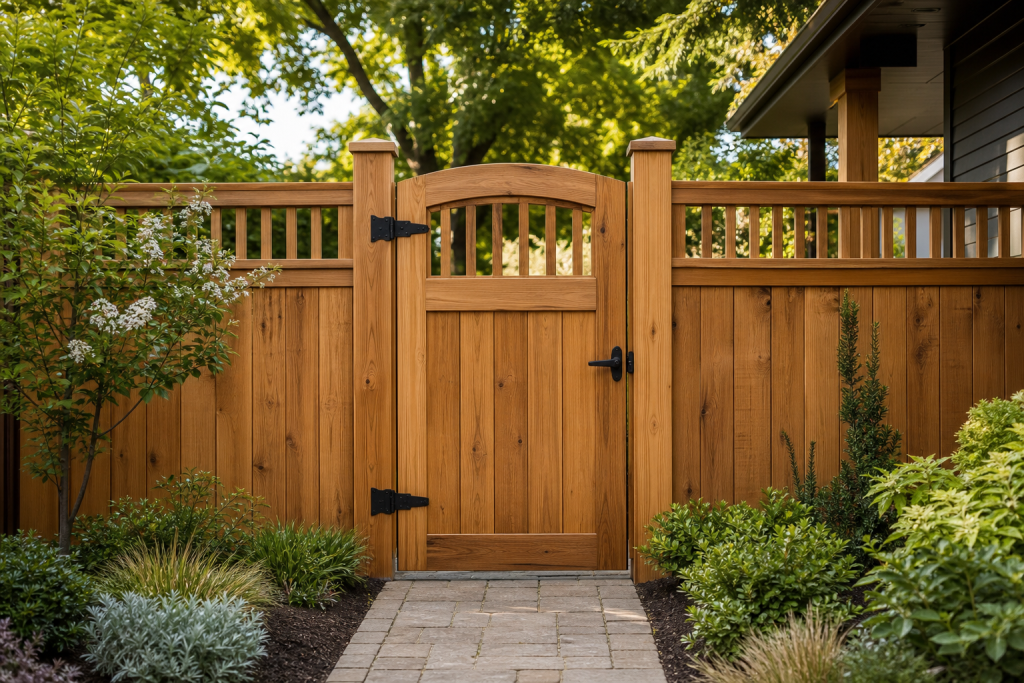
If you need a gate that matches your existing fence, withstands Ontario weather, and stays square for years, follow these step-by-step actions. This guide walks Mississauga homeowners through quick screening, accurate measurements, material and finish choices, anti-sag framing, hardware selection, repair versus replace decisions, and the exact questions to ask a local contractor before you order a custom wood fence gate design.
Quick stop checklist before you start
Use this immediate yes/no checklist to decide whether you can proceed on your own or should request an on-site assessment from a professional.
- Is the opening clear of buried services, overhead obstructions, and major grade changes? Yes / No
- Are the existing posts solid and well anchored with no visible rot? Yes / No
- Do you already know the exact clear width and height of the opening? Yes / No
- Will the gate be used for vehicle access or only pedestrian use? Pedestrian / Vehicle
- Do you want the gate to match the fence material and finish exactly? Yes / No
If you answered No to any item about posts, obstructions, or precise measurements, book an on-site assessment. Immediate Fence Repair offers local callbacks and on-site quotes for Mississauga properties.
Step 1: measure and assess the opening and site
Accurate measurements are the foundation of a gate that fits and operates. Take these measurements and note site conditions before you design or quote.
- Clear width: Measure the distance between the inside faces of the posts at three heights: top, middle, and bottom. Record the smallest measurement. This ensures the gate will swing without binding.
- Clear height: Measure from the finished ground to the top of the opening at both sides and the centre. Note slopes or uneven ground.
- Jamb depth and reveal: Measure the post face thickness and any trim or trim boards so hinges can be set flush and the gate will close properly.
- Swing clearance: Check for driveways, steps, nearby structures, and how far the gate must open.
- Ground slope and drainage: Note if the ground rises or falls across the opening. Sloped sites affect hinge placement and threshold clearance.
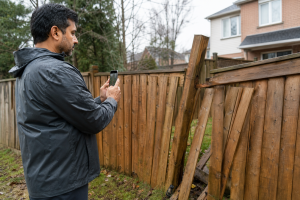
Record photos from both sides and a close up of the posts and hinge area. These files speed up an accurate quote from a contractor.
Step 2: choose materials and a matching finish
Match gate materials and finish to the existing fence for consistent appearance and for similar expansion, weathering, and maintenance needs. A trusted reference recommends using outdoor-grade lumber and matching species where possible to avoid compatibility problems between different materials.
Common choices and practical notes:
- Cedar: Naturally resistant to decay and popular in Ontario for its colour and grain. It weathers to a silver patina if left unfinished.
- Treated pine: Cost-effective and durable when finished correctly, but grain and appearance differ from cedar or hardwoods.
- Hardwoods or engineered boards: Offer a refined look and durability but are higher cost.
- Composite options: Low maintenance and consistent colour, but may not visually match a wood fence. If matching is essential, use wood for the gate.
This Old House advises choosing materials that match your existing fence and can withstand outdoor conditions to reduce future issues. Use finishes recommended for exterior use and outdoor-grade fasteners to lengthen service life.
Step 3: pick a structural design that prevents sag

A well engineered frame is the single most important factor for long-term gate performance. Wide or heavy gates sag if the internal framing and bracing are inadequate. Consider these structural approaches:
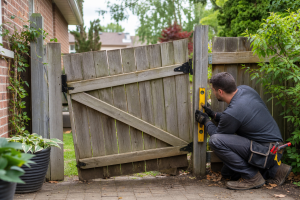
- Traditional frame with diagonal brace: A perimeter frame with a diagonal brace from the hinge-side top to the latch-side bottom prevents rotation and is effective for many single and double gates.
- Internal engineered framing: For wider gates or modern panel styles, an internal, ladder-like subframe or boxed torsion frame keeps the face boards supported and resists twisting. FenceScape highlights engineered internal structure as a reliable way to prevent sag in modern gate designs.
- Stiffeners and hidden metal plates: For very wide openings, consider metal stiffener plates or a lightweight steel internal frame concealed inside the wood for extra rigidity.
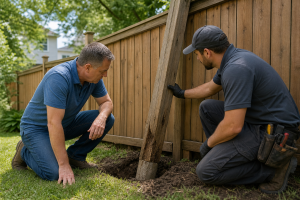
- Post strength: Use heavy-duty posts sized and anchored to support the gate weight. If posts show movement or rot, plan to repair or replace them before installing a custom gate; Immediate Fence Repair lists post repair among its services and can assess post condition on-site.
Step 4: select hardware and fastening strategies
Hardware quality and placement determine how smoothly the gate operates and how long it lasts. Pay attention to material grade, hinge style, and corrosion resistance.
- Hinge type: For heavy or wide gates use strap or barrel hinges rated for the gate weight. Anti-sag or adjustable hinges allow later tensioning to correct minor settling.
- Latch options: Choose a secure latch that fits the use case: simple gravity latches for low security, keyed or boltable latches for vehicle gates, and self-closing latches where required by safety rules.
- Fasteners and coatings: Use hot-dipped galvanized or stainless steel screws and bolts that resist corrosion in Ontario winters. Through-bolting hinges with washers distributes load better than short screws.
- Placement: Place hinges at least 1/3 and 2/3 along the gate height where practical, and ensure a firm connection into the post, not just into surface trim.
Early hardware selection can change the framing details, so review hardware options during the design phase rather than as an afterthought.
Step 5: choose the gate style for privacy, curb appeal and use
Your style choice must balance privacy, sightlines, and function. Pacific Wood & Iron recommends matching the design to yard layout and intended use to prevent later failures and to make installation straightforward.
- Solid panel gate: Best for full privacy and noise buffering. Requires strong internal framing to resist wind load and sag.
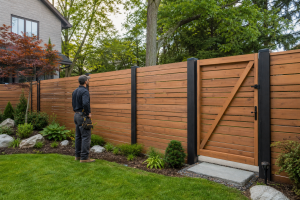
- Horizontal slats: Contemporary look that can be solid or slatted. Use proper spacing and a hidden frame to maintain straight lines.
- Picket or framed styles: Lighter and decorative, ideal for pedestrian gates where visibility matters more than privacy.
- Lattice top: Adds decorative height and partial privacy for a softer appearance.
Decide whether the gate must match every board orientation of the fence or if a complementary but distinct style would suit the property better.
Step 6: decide repair versus replace and check posts

Before ordering a new custom gate, check whether a repair will suffice. Typical repair solutions include hinge reset, shimming, partial panel replacement, or post splice. Full replacement is the safer choice when posts are rotten, shifted, or undersized for the new gate weight.
Signs you need post repair or replacement:
- Visible rot at the base of the post or soft wood when probed.
- Post movement when the gate is operated.
- Large gaps or uneven reveal across the gate after closing.
Immediate Fence Repair offers post repair and replacement services and can confirm whether a new gate can be mounted reliably on the existing posts.
Step 7: contractor questions and a Mississauga hiring checklist
Use this exact list when you meet contractors so you can compare bids fairly and spot workmanship issues.
- Can you verify the post-to-post measurements and show how you will accommodate uneven ground?
- What anti-sag method will you use for this width and style: diagonal brace, internal engineered frame, or hidden steel stiffener?
- Which hardware brands and finishes do you use? Are fasteners stainless or hot-dip galvanized?
- Do you repair or replace posts, and do you inspect footing conditions before mounting the gate?
- What warranty covers materials and labour, and how long is scheduling from approval to install?
- Can you provide photos of completed gates similar to this design in the GTA?
Bring your measurement photos and the quick checklist when you call a local contractor. Immediate Fence Repair accepts callback requests and books on-site estimates through their contact page.
Step 8: maintenance schedule and what to expect after installation
Routine maintenance keeps a wooden gate working and attractive at lower overall cost. Practical tasks and intervals to consider:
- Inspect hinges, latch and fasteners every 6 to 12 months and tighten as needed.
- Lubricate moving parts once per year with a weatherproof lubricant.
- Re-stain or reseal wood surfaces on a schedule that matches exposure; many owners plan for a protective finish refresh every 2 to 4 years.
- Check posts annually for movement, rot, or soil erosion around footings and repair promptly.
After installation expect an initial settling period. Adjustable hinges or a small tightening session after a few weeks is normal. A professional installer will describe expected touch-ups and any seasonal considerations for Mississauga weather.
Local notes: permits, property lines and inspections
Permit and setback rules differ by municipality. Before ordering a custom gate, verify property line positions with your survey and check City of Mississauga building services if you think a structure or vehicle access change could require a permit. When in doubt, request an on-site consultation so your contractor can flag local requirements and avoid rework.
Where to get help in Mississauga
For a local, on-site evaluation, request a callback or appointment through Immediate Fence Repair to have measurements verified, post conditions assessed, and a project quote prepared.
Frequently asked questions
Do I need a permit in Mississauga to install a custom wood gate
Permit requirements vary. Small pedestrian gates usually do not need building permits, but changes that affect driveway access, structural supports, or municipal right-of-way may. Check with City of Mississauga building services and consult your contractor before you proceed.
How do I measure my gate opening so the custom gate does not sag
Measure clear width at top, middle and bottom and use the smallest value. Measure height at both ends and centre and record ground slope. Provide photos of the posts and hinge areas. These measures let a designer size the frame and plan anti-sag bracing correctly.
Which wood species and finishes hold up best in Ontario weather
Cedar and pressure-treated lumber are common because they stand up to moisture when finished correctly. Match the species and finish to your existing fence to maintain consistent weathering. Use outdoor-grade fasteners and finishes for longer life.
When is a gate repair enough and when should I replace the whole gate
Repair is appropriate for isolated damage such as a rotten bottom board, loose hinges, or a misaligned latch. Replace the gate when posts are rotten or shifting, the frame is irreparably twisted, or the gate design no longer meets use and security needs.
What exact questions should I ask a contractor when getting a quote for a custom wood fence gate design
Ask them to confirm measurements on-site, explain their anti-sag strategy, name hardware brands and fastener finishes, list post repair or replacement options, provide a schedule and warranty, and show past examples of similar installs in the GTA.
If you want an on-site quote and professional installation in Mississauga or the Greater Toronto Area, book a visit with Immediate Fence Repair.
Key takeaway: Accurate measurements, matching materials, a reinforced frame, good hardware, and solid posts make a custom wood gate that looks right and resists sag. When in doubt, get an on-site assessment so you choose a design that fits your opening, your yard, and your maintenance expectations.
References: guidance on matching materials and build details from This Old House, early design and hardware considerations from Pacific Wood & Iron, and anti-sag framing options described by FenceScape. For local on-site assessments and post repair services, see Immediate Fence Repair.