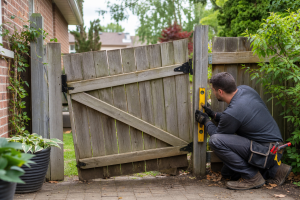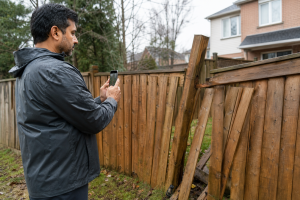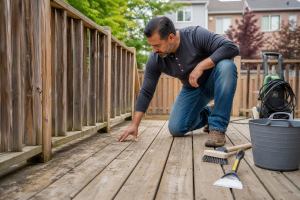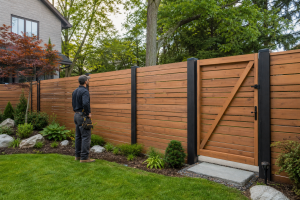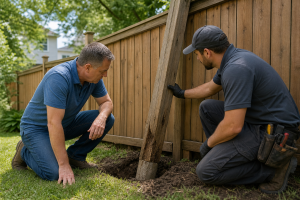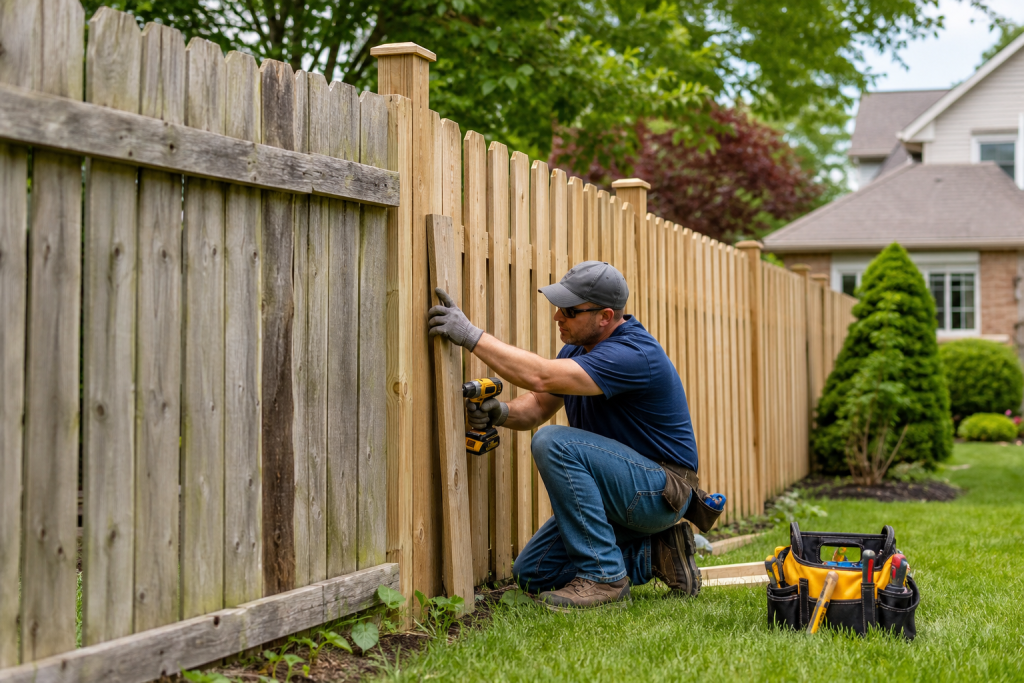
If you are facing a sagging panel, a leaning post, or visible rot, this article walks you through a 10 to 15 minute walkaround inspection, matches common problems to the correct wooden fence repair options, and lists the exact contractor questions Mississauga homeowners should ask before booking a quote. Use this checklist to decide whether a DIY fix is possible, whether a professional post replacement is required, and how to preserve curb appeal when you patch or replace boards.
A 10-15 minute Mississauga walkaround to diagnose the problem
Take a steady path along your property line, photograph each damaged section, and note the location by panel number or a nearby landmark. Check these five items in order and record what you find.
- Posts: look for leaning, movement, or gaps at the base. Push the top of a post gently and watch for wobble.
- Ground-level wood: press a screwdriver or awl into the post or bottom rail where it meets the soil. Soft, crumbling wood usually means rot rather than a simple surface problem. This field test is recommended by local homeowner guides because it reveals base decay that visual checks miss, see the GTA homeowner guide for details (gtafencingcompany.com).
- Panels and boards: note cracked, split, warped, or missing boards, and whether the damage is isolated or repeated along long runs.
- Fasteners and rails: check nails, screws, and horizontal rails for separation or broken connections.
- Surroundings: inspect drainage, vegetation touching the fence, and recent impacts from lawn equipment or vehicles.
For a homeowner action checklist and recommended photo documentation before you contact a contractor, see this local action guide (fencescape.ca).
Match the damage to the right repair method
After your inspection, match damaged components to one of these common wooden fence repair methods. Each entry explains when to choose it, the main benefit, and the limits to expect.
Board or panel replacement
When to choose it: one or a few boards are cracked, split, or rotted but posts and rails are solid. Benefit: fast and low cost, and it keeps the original fence line. Limit: visible grain or colour differences unless you match species and board width.
Pro tip: match wood species, board profile, and fastener type to keep curb appeal. Practical how-to resources explain correct fasteners, glue, and clamping techniques for neat repairs (djfencing.ca) and general guidance on material choice (howstuffworks.com).
Post splice or partial post repair
When to choose it: the post is damaged above ground but the buried portion remains sound. Benefit: less excavation and quicker work than full replacement. Limit: splice repair only works when the buried base has no rot and the post still carries load without excessive movement.
Full post replacement
When to choose it: screwdriver test reveals soft wood at ground level, multiple posts along a run show decay, or posts move when pushed. Benefit: restores structural integrity and prevents repeat failures. Limit: requires excavation, new concrete footings, and careful alignment to keep panels straight. Professionals typically remove the compromised post and set a new treated post in fresh concrete to meet load requirements.
Reinforcing and bracing
When to choose it: one or two posts are leaning from an impact or wind, but rot is not present. Benefit: faster and less costly than replacing a post. Limit: not suitable for rotted or repeatedly failing posts. Temporary bracing can be useful short term, but if the same post has been braced several times, replacement is usually the better long-term option.
Maintenance fixes: staining, sealing, and fastener replacement
When to choose it: the fence is structurally sound but shows weathering, surface rot, or failing fasteners. Benefit: extends life and improves appearance. Use decay-resistant materials and appropriate sealers to slow future rot. In the GTA climate, treated lumber and naturally durable species perform better over time.
Decide repair or replacement: a practical matrix
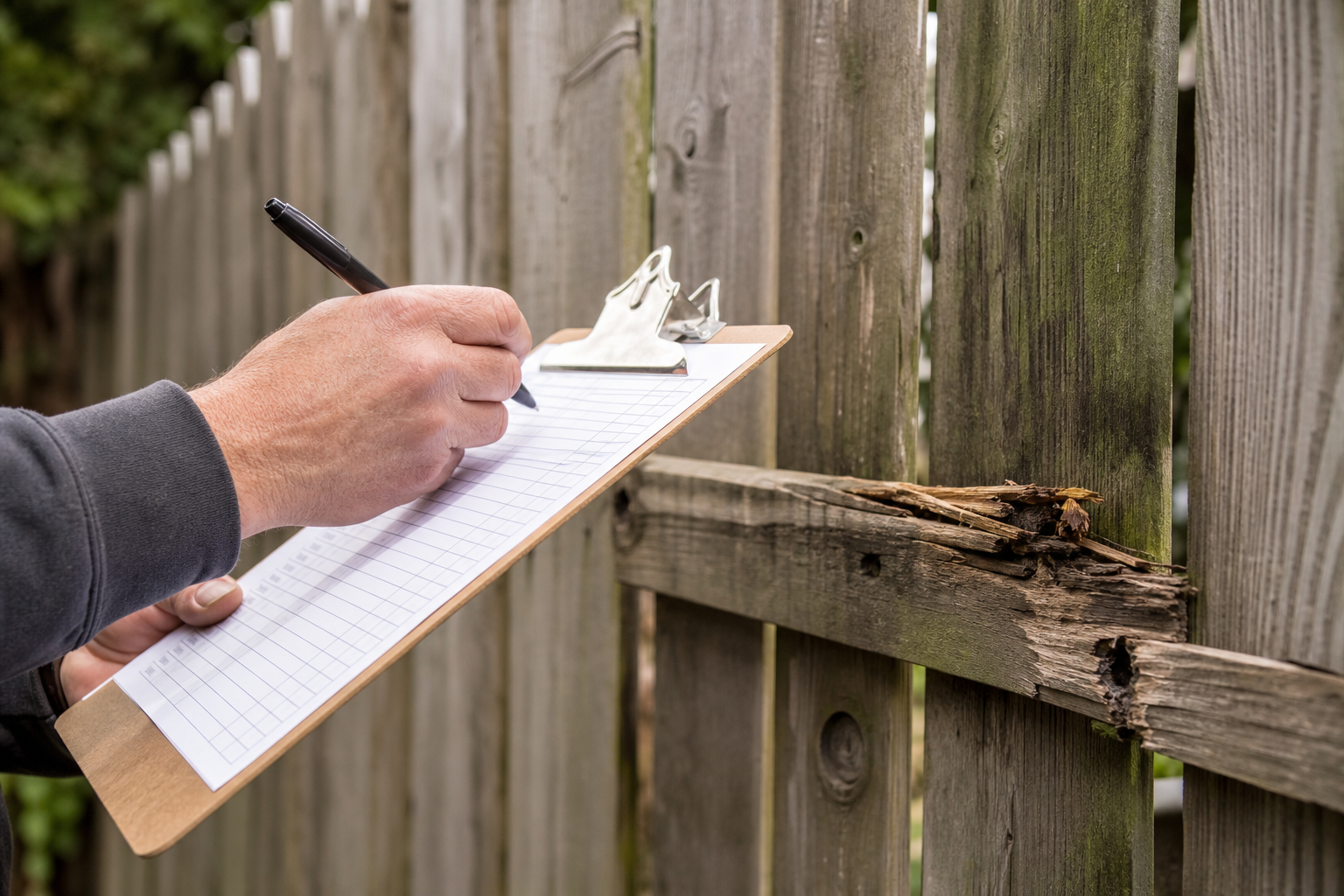
Use these criteria when deciding whether to repair the fence or replace it. If you answer yes to two or more items below, replacement often makes more sense.
- The fence is older and has required frequent repairs across different sections.
- Multiple posts are compromised, or long continuous sections need work.
- Structural safety is at risk, for example large sections lean or could collapse.
- Patching would leave a visibly mismatched appearance that undermines curb appeal.
When you evaluate long term value, weigh the cumulative cost and inconvenience of repeated repairs against the upfront cost of a full replacement. Local contractor resources explain how age, extent, and prior repairs guide that decision (djfencing.ca) and (gtafencingcompany.com).
When you can do it yourself and when to call a pro
Reasonable DIY jobs for a confident homeowner include board or single-panel replacement, tightening loose fasteners, and applying stain or sealer. These tasks need basic carpentry tools and the photos from your initial walkaround to document the condition.
Call a professional for full post replacement, multiple leaning posts, extensive rot at ground level, complex gate alignment problems, or when matching an existing fence profile is critical. Avoid the common DIY shortcut of bolting a new post to a rotted one, known as sistering, because experts report it frequently fails and only delays a proper repair. Home improvement resources warn that some shortcuts increase long term cost and risk (lowes.com).
Materials that last in the GTA climate and how they affect your repair choice
Material selection affects how long repairs last. Pressure-treated lumber and decay-resistant species such as cedar or redwood resist rot and reduce maintenance frequency. Fasteners should be corrosion-resistant to avoid staining and failure. When repairing, use materials that match the buried post treatment and board profile to avoid uneven weathering.
If your existing fence is a less durable species, consider replacing high-risk posts or bottom rails with pressure-treated components to extend the life of repaired sections. Practical how-to sources recommend treated lumber and weather-suitable finishes for durability (howstuffworks.com) and (djfencing.ca).
The exact questions to ask a Mississauga fence contractor before you book
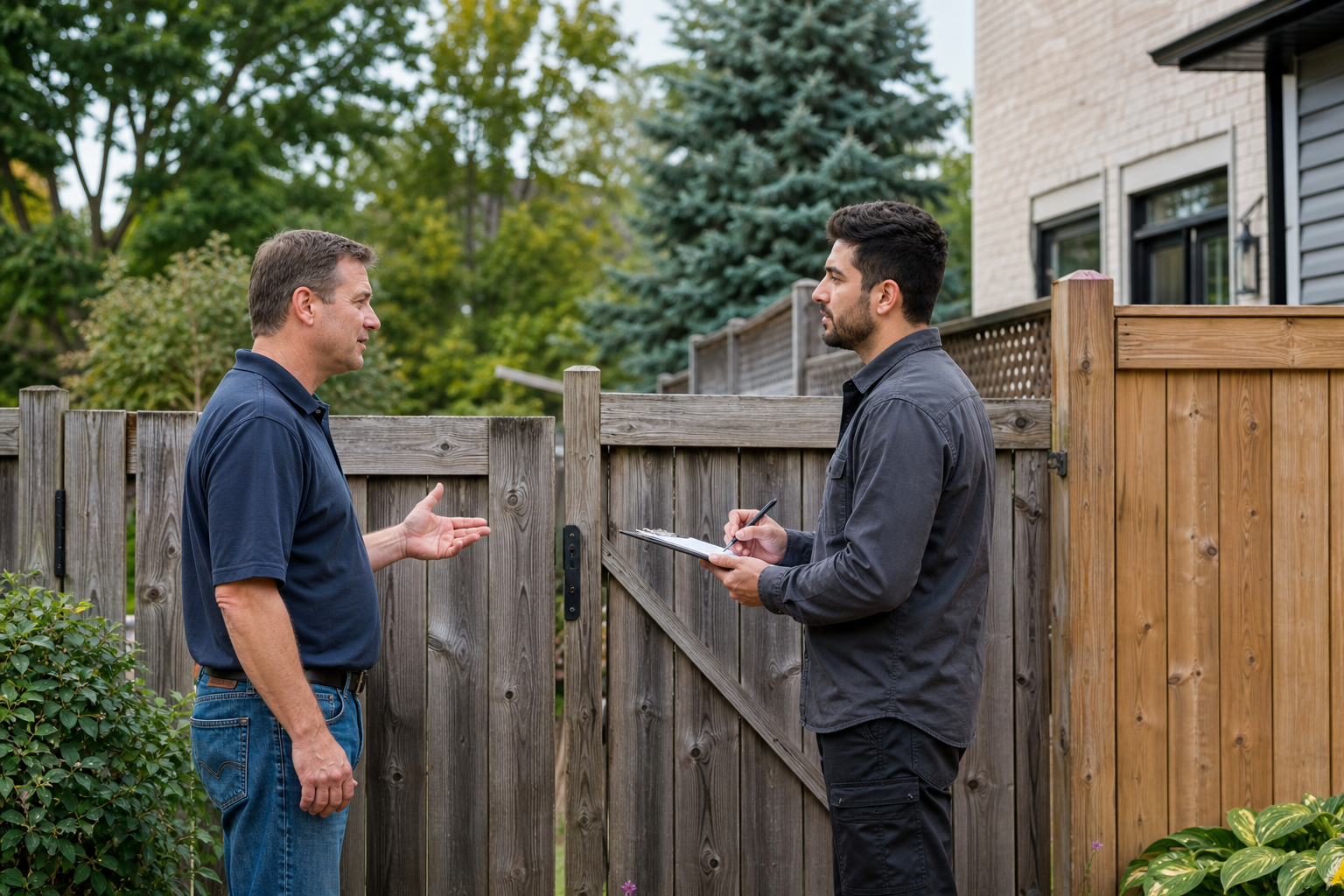
Use these verification points during calls or on-site quotes to compare bids and avoid surprises. Ask for written answers where possible.
- Are you insured and can you provide proof of liability insurance and WSIB or equivalent coverage? Request a copy or confirmation.
- How will you assess post rot and what is your method for replacing compromised posts? Ask whether they remove posts and set new posts in concrete footings.
- Will replacement boards match my existing fence by species, board width, and finish? Ask for example photos of previous matching work.
- Do you provide a timeline, a written quote that lists materials and labour, and a clear cleanup plan?
- Will any permits or neighbour approvals be required for the planned work, and will you handle permit applications in Mississauga?
- Can you provide local references or photos of similar repairs completed in the GTA?
Immediate Fence Repair is a Mississauga-based team that offers request-a-callback and appointment booking options on their site if you prefer a local on-site assessment and written quote (immediatefencerepair.com).
Mississauga-specific checks: property lines, bylaws, permits, and insurance notes
Confirm property lines before cutting into a shared fence to avoid disputes. Major replacements may require municipal permits or neighbour notification depending on scope. This article does not quote municipal bylaw text. For definitive rules contact the City of Mississauga or discuss permit handling with your contractor before work begins.
Also check whether your homeowner insurance has contractor requirements and whether the contractor will provide proof of coverage. These steps reduce the risk of unexpected liability during repair work.
What to expect during and after repair and the one-step next move
Professional post replacement normally includes removing the damaged post, digging out the old footing, setting a new post in concrete, realigning rails, and reattaching panels. Expect site protection for landscaping, daily cleanup, and a final inspection with you to confirm the finish. For maintenance tasks like staining, expect preparation, one or two coats, and a drying window depending on weather.
If you want an on-site assessment from a local Mississauga team, request a callback or book an appointment with Immediate Fence Repair for a professional inspection and written quote on materials and labour. Their website explains service areas and booking options (immediatefencerepair.com).
FAQ
How do I tell if a wooden fence post needs full replacement or just a repair?
Perform the screwdriver test at ground level. If wood is soft or crumbling, or the post moves when pushed, full replacement is usually required. Partial or splice repairs are only reliable if the buried base is solid and there is no rot at the footing.
When is it better to replace a wooden fence instead of repairing it?
Replacement is generally wiser when multiple posts or long runs are compromised, the fence is old with frequent repairs, or safety is at risk. If repairs would recur, a replacement gives better long-term value and a uniform appearance.
Can I safely repair a wooden fence myself and which jobs should I avoid?
Homeowners can handle board swaps, small panel repairs, and staining. Avoid full post replacements, multiple leaning posts, complex gate realignment, and any repair where rot reaches the buried post. These tasks need excavation, accurate concrete footings, and hardware alignment best handled by a professional.
What should I ask a contractor to ensure replacement wood matches my existing fence?
Ask for the wood species, board width, profile, and proposed fasteners. Request photos of past matching projects and ensure the written quote lists materials so you can verify the proposed match before work begins.
Do I need a permit or neighbour permission for fence work in Mississauga?
Permit requirements depend on the scope and height of the work. Neighbour approval may be necessary for shared fences. For definitive rules consult the City of Mississauga or discuss permit handling with your contractor before work begins.
Ready for a site inspection and a written quote from a Mississauga team? Request a callback from Immediate Fence Repair to schedule an on-site assessment and get a clear recommendation for wooden fence repair or replacement.