Deciding whether to repair a leaning or loose post or to replace it entirely is the single most important choice for a healthy fence. This article gives exact inspection steps, seven common mistakes homeowners make, a short repair versus replace checklist, and clear triggers for calling a professional. Immediate Fence Repair, a Mississauga-based fence and deck company, offers post repair and replacement services and can be booked for an on-site assessment if you need help making the decision.
Quick answer: repair, replace, or call a pro
If the problem is one isolated post and the buried end of the wood is still firm, resetting or splicing the post is usually viable. If the lower section flakes, feels spongy, or shows fungal growth, you are likely facing rot and should plan to replace the post. If several posts are loose, many bases show decay, or concrete footings have failed, replacement of larger sections is usually the correct option. These checks are recommended by professional fence services and home rehabilitation guidance.
For a short discussion on repair versus replacement see the GTA homeowner guide on repair or replacement and for practical wobble and rot checks consult a local field guide for contractors and DIYers.
Inspection checklist: exact steps to check a suspect post
Bring a shovel, work gloves, a pry bar, a hammer, and safety glasses. Work safely around buried services and do not dig without locating utilities if you suspect cables or pipes. Follow these steps in order.
- Shove test: at shoulder height push the post firmly. If the whole post moves with little resistance the footing or post is compromised. A simple shove reveals looseness that matters for the whole fence line.
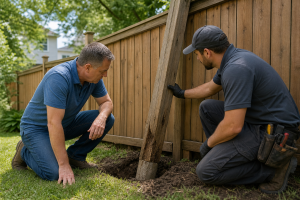
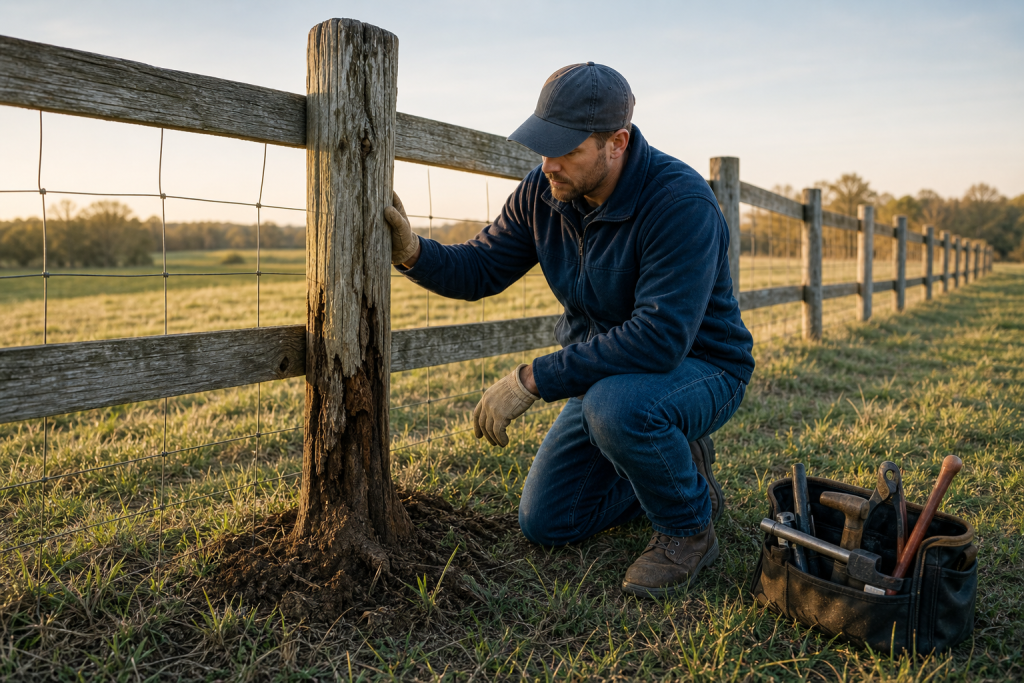
- Dig and inspect the base: dig down one side to expose the lower 10 to 20 centimetres of the post and the concrete pad if present. If the wood flakes, crushes, or feels spongy at the buried end, that is active rot and indicates replacement is likely. Rehabilitation and field guides recommend this direct inspection to detect subsurface rot.
- Look for fungal growth and staining: white or dark fungal staining near the post base is a clear sign the wood is decaying and will not reliably hold fasteners or panels.
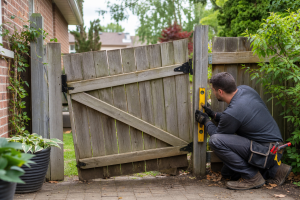
- Check how panels attach: loosen one rail or panel connection to see whether fasteners bite into solid wood. If nails or screws spin freely, the post core is compromised and replacement is the safer option.
- Inspect the concrete footing: if a concrete pad is cracked, separated, or crumbling, the post may not be stable even if the wood looks sound. Many professionals will replace both the post and its footing rather than only resetting an unstable pad.
These inspection steps mirror recommended field checks used by professional contractors and rehabilitation guidance such as HUD sitework recommendations and practical fence repair articles.
7 mistakes homeowners make before fence post repair

1. Did you assume the visible top equals the hidden base?
Why it matters: rot often starts below ground, so a post that looks solid above grade can be rotten at the buried end. Always dig down to inspect the base before deciding to reset or splice the post.
2. Did you test the post by pushing at shoulder height?
Why it matters: a visual check alone misses looseness in the footing. A firm shove at shoulder height shows whether the post and footing resist lateral loads. Ignoring this simple test leads to repairs that fail when wind or a gate opens.
3. Are you fixing decorative damage before structural problems?
Why it matters: homeowners often paint or patch visible boards first. Structural issues like an unstable post should be fixed first because the post is the entire fence’s foundation. Experts advise focusing on structural repairs before cosmetics.
4. Did you rely on surface dryness as proof of health?
Why it matters: a weathered but dry-looking post can still have internal decay. Soft internal wood will not hold fasteners. Use a probe or a screwdriver to test material soundness near the base.
5. Did you ignore nearby posts?
Why it matters: one failing post often signals stress on adjacent posts or shared footing failure. Replacing a single post without checking neighbouring supports can require repeated returns and extra cost.
6. Did you try to reset a post on crumbling concrete?
Why it matters: resetting a post into failing concrete only delays the problem. If the concrete footing is broken or separated, the correct fix is to replace the footing and post so the new post has a stable base.
7. Did you skip calling a professional when you should not have DIYed?
Why it matters: homeowners underestimate hidden issues such as buried concrete, wide area rot, or risk to gates and nearby structures. When several posts are affected, or when you find heavy rot at ground level, a contractor’s assessment prevents wasted labour and a second trip to replace rebuilt sections.
Repair versus replace: clear decision checkpoints
Use these simple yes or no checkpoints. Each yes moves you toward replacement or a professional call.
- If the base of the post flakes or feels spongy, plan to replace the post rather than repair.
- If only one post is loose and the lower section is solid, a reset or splice is often a reliable repair.
- If concrete footings are cracked or separated, replace the footing and post rather than merely resetting the post.
- If more than two or three posts along the same run show decay or looseness, schedule replacement of the section, as widespread failure usually means the system is at or near the end of its useful life.
These checkpoints align with the decision guidance found in professional fence repair resources and homeowner rehabilitation publications.
Mississauga and GTA context: why season and soil matter
In the Greater Toronto Area freeze and thaw cycles, and wet clay soils, increase frost heave and water retention around post bases. That movement and moisture accelerates rot and can make shallow concrete footings fail more quickly. When inspecting posts in Mississauga you should pay particular attention to footing movement and signs of long term moisture exposure. If you see seasonal heaving or saturated soil at the base, expect a more substantial repair than a simple reset.
When to call a pro and what a contractor will check

Call Immediate Fence Repair or another qualified contractor when you find any of the following: multiple failing posts, buried concrete that has separated from the post, rotted posts at or below ground level, or a gate that no longer closes safely. A professional inspection will include a full walk of the line, excavating suspect post bases, checking footings, measuring panel alignment, and advising whether targeted repair or section replacement is best. Immediate Fence Repair offers callback and booking options through their site for prompt assessments.
Common homeowner objections and how to judge them
“I can do this myself” is only true when the issue is one isolated post and you are confident the base is sound. If you are unsure, a pro will avoid repeat work. “It looks minor” is not proof, because rot at the buried end can be invisible. “I do not want to spend now” risks a larger failure and higher replacement cost later. “Do I need a permit” varies with location and scope of work, so check with your municipality; do not assume permits are or are not required without a local check.
Printable inspection checklist and next step
Use this compact checklist when you inspect a suspect post. If any box is true, plan replacement or call a professional.
- Shove test shows excessive movement
- Lower 10 to 20 cm of post flakes, crushes, or is spongy
- Fungal growth or dark staining at the base
- Fasteners spin freely in the post
- Concrete pad is cracked, separated, or crumbling
- Two or more posts along the run show the same problem
For a fast, on-site assessment you can request a callback or book an appointment with Immediate Fence Repair through their official site. A professional visit confirms whether a targeted fence post repair will hold, or whether replacement is the safer, more durable choice.
Frequently asked questions
How can I test whether a wooden fence post can be reset instead of replaced?
Perform a shoulder-height shove test, then dig down one side to expose the buried end. If the buried wood is firm and not spongy, a reset or splice may work. If the base flakes or shows fungal growth, replacement is usually necessary. See field inspection guides for recommended digging and probing techniques.
What are the quickest signs that a fence post has rot at ground level?
Visible soft or crumbling wood at the base, fungal staining, and fasteners that no longer bite into solid wood are quick signs. A probe or screwdriver pushed into the base will show whether the wood is sound or decayed.
Will replacing a single post fix a leaning fence or should I expect more work?
Replacing a single post can fix a leaning section if the adjacent posts and footings are sound. If several posts are loose or footings show movement, you will likely need section replacement to restore long term stability.
Do I need a permit in Mississauga to replace fence posts or foundations?
Permit requirements vary by municipality and by the scope of work. Check with your local city office before digging or replacing footings to be sure. A contractor can often advise about local rules but do not rely on online guidance as a substitute for municipal confirmation.
What immediate steps should I take if a post falls after a storm to protect my property?
Secure any exposed sharp edges, move or brace the fallen section to prevent trespass or injury, and call a contractor for an emergency assessment. Avoid temporary fixes that could create a safety hazard.
Immediate Fence Repair offers fast assessments and same-day response options for homeowners in Mississauga and the GTA. Ready to book an on-site assessment with Immediate Fence Repair? Request a callback or book online.
Selected further reading and inspection references: HUD sitework rehabilitation guidance, local fence repair checklists, and professional repair versus replacement discussions are useful background when you perform these checks.