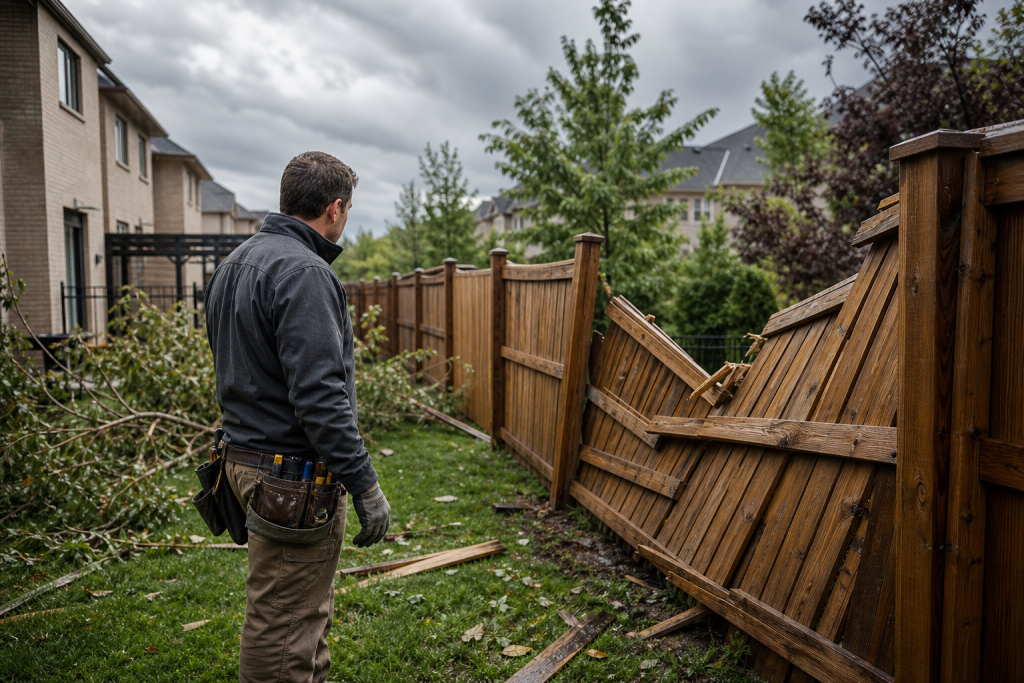
If a recent storm left your fence leaning, broken, or scattered with debris, this checklist will help you act quickly and confidently. Use these seven on-site checks to secure safety, collect insurer-ready evidence, prioritise what to fix now, and decide whether to repair or replace. The steps are written for Mississauga and GTA homeowners who need practical, local next steps and a fast contact for a same-day inspection.
How to use this checklist
Start at item 1 and work through the numbered list on-site. If you see any electrical, structural, or personal-safety hazards, stop and call emergency services before approaching the fence. If you prefer a fast, professional assessment instead of a DIY inspection, Immediate Fence Repair offers same-day inspection and callback booking — call +1 (437) 990-5158 or visit the Immediate Fence Repair website to request an appointment.
-
1. Do immediate safety and hazard checks first
Before touching anything, look for hazards you cannot safely manage. Stay back from downed or low-hanging power lines, avoid unstable fence sections that could fall, and watch for standing water or loose debris that could hide sharp objects. If you detect electrical, gas, or structural danger, call emergency services and do not attempt to stabilise the fence yourself. Safety-first inspection steps like these are recommended in industry post-storm guides to prevent injury and further damage (after the storm and fence storm damage).
What to bring on the first walk-through: a charged phone for photos and calls, gloves, a flashlight if lighting is poor, and a notebook to record times and observations.
-
2. Photograph and document the damage for insurance and records
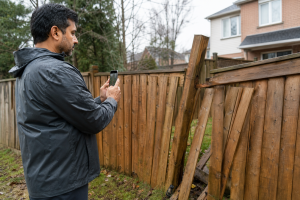
Document everything before you move or clear debris. Take wide-angle photos of the whole fence line, mid-range shots that show each damaged section in context, and close-ups of broken posts, snapped fasteners, or rot. Capture video panning along the fence to show continuity of damage and narrate what you see, saying the date and time on camera if possible. Save local storm reports or weather data for the date and time of the event; insurers commonly request proof that the damage was caused by a qualifying storm event. These documentation steps are commonly advised by experts handling storm-damage claims (Fence Storm Damage: Emergency Repair, Insurance Claims & Prevention).
Record whether neighbouring property was affected and whether your fence damaged a neighbour’s items. Keep all receipts if you make emergency purchases (sandbags, temporary bracing materials) — insurers may reimburse immediate, reasonable expenses.
-
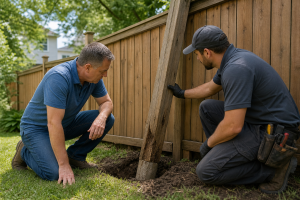
3. Inspect posts and footings first: structural priority
Start your technical inspection with fence posts and their footings. Posts are the structural backbone: a single damaged board is cosmetic, but failing posts mean the fence cannot be repaired reliably. Check each post for vertical plumb, lateral movement, and soft or spongy wood at the ground line. If concrete footings are cracked or pulled out, the post may require replacement. Guides for homeowner inspections note that isolated panel damage with solid posts generally points to repair, while multiple failing posts or footing failure typically means replacement is the practical choice (Fence Repairs Near Me and Fence Repair or Replacement: How to Decide).
How to test a post: push on the post at shoulder height with steady force. Less than an inch of movement is usually acceptable; visible wobble, leaning more than a few degrees, or soft rot at the base indicates the post should be dug out and evaluated by a professional.
-
4. Check panels, boards and fasteners for repairable damage
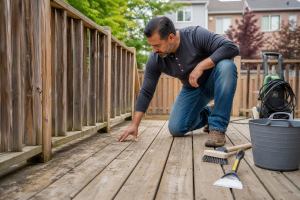
Examine panels, pickets, rails, and fasteners. Replaceable, repairable signs include split boards, missing screws or nails, and isolated blown-off panels. Active wood rot, long cracks through boards, or panels that no longer fit the rails suggest more extensive work. Mark each repairable defect and estimate the number of panels or boards affected — repair is cost-effective when damage is localised and cosmetic, but replacement is often better when more than a few contiguous panels are compromised. Practical DIY and professional repair workflows for storm-damaged boards are described in how-to resources and can help you decide whether to buy parts or call a contractor (homeowner action guide and How to Repair a Fence Damaged by a Storm).
Tip: number the damaged panels with chalk or tag them so you and a contractor agree on the scope during the first site visit.
-
5. Inspect gates, hinges and alignment: identify stress points

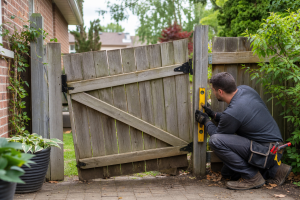
Gates transmit loads into posts and can accelerate fence failure. Check gate alignment, latch engagement, and hinge bolts. A sagging gate, a gate that drags on the ground, or hinges pulled away from the post indicate the post or its connections are under stress and should be prioritised. Left unchecked, a failing gate can damage adjacent panels and increase overall repair costs. Homeowner inspection checklists highlight gate issues as common triggers for broader repairs (Fence Repairs Near Me).
If the gate has electrical elements, such as an automatic opener, document those components separately and avoid operating the mechanism until a professional inspects it.
-
6. Make safe temporary stabilisation choices now
For immediate safety and to limit further damage, use temporary stabilisation: prop a leaning post with a diagonal brace, reattach loose boards with galvanized screws, and clear windborne debris from the fence line. Keep temporary fixes conservative — do not excavate around footings or cut posts unless you know what you are doing. When damage is severe or posts are uprooted, call a professional for emergency stabilisation rather than attempting complex structural fixes yourself. Industry advice for homeowners recommends DIY temporary measures for isolated, low-risk issues and professional support for broader structural failures (Fencing Direct and Modern Fence & Deck).
Materials to keep on hand for short-term bracing: treated timber for a diagonal brace, ratchet straps to hold panels temporarily, heavy-duty screws, and plastic sheeting to shield exposed wood from rain until repairs can be scheduled.
-
7. Use clear thresholds to decide repair versus replacement and choose a local contractor
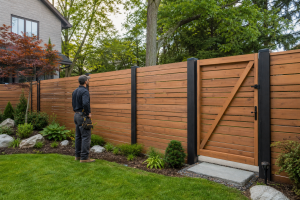
Decision thresholds made simple: if damage is confined to isolated panels or pickets and most posts are solid and straight, a professional repair keeps costs and disruption low. If multiple posts fail, concrete footings are lifted, rot is widespread, or the fence is near the end of its expected life, replacement is often the more cost-effective and long-lasting choice. These thresholds align with regional advisory guidance on repair versus replacement decisions (GTA homeowner guide).
How to choose a Mississauga contractor: prioritise response time, local reviews, clear written estimates that separate materials and labour, warranty terms for work and materials, and evidence of experience with storm repairs and post replacement. Ask whether the contractor handles insurance documentation and whether they can provide emergency stabilization the same day. Immediate Fence Repair offers on-site assessments and booking by phone or online for Mississauga and the GTA; visit the Immediate Fence Repair website or call +1 (437) 990-5158 to request a same-day inspection.
Frequently asked questions
What should I do first after storm damage to my fence?
First, assess safety: stay away from downed power lines and unstable sections, then photograph and document the damage without moving anything. If there is an immediate hazard, contact emergency services. For non-hazardous damage, follow this checklist and call a local fence contractor if you need a same-day assessment.
How do I know whether to repair or replace a storm-damaged fence?

Repair when damage is isolated and posts and footings remain solid. Consider replacement when multiple posts or footings have failed, rot is widespread, or the fence is at the end of its useful life. Industry sources suggest replacement when repair costs approach a large share of a new fence or when structural integrity is compromised (GTA homeowner guide).
What photos and documents do insurers usually require for a storm-damage fence claim?
Insurers typically want wide and close-up photos, video showing the full fence line, a dated timeline of the storm, and local weather reports confirming the storm event. Keep records of emergency purchases and any communications with neighbours or contractors. Documenting before you clear debris is important (Fence Storm Damage).
Can I safely stabilise a leaning fence post myself and for how long?
You can install a temporary diagonal brace or ratchet strap to reduce movement for a short period, but temporary measures are only for safety and to limit further damage. Do not excavate or attempt permanent structural repairs without experience. If posts are uprooted or footings have failed, call a professional for emergency stabilization.
How do I find a reliable fence repair company in Mississauga that responds quickly?
Look for local companies that offer on-site assessments, clear estimates, and explicit response-time commitments. Ask about warranties and whether they assist with insurance documentation. For Mississauga homeowners needing quick help, Immediate Fence Repair provides local assessments and same-day inspection booking; call +1 (437) 990-5158 or visit the Immediate Fence Repair website to request service.
Next steps and a local contact
If you want a professional, same-day inspection in Mississauga, call +1 (437) 990-5158 or request a callback on the Immediate Fence Repair website. Their team provides on-site assessments, fence post repair and replacement, new wood and composite installations, and emergency stabilization across the GTA.
Key takeaway: document first, stabilise safely, prioritise posts and gates, then choose repair or replacement using the simple thresholds above. When in doubt, book a prompt inspection so experts can confirm the scope and protect your property.