Choosing a semi-privacy fence with lattice balances screening, airflow and a decorative top. Before you commit, run a short series of checks to avoid common mistakes that cause early rot, poor stability, permit problems or neighbour disputes. This article names the installation, material and permit risks to inspect, and gives exact questions to bring to a contractor quote so you get a durable result for your Mississauga property.
What a semi-privacy fence with lattice is and when it suits your yard
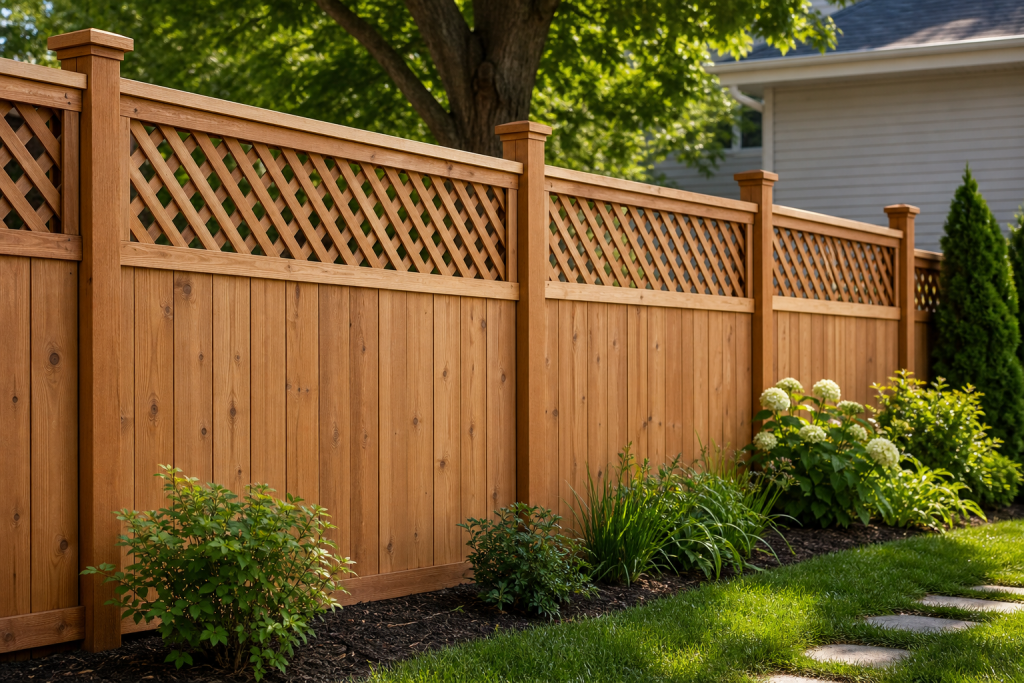
A semi-privacy fence uses closely spaced boards for most of the panel with a lattice top or an open section above the solid boards. The lattice adds light, airflow and a decorative cap while increasing screened height without a full privacy wall. Homeowners choose this style when they want privacy at eye level, better air circulation for plants, or a more attractive roofline for the fence. Immediate Fence Repair lists semi-privacy and full-privacy wooden fence designs and custom lattice options on its website for local examples.
Mississauga permit, height and setback checks you must run first
Local rules determine whether you need a permit, where a fence may sit relative to the sidewalk or street, and height limits in sight triangles. Before ordering materials or signing a contract, confirm current requirements on the City of Mississauga fence information resources so you and your contractor agree on a compliant plan and avoid rework or enforcement notices. Verify permitted fence heights, corner sight-line restrictions and whether a building permit or other approvals are required for your lot type.
Installation and structural mistakes that shorten a lattice fence’s life

Many failures in lattice-topped fences come from weak foundations and poor detailing where the lattice attaches. Watch for these construction errors and require the corrective specifications in writing:
- Shallow or undersized posts, which let panels lean during wind or frost. Ask for post diameter and minimum embedment depth that account for local frost conditions and soil type.
- Insufficient concrete footings. Posts set only in loose backfill or a small, inadequate concrete volume will move or fail sooner. The quote should state footing dimensions and concrete mix or class.
- Poor lattice fastening. Lattice nailed only at a few points will sag or detach. The contractor should specify how the lattice is fastened to the top rail or cap, including fastener type and spacing.
- Low ground clearance. Boards that touch the soil wick moisture and rot. Require a minimum clearance between the bottom board and soil or paving, and request treated or sealed cut ends for exposed edges.
- No allowance for drainage and frost heave. Drainage that channels water into post holes accelerates rot and movement. Verify the contractor will grade around posts and add drainage where needed.
- Unprotected post bases and cut ends. Freshly cut timber and post bottoms must be sealed or be rot-resistant species or pressure-treated. Confirm the rot-protection method for any field cuts or notched areas.
Material and maintenance tradeoffs: cedar, pressure-treated wood and composite lattice
Material choice affects appearance, maintenance frequency and long-term performance in Mississauga’s climate. Consider these tradeoffs when you compare quotes:
- Cedar looks warm and weathers attractively. It resists insects and checks less than some species, but it still needs periodic sealing or staining to maintain colour and limit surface weathering.
- Pressure-treated wood gives strong rot resistance for posts and lower boards. It is often used for structural parts while a more attractive species is used for visible boards and lattice. Treated wood may accept stain differently, so discuss finish plans with your installer.
- Composite panels and lattice reduce routine maintenance because they do not need regular staining. Composite lattice must be fastened with suitable fasteners and allowances for thermal movement. If composite is used on top, confirm attachment details and how expansion is handled.
Fastener selection matters across all materials. Corrosion-resistant screws and coated or stainless steel fasteners reduce staining and splitting. Ask whether the installer uses fasteners compatible with treated wood or composite materials.
Boundary, shared-fence responsibility and neighbour communication
Disputes often start because property lines or shared responsibilities were not confirmed. Confirm your property lines before work begins and check local guidance about dividing line fences. If the fence sits on a boundary, decide and document who pays for which parts and get written neighbour consent where possible. For corner lots, ensure fence placement does not encroach into sight triangles for vehicle safety. Written agreements and early communication reduce later disagreements.
Exactly what to ask a contractor and what should appear in a written quote

Use this precise question list when you contact a contractor and require these items in the written quote so comparisons are apples-to-apples:
- Post specifications: diameter, timber species or material, embedment depth and concrete volume per post.
- Lattice attachment: fastening method, fastener type and spacing, and whether a top cap or fascia will be installed.
- Rot protection: how post bases and all cut ends will be sealed or whether rot-resistant stock is used.
- Permit handling: whether the contractor will pull permits or submit documentation, or whether that is the owner responsibility.
- Site preparation and disposal: removal of the old fence, debris hauling and restoration of disturbed areas.
- References and photos of recent, similar lattice-topped installations in the local area.
- Insurance and warranty: proof of liability insurance and a written warranty that states what is covered and for how long.
- Itemized quote: separate line items for materials, labour, permit fees, removal and disposal, and an explicit schedule window for starting work.
Immediate Fence Repair lists full-service options and callback booking on its website. Choose a contractor who documents these specifics rather than providing a vague total price with no scope detail.
How to spot real red flags in a pitch or a quote
Pause and ask for clarification or a second opinion if you see any of the following in a contractor pitch or quote:
- Vague specifications such as simply listing “wood posts” with no size, embedment or concrete detail.
- No discussion of rot protection, sealed cut ends or post base treatment.
- Refusal to provide proof of insurance or local references.
- Cash-only requests with insistence on no written contract.
- No plan for permit handling or unwillingness to sign a permit application as the installer when required.
- Extremely low bids that omit disposal, site cleanup or proper fastening details.
- A warranty that is verbal only or that excludes workmanship or structural failures.
Decision checklist and contractor-ready template you can use today
Use this compact checklist when you request a quote. Print it or copy it into an email to a contractor.
- Municipal checks done: property lines, corner sight lines, height limits and permit triggers verified with City resources.
- Post specs required: material, diameter, embedment depth and concrete volume confirmed.
- Lattice fastening: method, fastener type and spacing specified.
- Rot protection: treated posts or preservative for all cut ends noted.
- Disposal and site restoration included in the quote.
- Proof of insurance and a written warranty supplied with the quote.
- References and photos of completed lattice fences provided.
Template message to request a callback or quote:
Hi, I am considering a semi-privacy fence with lattice and would like a written quote. Please confirm post size and depth, concrete footing spec, lattice fastening method, rot protection for cut ends, permit handling, removal of old fence, warranty details, and your availability for a site visit. Thank you.
Send that message to a local installer or request a callback via the Immediate Fence Repair website at https://www.immediatefencerepair.com/ or call the office at +1 (437) 990-5158 for an appointment and on-site assessment.
Frequently asked questions
Do I need a permit in Mississauga to install a semi-privacy fence with lattice?
Check City of Mississauga fence information resources for current height limits, sight-line rules and permit triggers before you begin. Those municipal resources explain when permits or approvals are required and how to proceed with an application.
Who is responsible for a shared fence on a boundary line in Mississauga?
Responsibility for a shared fence is often negotiated between neighbours. Confirm the property line first and follow municipal guidance about dividing fences. A written agreement that clarifies cost sharing and maintenance responsibility reduces later disputes.
Will adding a lattice top increase maintenance or rot risk?
Adding a lattice increases exposed joints and fasteners, which raises maintenance needs. Proper fastening, good ground clearance, rot-resistant materials for the top cap, and sealing cut ends reduce those risks. Discuss maintenance expectations and a recommended upkeep schedule with your contractor.
How deep should posts be for a lattice-topped semi-privacy fence in our climate?
Post depth must account for frost heave and wind loads. Require the contractor to state embedment depth in the quote and to use an appropriate concrete footing. Ask for local references or an engineering detail for exposed or high-wind locations if you are unsure.
Can I add lattice to an existing fence later or is it best installed with the fence?
You can add lattice later, but it is easier and more secure when planned at installation. Retrofits must account for attachment points, post capacity and overall height rules. If you plan an addition, ask the installer to leave a suitable top rail and attachment detail during the initial build.
To get a precise quote or site assessment, request a callback via https://www.immediatefencerepair.com/ or call +1 (437) 990-5158. Ready for a precise quote or a site assessment?