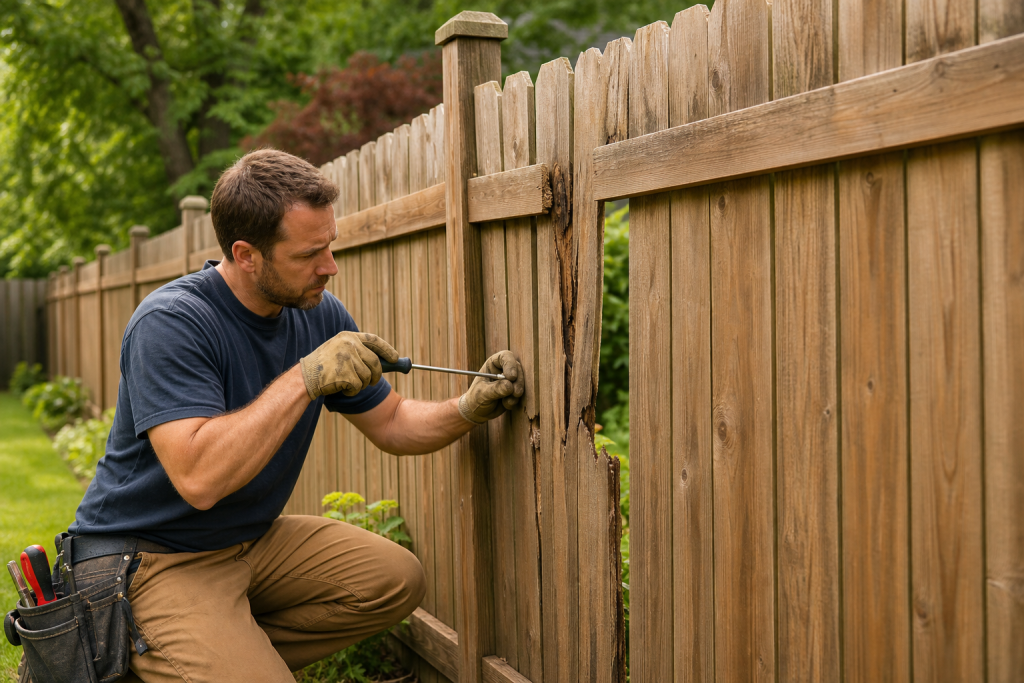
Quick 10-minute inspection checklist you can do today
What you need: a tape measure, a small screwdriver or awl for a soft-wood probe, a camera or phone, and a partner if gates are heavy. Walk the fence once and follow the ordered checks below. Stop and call a pro if any check shows structural failure or a safety hazard.
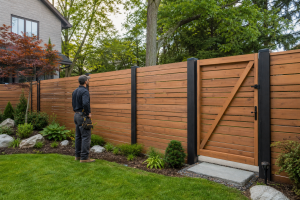
- Scan for leaning sections and note locations.
- Tap fence posts and boards, then probe at ground level and about 10 cm above grade.
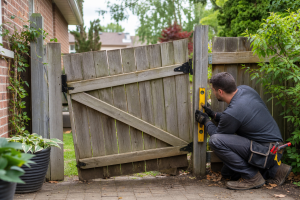
- Open and close gates, looking for racking or dragging.
- Inspect fasteners for heavy corrosion and missing nails or screws.
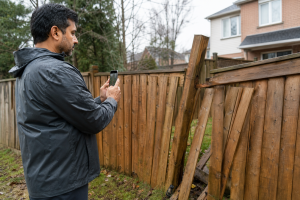
- Photograph problem areas and measure any affected run lengths.
Safety note: do not stand beneath a visibly unstable section. If the fence looks ready to fall, keep clear and schedule an immediate assessment.
Step 1: inspect the posts, the single most important structural check
Why posts matter: posts bear the load and keep panels plumb. If posts fail, simple board repairs will not last. Perform three checks:
- Visual lean test: step back and look along the fence line. A post that leans or drags its panel indicates foundation movement or rot.
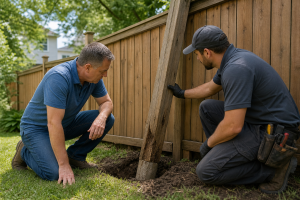
- Probe at grade: use a screwdriver or awl to press into the post about 5 to 15 cm above ground. Soft, crumbling wood at or just above grade usually means rot. Rotten posts at grade are a common reason contractors recommend full replacement rather than patching, because the footing and below‑grade timber are compromised.
- Push test: with a partner, apply firm pressure to the post. Any noticeable movement at the base means the post footing is compromised.
If posts are rotted at grade, replacement of that post is required and may make section replacement more cost effective. Contractors commonly treat rotten posts as a threshold for replacement rather than repeated repairs (see regional contractor guidance).
Step 2: check boards, fasteners, and gates to separate cosmetic from structural problems

Look for two groups of issues: cosmetic weathering and structural weakening.
Cosmetic signs (usually repairable)
- Silvering or surface weathering of cedar boards.
- Minor splits and hairline cracks that do not go through the board width.
- Loose pickets that reattach with new screws or nails.
Structural signs (may need section or full replacement)
- Boards split completely through or missing large portions.
- Racked or twisted gate frames where the latch no longer lines up.
- Fasteners that have corroded through or left wide gaps between boards and rails.
Fastener note: screws and nails that are heavily corroded or that spin out when tightened usually indicate a hardware-level failure that can let the entire panel move. When replacing fasteners, contractors typically prefer galvanized or stainless steel to slow future corrosion in wet sites.
Gate-specific note: gates are a frequent failure point in GTA winters. If the posts are plumb and the gate frame is not racked, a professional can often realign or rebuild the gate hardware. If the gate frame or posts are beyond alignment, replacement will be recommended.
Step 3: measure the damage — percent-of-sections and cost thresholds professionals use
Two practical contractor rules of thumb help decide repair versus replace:
- If damaged sections are limited and posts are sound, repair is often worthwhile.
- When more than about 20 to 25 percent of panels or sections are affected, or damage is scattered across the run, replacement becomes more attractive.
- If the estimated repair cost approaches a large fraction of replacement cost, commonly cited near 50 percent, choose replacement for value and longevity.
Also use age as an input. In Ontario, cedar fences commonly have expected service lives around 15 to 25 years depending on site exposure and maintenance. If your fence is near the top of that range, replacement becomes more defensible.
When collecting quotes, ask contractors to provide itemized repair and replacement options so you can compare the total cost and expected life. Request that they note which posts were tested and which panels they expect to reuse.
Step 4: factor in Mississauga and GTA conditions that speed failure

Local climate and site conditions in Mississauga and the broader GTA affect cedar longevity. Include these in your decision:
- Freeze-thaw and winter loads, where snow, ice, and repeated freeze-thaw cycles stress joints and hardware.
- Poor drainage and standing water, since posts sitting in wet soil rot faster and standing water at a post base is a sign to expect deeper decay.
- Sprinkler spray, because repeated irrigation accelerates decay at posts and reduces fastener life.
- Snow-clearing damage, which often affects gates and lower boards and can cause misalignment over several winters.
These local factors can change a repair from a sensible short-term fix into an expense that will repeat. Inspect post footings, look for water pooling, and note any regular sprinkler overspray near the fence line.
Decision flow: repair, partial replace, or full replace and what to expect
Use the following ordered flow when deciding. For each outcome you will see the described contractor actions on site.
- Repair, choose when posts are solid, damage affects less than about 25 percent of sections, and repair cost is well below replacement. Expect: replace boards and fasteners, tighten or reset rails, and reattach or realign gate hardware. Repair work for small jobs often takes a few hours to a day.
- Partial replace (sectional), choose when one or a few posts are failing or several adjacent panels are damaged. Expect: dig and set new posts with proper footings, install new rails and fresh cedar panels for the affected run, and reconnect existing sound sections to new posts. Sectional jobs commonly take one to two days depending on access and footing requirements.
- Full replacement, choose when multiple posts are rotten at grade, damage exceeds the practical repair threshold, or the fence is near the end of its expected life. Expect: removal of old posts and panels, new footings and posts set to current best practice, and full reinstallation of cedar panels or a material change if specified. Full replacements require scheduling and a written scope of work.
If you are uncertain about structural issues, request an on-site structural check with a contractor rather than guessing. Professionals will test post footings, measure run straightness, and provide a repair versus replace estimate with line items.
What to prepare before a pro assessment and questions to ask your contractor
Before the visit, gather:
- Photos of the fence line (wide and close-ups) and notes on when damage began.
- Measurements of the damaged run length and gate opening width.
- Any known property-line or neighbour agreements relevant to the fence.
- Records of past repairs or warranties if available.
Ask these contractor questions during the assessment:
- Will you test and report on post footings and hidden rot? Ask for a clear finding in writing.
- What is covered by your warranty and for how long?
- Will you provide itemized repair and replacement quotes so I can compare total cost and expected life?
- How will you protect landscaping and handle debris removal?
- Do you recommend changes to drainage or sprinkler placement to prevent future rot?
These items keep the estimate comparable and help you evaluate whether repair or replacement delivers better value.
Next steps and how Immediate Fence Repair helps
If you want a local assessment, Immediate Fence Repair is based in Mississauga and serves the GTA with fence post repair, wooden fence repair, new wood fence installation, and cedar work. You can request a callback or book an appointment online through Immediate Fence Repair to schedule an on-site inspection and itemized quote.
The team can test posts, recommend sectional or full replacement when appropriate, and explain how local drainage and winter exposure affect the recommended scope. Use their assessment to compare repair and replacement options with clear line-item pricing.
Frequently asked questions
When is repairing a cedar fence post enough and when must the post be replaced?
Repair is reasonable when the post is firm at the base, the region above grade is sound, and movement is limited. Replace when probing shows rot at or just above ground level, when the post moves in the footing, or when multiple posts on the same run are compromised. Posts rotten at grade commonly force replacement because the footing and structural support have failed.
How can I tell if cedar boards are still structurally sound or only cosmetically weathered?
Cosmetic weathering is surface silvering and minor splits. Structurally compromised boards are soft when probed, split through their width, or allow light to pass through gaps where rails should hold them. If many boards share these failures or rails are loose across sections, consider sectional replacement.
If I choose repair, how long can I reasonably expect the work to last compared with replacement?
Repair life depends on site conditions and how much of the structure is replaced. Repairs to sound posts and isolated boards often last several years; repairs over damaged footings or widespread rot are at risk for repeat problems. A full replacement typically provides the longest service life because it addresses posts, footings, and hardware together.
What information should I have ready for a contractor to get an accurate on-site quote?
Provide photos, the damaged run length, gate width, records of prior repairs, and notes about drainage or sprinkler locations. Tell the contractor about any neighbour agreements or known property-line issues so the estimate includes any permit or boundary work.
Ready for an on-site inspection with a Mississauga fence company that can test posts, offer itemized repair and replacement quotes, and explain local winter and drainage impacts? Immediate Fence Repair can schedule a callback or appointment to inspect your cedar fence and recommend the right outcome?