If your deck railing feels wobbly, shows rust, or has loose balusters, you can make a fast, safe assessment before calling a contractor. This seven-point checklist walks Mississauga and GTA homeowners through a short safety inspection, material-specific fixes, rule-of-thumb repair-versus-replace criteria, and what to expect when you book a local pro. Use the quick checks below to prioritise urgent issues and gather the facts a contractor will need.
1. Do a quick safety inspection and gather simple tools
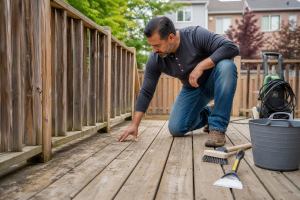
Time 10 to 15 minutes. Stand back first and scan the entire railing run for obvious damage: leaning sections, missing spindles, open gaps, or cracked top rails. Then perform these hands-on checks while wearing sturdy shoes and gloves.
What to test
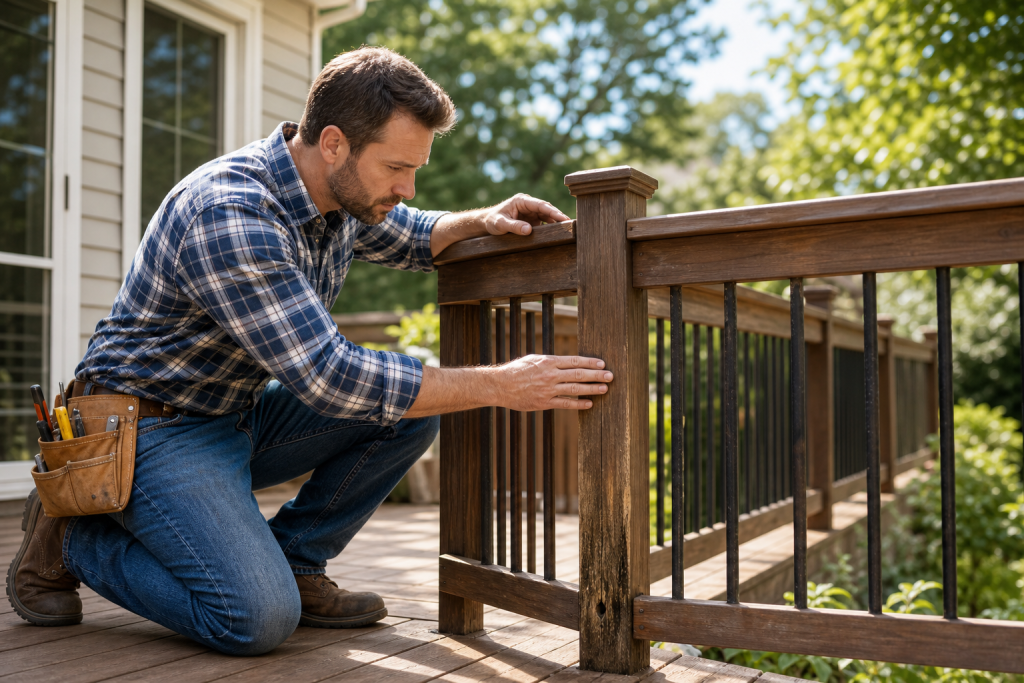
- Grip and wiggle each post and top rail. Any movement at the base or along the ledger is a concern.
- Push outward on the top rail and apply downward force to each post to detect looseness.
- Inspect fasteners for rust, stripped heads, or pulled screws.
- Look under the deck and at ledger attachments for rot, gaps, or movement at the ledger connection.
Tools to have on hand: a flashlight, pry bar, adjustable wrench, screwdriver set, a hammer, and a short level. For a printable seasonal checklist adapted to Ontario conditions, see a spring inspection guide that highlights freeze-thaw, snow load, and salt exposure here.
One-sentence stop rule: if a post moves more than an inch (25 mm) under hand pressure, or you see extensive rot at the post base or ledger, stop and schedule a professional inspection immediately.
2. Test posts and attachments: the single most important check
Posts transfer railing loads to the deck and foundation, so a loose or rotten post is the most common safety failure. Grasp each post 6 to 12 inches above the deck and push and pull firmly. Also check the ledger where the deck meets the house, because failed ledger connections are a serious structural risk. Make these checks part of your annual routine as recommended by deck safety resources here.
What movement means and short-term fixes
- Minor wobble with solid wood and rusted fasteners: tightening or replacing the fasteners may restore safety.
- Wobble plus visible rot at the post base: the post must be assessed and likely replaced, not merely tightened.
- Ledger movement or separation from the house: avoid DIY shimming. This needs an immediate professional evaluation.
3. Wood railings: common failures and practical repairs

Wooden railings commonly fail at the post bottom, baluster connections, and where screws or nails have corroded. Start by replacing corroded screws and fasteners with corrosion-resistant options. For small rot spots, a combination of mechanical repair and epoxy can be used for non-load-bearing trim; however, load-bearing members, such as posts and ledger boards, must be replaced if they show significant decay.
Practical step-by-step fixes you can try safely
- Replace screws and lag bolts with stainless or hot-dipped galvanized fasteners to resist salt and moisture.
- Tighten loose balusters and re-fastening point-loaded connections with new screws or brackets.
- For a cracked post that is still mostly sound, sister a new post alongside the original and through-bolt into the framing, then trim and finish to match.
- When rot is confined to a small area of a rail, remove the damaged wood, treat surrounding timber, and use an epoxy patch intended for structural repair only if the piece is non-load-bearing.
Warning: do not rely on epoxy or cosmetic fixes for a primary load-bearing post or an unstable ledger; these are safety-critical elements and replacement is the correct long-term solution, as noted by decking specialists here.
4. Composite railings: what you can repair and what to replace
Composite rails use internal framing and hidden fasteners. Common failures include pulled or stripped hidden fasteners, cracked cap rails, and separation where the composite attaches to the framing. Because composite materials behave differently than wood, the correct approach is often to replace the failed component rather than force a patch.
Repair options
- Replace stripped or corroded fasteners with the manufacturer-recommended stainless or coated screws to avoid splitting or stress at the mounting points.
- Re-seat loose cap rails and reattach using the proper clips or brackets that match the system originally installed.
- If the composite post sleeve is damaged but the internal wood post is sound, replace the sleeve and reset the trim according to the product instructions.
Because composite systems are product-specific, consult the decking or railing product documentation and avoid generic screws or clips that the manufacturer does not recommend. When in doubt about hidden framing, call a contractor to open a small inspection access point rather than guessing.
5. Metal or aluminum railings: corrosion, welds, and tightening

Metal railings typically fail at fasteners, brackets, welds, or from corrosion near joints when exposed to winter salt. Inspect for cracked welds, loose brackets, and pitted hardware. Temporary fixes include replacing corroded bolts and tightening bracket hardware. Cracked welds or multi-point corrosion require welding or replacement of the affected section.
Practical tips
- Remove rust with a wire brush, treat with a rust converter, and refinish only small surface defects. Do not attempt to return a structurally compromised welded joint to service with paint alone.
- Replace corroded hardware with stainless or marine-grade options and check the integrity of anchor points into the deck framing.
- For weld failure, arrange welding from a certified metalworker or replace the railing module to restore design load capacity.
In Ontario climates, salt and freeze-thaw cycles accelerate corrosion, so choose corrosion-resistant hardware and schedule inspections after winter months. For more on seasonal priorities for Ontario decks, see the spring inspection checklist here.
6. Repair or replace: clear decision criteria to follow
Use these practical rules to decide whether to repair or replace a railing span. These are rule-of-thumb criteria, not engineering guarantees, but they help prioritise safety.
- Repair when damage is localised and the load-bearing members (posts, ledger, joists) are structurally sound, and replacement fasteners or brackets restore solid attachment.
- Replace when two or more adjacent posts show rot or movement, when the ledger is loose or separated, or when the majority of fasteners are corroded and the material has reached the end of its expected service life.
- Prefer replacement when multiple material types have failed together, for example rotted wood framing under a composite rail, because hidden framing failure increases risk.
- When visual inspection suggests a compromised ledger or uncertain structural integrity, seek a professional inspection and avoid temporary DIY fixes. Deck safety guidance emphasises ledger and post examinations as part of any decisive assessment here.
Key takeaway: small localized issues can often be repaired quickly and affordably, but any sign of compromised posts or ledger attachments should trigger replacement planning and a contractor assessment.
7. What to expect when you call a Mississauga contractor and the questions to ask
A reliable local inspection will include a hands-on test, photo documentation of problem areas, a written scope of recommended work, and an estimated timeline window. For Mississauga and the GTA, choose a contractor who can show recent local photos, provide a written warranty or workmanship statement, and offer clear next steps.
Suggested inspection and quote checklist
- On-site safety assessment including post and ledger checks and a photo record.
- Written quote that separates labour, materials, and any permit or disposal costs.
- Estimated start and completion window and clarification of site protection and cleanup.
- Details on materials, fastener types, and any recommended upgrades for Ontario winters.
- Warranty or follow-up inspection terms for workmanship.
Questions to ask when you book
- Have you completed similar deck railing repairs in Mississauga or the GTA?
- What fasteners and corrosion-resistant materials will you use for my repair?
- Do you provide photo documentation and a written scope before work begins?
- What warranty do you offer for the repair or replacement?
- Do you handle any permit checks or will I need to confirm local requirements?
If you would like a local estimate, Immediate Fence Repair is a Mississauga-based deck and fence company serving the GTA with deck designing, building, and maintenance services since 2020. Request a callback or book an appointment online at Immediate Fence Repair or call (437) 990-5158. The team documents work with photos, offers fast turnaround, and is verified on Google My Business as Immediate Fence And Deck.
Frequently asked questions
How do I know if my deck railing is unsafe and needs a professional inspection?
If posts move under firm hand pressure, if you see rot at post bases or ledger detachment, or if multiple fasteners have failed, arrange a professional inspection. These are commonly cited safety triggers in deck inspection guidance from deck safety experts.
Can I tighten loose railings myself and when should I stop and hire a contractor?
You can tighten corroded or loose fasteners and replace small hardware yourself, but stop if the post or ledger shows rot or significant movement. Structural connections or uncertain framing require a pro.
Are permits required for deck railing repair or replacement in Mississauga?
Permit requirements depend on the scope of work and local bylaws. Do not rely on a generic rule here. Ask the contractor to confirm whether a permit is needed or consult the City of Mississauga planning office for your property.
How long will a typical deck railing repair take and what temporary safety steps should I take?
Minor fastener and baluster repairs often take a few hours. Post replacement or ledger work can take a day or more depending on drying, framing, and finish work. Until repairs are complete, block access to the affected section and post a clear temporary barrier.
What warranty or follow-up should I expect from a contractor after deck railing repair?
Expect a written scope and a workmanship warranty or follow-up inspection period. Ask the contractor to specify what the warranty covers and any maintenance you should perform to keep the repairs in good condition.
If you are ready to schedule an inspection or request a callback from a local Mississauga team, contact Immediate Fence Repair to book an appointment or discuss options for deck railing repair across the GTA.