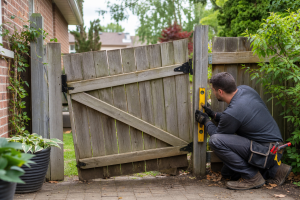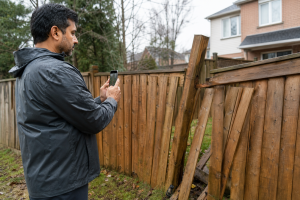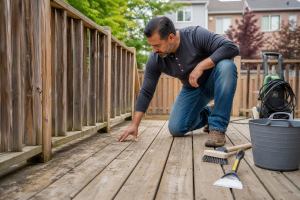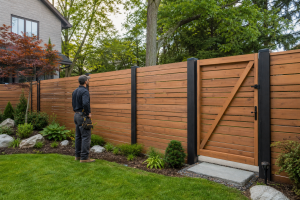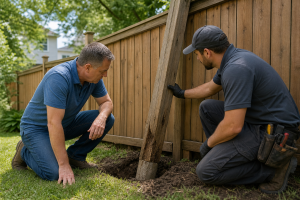
Wooden fence rot treatment can help protect sound wood, but it cannot restore timber that has become soft, crumbly, or structurally weak. Before applying stain, sealer, or paint, determine whether the problem is surface weathering, a repairable section, a failing post, or deterioration extensive enough to justify replacement.
That decision matters especially around fence posts and lower sections, where wood may remain close to moist soil. Natural Resources Canada explains that treated wood can help protect against fungi that cause rot, while Government of Canada guidance notes that fence posts commonly contact moist soil or areas where moisture cannot readily evaporate. Read the Government of Canada guidance on moisture and wood products before assuming surface treatment will solve the problem.
Quick summary

- Inspect boards, rails, posts, fasteners, and ground-contact areas before treating the fence.
- Do not use a protective coating to disguise wood that is already soft or losing structural strength.
- Clean and suitably dry sound wood before staining, sealing, or painting, and complete repairs first.
- Localized damage may call for a board or rail repair, while a weakened post or widespread decay may require replacement.
- Seek an assessment if the fence is leaning, unstable, extensively damaged, or shared with a neighbouring property.
1. Identify rot before choosing a treatment
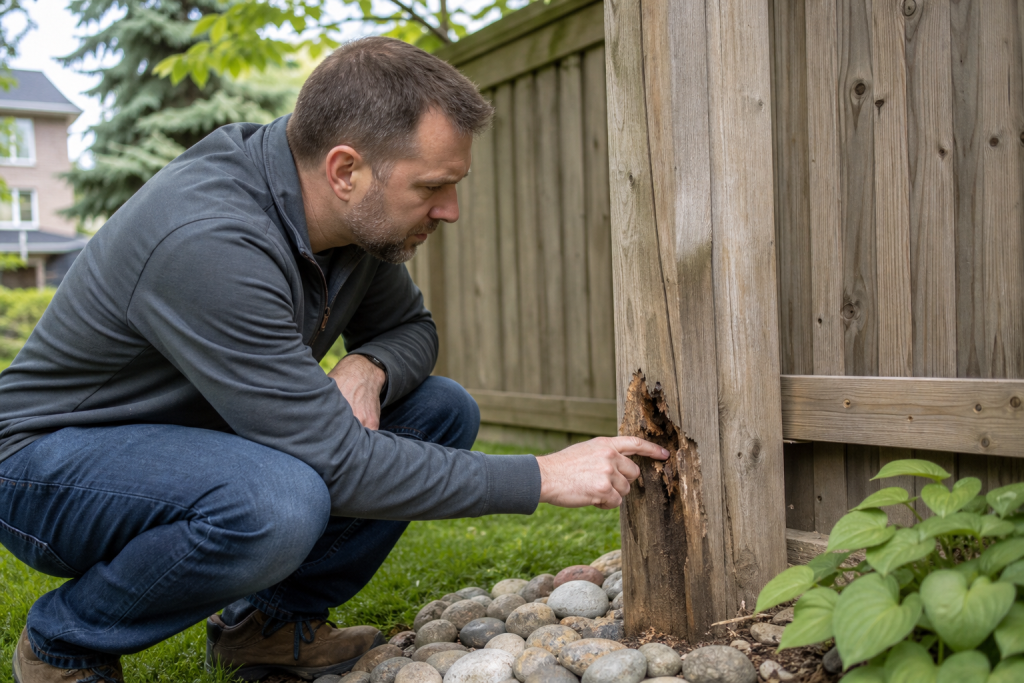
Discolouration, fading, and surface checking do not automatically mean a fence is rotten. Weathered wood may still be stable, while a small-looking damaged area can conceal a weakened post or rail. Look for wood that feels soft, breaks away easily, appears crumbly, or no longer holds boards and fasteners securely.
Pay particular attention to post bottoms, board ends, joints, rails, and places where water can collect. Check whether the fence is leaning, gates have dropped out of alignment, or adjacent boards and rails move when lightly handled. These signs may indicate that the issue is not merely cosmetic.
An inspection should cover the affected run of fencing rather than only the most obvious mark. Immediate Fence Repair states that wooden fences may need repair because of weather damage, water damage, or wear and tear, and offers wooden fence repair, fence post repair, post replacement, and maintenance. The response should match the condition of the wood, not simply its age or appearance.
2. Mistakes that can undermine wooden fence rot treatment

Treating over active decay
A stain or water-resistant coating can improve the protection and appearance of suitable wood, but it does not make severely decayed timber structurally sound. Coating over soft boards or a failing post leaves the underlying problem in place and may make later inspection more difficult.
If the wood has lost its strength, determine whether the affected board, rail, or post should be repaired or replaced. Treatment belongs after the material’s soundness has been established.
Inspecting only the visible boards
Fence boards are easy to notice, but posts and rails often determine whether the structure remains stable. A replacement board will not correct a post that is moving, split, or weakened near the ground. Check the components supporting the fence, not just the surfaces facing the yard.
Ignoring moisture at ground contact
Moisture is a central risk because wood that remains damp cannot dry readily. Government guidance identifies fence posts and similar wood products as materials commonly exposed to moist soil or locations where moisture collects. Treatment on the upper portion of a post cannot remove deterioration at the ground-contact area.
Look for soil, leaves, mulch, or other buildup pressed against the fence. Also consider whether water drains towards the posts or collects along the bottom boards. These observations help explain why rot developed and what needs to change after repair.
Sealing damp or dirty wood
Protective products need a properly prepared surface. Dirt, algae, loose fibres, and trapped moisture can interfere with coverage and leave vulnerable areas untreated. Applying a coating before cleaning and allowing the surface to become suitably dry may produce an uneven or short-lived result.
Overlooking cut ends and connected damage
Cut ends, drilled areas, joints, and repaired sections deserve close attention because they can expose untreated wood. A treated-wood fence construction plan also advises protecting exposed cut ends and paying particular attention to cut and drilled areas. If one board is damaged, inspect neighbouring boards, rails, and fasteners rather than assuming the problem stops at one piece.
3. Prepare the fence before applying protection
Begin with a full inspection. Note soft boards, damaged rails, loose fasteners, unstable posts, and areas where soil or debris holds moisture. This separates maintenance work from structural repair.
Remove surface buildup using an approach appropriate for the fence material and condition. Avoid aggressive cleaning that damages sound fibres, and do not treat cleaning as a substitute for replacing decayed wood. If boards or posts are weakened, resolve that issue before applying a finish.
The surface must also be suitably dry before sealing, staining, or painting. Read the selected product’s instructions, since readiness depends on the material, weather, and product. Never assume a coating can safely trap moisture inside the wood.
Immediate Fence Repair’s wood rot inspection and maintenance information describes checking for rot, loose boards, and structural weaknesses before repairs, cleaning, sealing, or staining. The same logic applies to a wooden fence: protection is most useful after the underlying condition has been addressed.
4. Should you treat, repair, replace a post, or replace the fence?
The best option depends on how much sound material remains, whether the support structure is stable, and whether damage is isolated or widespread.
| Option | When it may fit | What it cannot do |
|---|---|---|
| Surface maintenance | The wood is generally sound, with weathering or early protection needs. | It cannot restore soft, crumbly, or structurally weakened wood. |
| Localized board or rail repair | Damage is limited and posts remain stable. | It will not solve a failing post or widespread deterioration. |
| Fence post repair or replacement | A post is weakened, leaning, broken, or no longer provides reliable support. | It may not address nearby damaged boards, rails, or gates. |
| Broader fence replacement | Multiple connected components are deteriorated or repair would leave an unreliable structure. | It is a larger project and still requires moisture management afterward. |
Immediate Fence Repair’s FAQ notes that minor damage may be repairable, while extensive damage or wear can make replacement more cost-effective after assessment. That distinction is more useful than choosing treatment based only on age or appearance.
5. When should you seek a professional fence assessment?
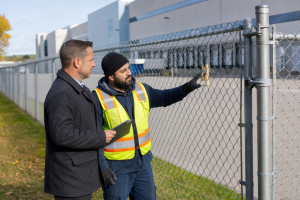
Arrange an assessment if the fence is leaning, a post feels unstable, boards are breaking away, several connected sections show decay, or you cannot tell whether the damage is cosmetic or structural. An assessment is also sensible when a gate has become difficult to operate or the fence no longer provides dependable separation or privacy.
Professional help can be valuable when several components are involved. Immediate Fence Repair provides wooden fence repair, fence post repair, post replacement, and comprehensive fence maintenance for property owners in Mississauga and the broader GTA. A qualified review can help identify whether treatment, localized repair, or replacement is the appropriate scope.
6. Check boundary-fence responsibility in Mississauga
Before authorizing work on a shared boundary fence, confirm who owns it and who is responsible for repairs. The City of Mississauga states that fences on private property must be kept in good repair. For a boundary fence, a survey showing ownership or the lot line can help establish responsibility.
Discuss proposed work with the neighbouring property owner where appropriate, and verify applicable municipal requirements rather than assuming treatment or replacement can proceed without agreement.
7. How to reduce the chance of future fence rot
Prevention starts with regular inspection. Check for new soft spots, loose boards, damaged rails, leaning posts, open joints, and buildup along the bottom. Cleaning away leaves and other moisture-holding material can help you spot problems earlier.
Address small defects before water reaches more vulnerable areas. Timely staining or painting may help protect suitable wood, but these measures support sound timber rather than reversing established structural decay. Product directions should guide preparation and application.
After repair or treatment, continue checking post bases, cut ends, gates, and low boards. If deterioration keeps returning in the same area, investigate the moisture source instead of repeatedly coating the symptom.
Wooden fence rot treatment decision checklist
- Is the wood faded or weathered, or soft, crumbly, split, or unstable?
- Have you checked posts, rails, gates, fasteners, and adjacent boards?
- Is moisture collecting near the ground, behind debris, or at a joint?
- Is the surface clean and suitably dry before applying protection?
- Can the damaged section be removed without leaving a weakened support structure?
- Does the fence need maintenance, localized repair, post replacement, or broader replacement?
- Is the fence shared, and have responsibility and the lot line been confirmed?
- Is the fence leaning or unsafe enough to require assessment first?
Frequently asked questions
Can wood rot be treated without replacing the affected fence board or post?
Sometimes, if the wood is still sound and the issue is surface weathering or early protection needs. Once a board or post is soft or structurally weak, treatment alone should not be expected to restore its strength.
How can I tell whether a fence post is too damaged to repair?
Warning signs include leaning, movement, splitting, soft wood near the ground, or a post that no longer holds the fence securely. When its condition is uncertain, seek an assessment before applying a surface product.
Should I get permission before repairing a shared boundary fence in Mississauga?
Confirm responsibility and the lot line before authorizing work. The City of Mississauga notes that ownership or the lot line may affect who is responsible for required repairs. Discuss the proposed scope with the neighbouring owner and check current municipal information where necessary.
Conclusion: choose treatment only when the wood is still sound
Effective wooden fence rot treatment begins with diagnosis, not a coating. Inspect the full fence, focus on posts and ground-level sections, clean and suitably dry sound wood, and repair weakened components before applying protection. If damage is extensive, broader replacement may be more practical than repeated surface treatment.
For homeowners unsure whether they need wooden fence repair, wood fence post repair, or replacement, an assessment can clarify the next step. To discuss a fence condition or maintenance requirement in Mississauga or the GTA, contact Immediate Fence Repair.