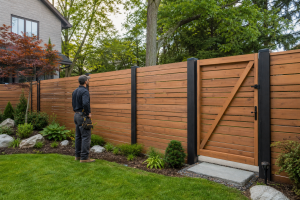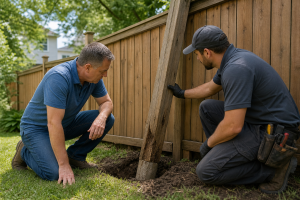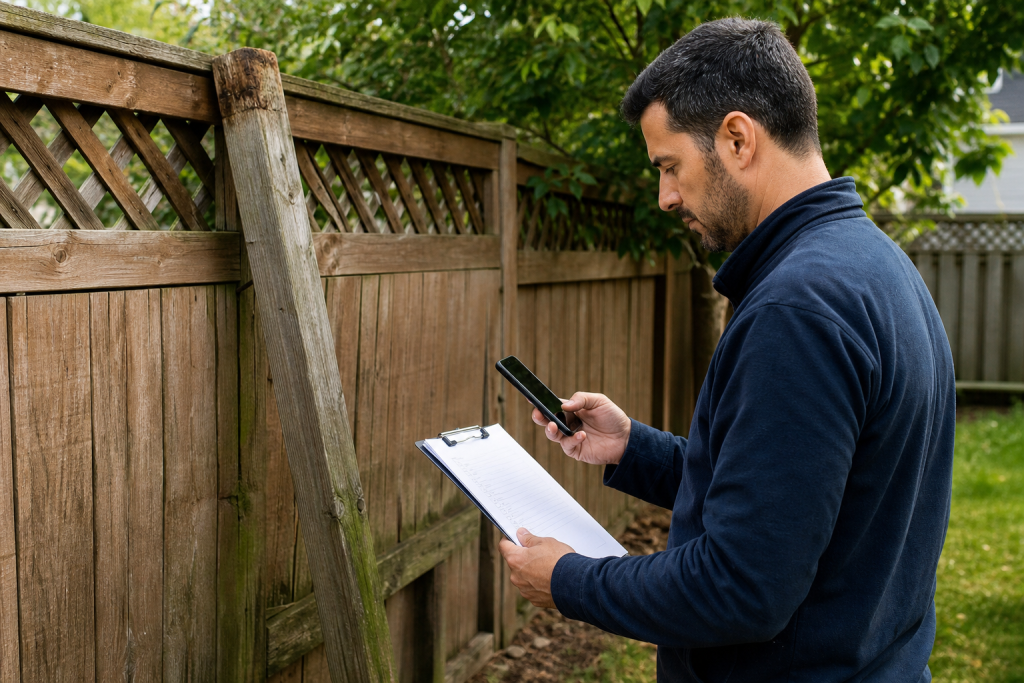
A leaning post, loose board, sagging gate, or soft patch of wood does not always mean your entire fence needs replacing. The better first step is a safe walkaround inspection that separates an isolated repair from a structural or widespread problem.
Use this fence repair checklist in Mississauga to inspect the main components, record what you find, and decide whether limited maintenance, targeted repair, or a professional assessment makes the most sense. Do not climb, dismantle unstable sections, or use force to test a post or gate.
Before you inspect: prepare safely
Choose a time when the fence line is visible and you can walk around it without entering an unsafe area. Bring a phone or camera, a notepad, and a pen. You only need to observe, gently operate accessible hardware, and note visible symptoms. This is not a structural test.
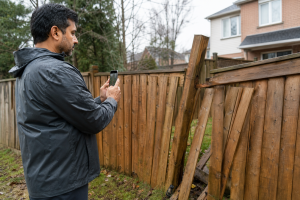
Start with one wide photograph of each fence run. Then take close photographs of leaning posts, gaps, cracked boards, rot, loose connections, gate hardware, standing water, or vegetation touching the fence. Add location notes such as “left side gate post” or “rear corner, three damaged boards.”
- Do not climb the fence or lean your body weight against it.
- Do not pull aggressively on posts, panels, rails, or gates.
- Do not dismantle boards to investigate hidden damage.
- Keep children and pets away from loose or sharp components.
- Stop if a gate, post, or complete section moves unexpectedly.
For a deeper walkaround, use this wooden fence inspection checklist alongside your notes.
1. Check posts and footings for movement

Posts carry the load of the fence, so begin by looking along the top line. A post that leans, creates a gap at its base, or causes adjoining panels to tilt may need more than cosmetic board work. Look for exposed soil, a visible gap around the post, cracking near the ground, or a section that no longer meets the neighbouring post cleanly.
Use a visual check first. If the post looks sound and stable, you may lightly touch it to notice obvious movement, but do not push hard or try to straighten it. Movement can indicate deterioration below ground or a problem with the support around it.
Record how many posts are affected and whether the movement is isolated or repeated. One damaged post may call for wood fence post repair or replacement, while several leaning posts suggest that the connected sections should be assessed before cosmetic work.
2. Inspect the wood for rot, cracks, and moisture damage
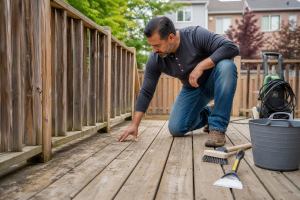
Examine wood closest to the ground, where persistent moisture and soil contact can make deterioration difficult to notice from a distance. Look for darkened areas, soft or crumbling wood, deep splits, swollen edges, and surfaces breaking apart rather than merely weathering.
Inspect bottom rails and the lower ends of posts, not just the face of each board. A single damaged picket is different from decay appearing across several rails, posts, or panels. Note whether the damage is superficial or appears to affect the component’s strength.
Do not rely on paint or stain to hide a structural issue. If wood is visibly soft, cracked through, or deteriorating in several locations, photograph each area and include it in the assessment request.
3. Review boards and panels section by section
Walk the fence one section at a time and identify missing, loose, cracked, warped, split, or badly mismatched boards. Check whether damage is confined to a few pickets or whether whole panels have shifted, bowed, or separated from their supports.
Count affected boards where possible and mark their locations. “Two cracked boards beside the driveway” is more useful than a general statement that the fence is damaged. Include photographs showing how each board relates to the posts and rails.
Look for patterns. Damage concentrated in one place may follow an impact or localized moisture problem. Similar damage across a long run may point to age, exposure, or a supporting component that has failed. Match the visible problem to the condition of surrounding panels before choosing a patch.
4. Examine rails, nails, screws, and connections
Rails connect the posts and support the boards, so inspect them for separation, sagging, cracks, and movement. Look for boards pulled away from a rail, missing or raised fasteners, and connections that no longer hold the panel square.
Limited maintenance may be reasonable when a sound board has one visibly loose fastener and the surrounding section remains stable. If the rail moves with the panel, several fasteners have failed, or the section shifts as a whole, the underlying support may need attention.
Record whether the problem affects one connection, one panel, or multiple fence runs. Do not hammer, drill, or remove fasteners from a section that is leaning or unstable.
5. Test gates and hardware without forcing them
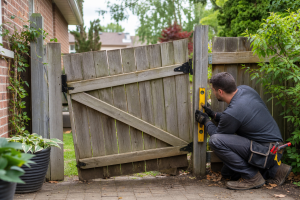
Open and close each gate gently if it appears stable. Note whether it drags, sags, sticks, swings open, fails to latch, or leaves an uneven gap. Inspect hinges, latches, handles, and visible mounting points for looseness, rust, bending, or separation.
Hardware adjustment may be enough when the gate is square, the posts are stable, and the issue is limited to a hinge or latch. A gate that is difficult to operate because its supporting post has shifted is a different problem. Forcing it can worsen the hardware or stress the post.
Include the gate’s location and specific symptom in your notes. If the gate needs structural work, a company offering wooden fence gate services can assess it with the surrounding fence.
6. Look at drainage, vegetation, and nearby conditions
A fence problem may have a contributing condition outside the fence itself. Look for standing water, persistently damp soil, mulch or soil built up against the wood, sprinkler spray, dense vegetation, vines, or branches pressing against panels and rails.
Note recent events as well. A vehicle, lawn equipment, falling branch, construction activity, heavy wind, or altered grading may explain a new lean or broken section. Photograph the surrounding condition, not only the visible fence damage.
Replacing one board will not solve a problem caused by ongoing moisture or pressure. Clearing vegetation or redirecting a sprinkler may help, but structural movement, rot, and impact damage still require careful assessment.
7. Decide whether targeted repair or replacement is more appropriate
Compare the number, location, and severity of your findings. The question is not whether any damage exists. Most older fences have some wear. The question is whether the fence remains fundamentally stable and whether damaged components are isolated enough to repair sensibly.
| What you find | Likely direction | Recommended next step |
|---|---|---|
| One or two loose or cracked boards with stable posts and rails | Targeted wooden fence repair | Photograph the boards and note their locations. |
| One gate that drags or will not latch, with stable posts | Gate or hardware repair | Describe the operating problem and avoid forcing it. |
| One leaning or moving post | Post repair or replacement assessment | Document the post and adjoining panels. |
| Rot or soft wood at several posts, rails, or panels | Broader repair or replacement discussion | Provide close and wide photographs. |
| Several connected sections leaning, separating, or failing | Structural assessment and possible replacement | Stop forceful testing and request an on-site evaluation. |
| Widespread wear combined with repeated repairs | Repair-versus-replacement comparison | Ask for options addressing immediate and longer-term condition. |
Repair is generally more suitable when damage is limited and the main structure remains sound. Replacement deserves consideration when deterioration is repeated or repairing one component would leave several others near failure. The fence repair FAQ also explains when extensive wear may make replacement more practical.
This checklist cannot determine hidden footing or subsurface conditions. If you see widespread rot, a moving post, a severely leaning run, or an unsafe gate, request a professional assessment instead of trying to stabilize it yourself.
What to record before requesting an assessment
- The property area or fence boundary affected.
- The fence material, such as wood or composite, if known.
- The number and approximate location of damaged posts, boards, panels, rails, or gates.
- Visible symptoms, including leaning, rot, cracks, gaps, loose fasteners, or difficult gate operation.
- Wide and close photographs showing each symptom.
- Any recent weather, impact, landscaping, drainage, or construction event.
- Whether the issue appears isolated or repeated.
Keep your description factual. Explain which post moves, which gate sticks, or where the wood appears soft. Immediate Fence Repair is a Mississauga-based fence and deck company serving residential and commercial customers in the GTA, with callback and appointment-booking options for prospective customers.
After the repair: keep checking the same seven areas
Use this checklist during routine fence maintenance rather than waiting for a major failure. Look for new post movement, soft ground-level wood, loose boards, separated rails, failing hardware, gate changes, and conditions that keep the fence wet or under pressure.
Address small visible problems promptly when safe, and ask about suitable painting, staining, or maintenance for the material. Regular observation does not guarantee prevention, but it can help you recognize changes before several components are affected.
Frequently asked questions
Should I try to straighten a leaning fence post myself?
No, not if the post or adjoining section moves, appears rotten, or is visibly unstable. Do not pull or brace it forcefully. Photograph the post, base, and connected panels, then request an assessment of the underlying structure.
Can this checklist be used for composite fence repair?
Yes. The framework still applies to posts, panels, rails, connections, gates, and surrounding conditions. Composite material may show different symptoms from wood, so record the material and ask for an assessment appropriate to the system.
What should I include when requesting a fence repair assessment in Mississauga?
Include your location, material, affected fence line, specific symptoms, photographs, gate operation details, and any recent impact or drainage issue. State whether one component or several sections are affected.
Make the decision from the evidence you found
A useful fence repair checklist should lead to a decision, not just a list of defects. Inspect safely, distinguish isolated damage from movement or widespread deterioration, and document the fence before touching anything unstable.
If the problem is limited to a few sound boards or hardware, targeted maintenance may be appropriate. If posts, gates, rails, or multiple sections are compromised, seek an assessment before choosing between repair and replacement. For a Mississauga fence inspection or repair discussion, contact Immediate Fence Repair.