Custom wood gate design is the process of planning a wooden gate around your property, rather than choosing a standard gate without considering its surroundings. It brings together appearance, privacy, access, operation, and compatibility with the existing fence.
The right design should look intentional from both sides and work comfortably for the way you use the property. That means considering whether a swing or sliding arrangement suits the available space, how much of the yard or entrance should be visible, and whether the current fence and posts can support the finished gate.
Key Takeaways
- Custom wood gate design coordinates the gate’s style, privacy, movement, finish, and relationship with the fence.
- Swing gates need suitable clearance for their opening path, while sliding gates may suit layouts where movement beside the fence is more practical.
- Board arrangement, colour, finish, and proportions should complement the surrounding fence instead of looking like a separate addition.
- An inspection is useful when the existing fence, posts, alignment, or gate condition may affect the design.
- Before requesting a quote, decide how the gate will be used, what it should look like, and how much ongoing maintenance is acceptable.
What custom wood gate design means
A custom wood gate is designed for a particular property and use. The customization may involve the gate’s appearance, board arrangement, privacy level, opening pattern, and relationship with the surrounding fence.
This differs from selecting a basic gate based only on a catalogue image. A thoughtful design considers the approach to the entrance, available space for movement, nearby post condition, and whether the gate is mainly for pedestrian access, a wider opening, privacy, or visual appeal.
Custom does not necessarily mean ornate. A simple vertical gate can be custom-designed if its proportions, board spacing, finish, and details suit the property. The goal is a gate that performs its intended function while appearing to belong with the rest of the enclosure.
Swing or sliding: how the main gate concepts differ

The two broad gate arrangements are swing and sliding. Neither is automatically better for every property. The practical choice depends on the approach, available clearance, desired movement, and surrounding fence layout.
| Consideration | Swing gate | Sliding gate |
|---|---|---|
| Movement | Moves through an opening arc from a fixed side. | Moves along the fence line or another planned route. |
| Space to review | Requires suitable space for the opening path. | Requires suitable space beside the opening for travel. |
| Visual character | Can create a familiar, traditional entrance appearance. | Can provide a different, streamlined entrance arrangement. |
| Key question | Will the opening path remain clear during everyday use? | Is there enough suitable space for movement beside the fence? |
When comparing styles for a custom wood gate design, review these wooden fence gate designs to see how swing and sliding models can complement different fencing styles. A site assessment should confirm which concept is practical rather than relying on appearance alone.
The design choices that shape a custom wooden gate
Once the basic movement has been considered, several visual and functional decisions shape the final result. These choices should be made together because a privacy-focused gate may need a different board arrangement and finish from a more open decorative entrance.
Gate style and privacy level
A semi-privacy design can provide a more open visual character while still creating a defined boundary. A full-privacy design creates a more enclosed appearance. Other options may emphasize board patterns or leave more of the surrounding landscape visible.
Think about what the gate should achieve from the street, walkway, yard, and neighbouring properties. Privacy, visibility, curb appeal, and a sense of enclosure may all matter, but increasing one can affect the others. Identify the priority instead of assuming maximum enclosure is always the best choice.
Board layout, colour, and finish
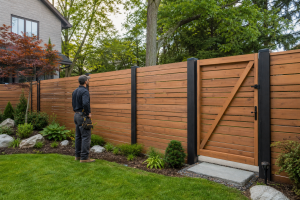
Board arrangement has a strong effect on the gate’s character. Vertical board-on-board, staggered boards, and horizontal board-to-board treatments create noticeably different appearances. The choice should reflect the style of the existing fence and the visual direction of the property.
A gate should coordinate with the surrounding enclosure, so review these custom wood fence solutions before selecting materials, colours, and finishes. Matching does not always require an identical pattern, but a deliberate relationship helps the gate look integrated.
Colour and finish also influence whether the gate blends into the fence or becomes a feature at the entrance. If the surrounding fence is weathered, a new finish may highlight differences in colour and condition. Assess the whole area before finalizing the design.
Single or double gate arrangements
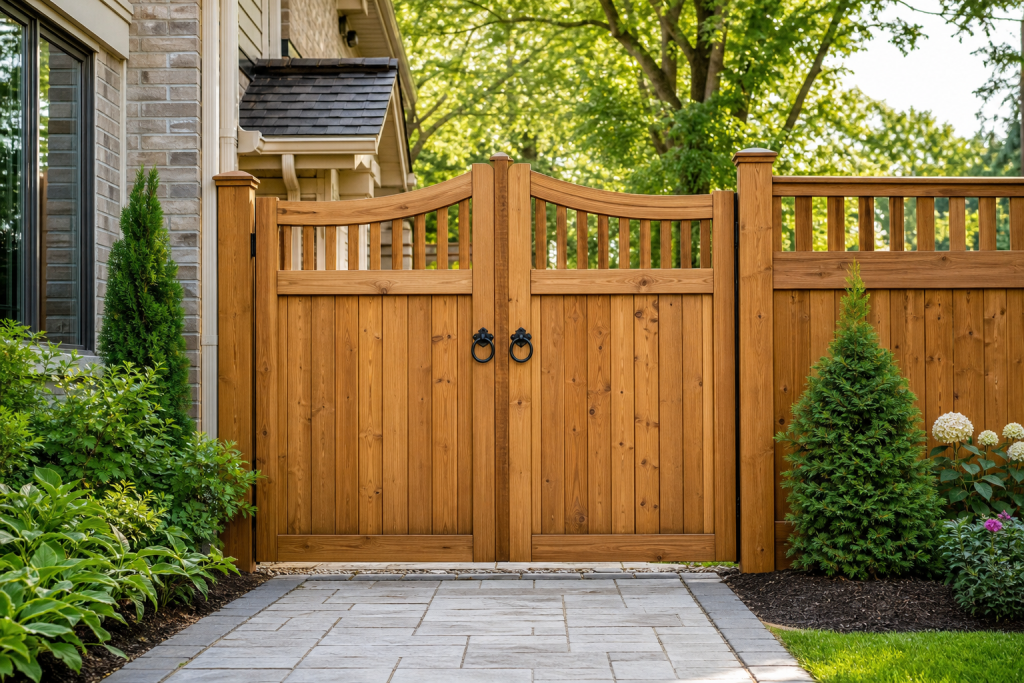
A single gate may suit a straightforward pedestrian entrance or narrower access point. A custom-built double gate may be considered where the property needs a broader opening or where two matching leaves create the desired visual balance.
The decision should be based on intended access, available opening, surrounding posts, and how the gate will be operated. Avoid choosing a double arrangement solely because it looks substantial if the property does not need that form of access.
Making the gate fit the existing fence
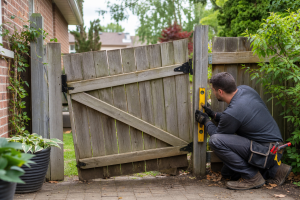
A new gate is only one part of an entrance system. Before confirming its design, inspect the fence’s age, material, style, finish, alignment, and nearby posts. A gate connected to weak or misaligned supports may not operate as expected, even if the gate itself is well designed.
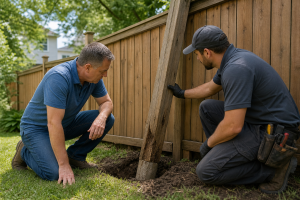
Look for leaning posts, loose boards, damaged sections, deteriorated wood, uneven lines, and areas where previous repairs have changed the appearance. These issues do not automatically mean the fence must be replaced, but they should be discussed before the gate is built.
Post condition deserves particular attention because posts help support the gate and influence alignment. A professional assessment can determine whether the existing structure is suitable, needs repair, or should be considered as part of a broader fence project.
Planning for everyday access and maintenance
Consider who will use the gate and how often. A pedestrian entrance may have different priorities from an opening used for larger property access. Review the approach path, direction of movement, visibility around the entrance, and whether the gate can be used without interfering with nearby landscaping or other features.
Maintenance should also be part of the design conversation. Wood can require inspection, cleaning, and attention to its finish over time. Ask which parts of the gate will need future care and how the chosen finish is expected to age in relation to the surrounding fence.
Where a property has several entrances, clear communication and easy-to-follow routes can improve the visitor experience. Planning principles for clear visitor routes may be relevant for larger properties or locations where people need to identify the correct entrance.
Custom wood gate design checklist
Use the following checklist before a consultation or design assessment:
- Purpose: Explain whether the gate is primarily for pedestrian access, privacy, property separation, appearance, or a wider opening.
- Movement: Discuss whether a swing or sliding concept suits the available layout.
- Privacy: Decide whether you prefer a more open, semi-private, or fully enclosed appearance.
- Style: Identify preferred board arrangements, such as vertical, staggered, or horizontal treatments.
- Finish: Consider how the colour and finish will relate to the current fence and other exterior features.
- Existing structure: Ask for the nearby fence, posts, alignment, and gate opening to be assessed.
- Access path: Confirm that the proposed movement will work with walkways, landscaping, vehicles, and everyday routines.
- Maintenance: Ask what inspection, cleaning, sealing, staining, or future adjustment the design may require.
- Quality checks: Confirm how the finished gate will be inspected for appearance, alignment, and operation.
Should the existing gate be repaired or replaced?
Repair may be appropriate when the main issue is limited to a damaged board, minor alignment concern, finish deterioration, or a localized component that can be restored without compromising the gate’s overall structure.
Replacement or a new custom design may deserve consideration when the gate has broader deterioration, recurring movement problems, extensive damage, or a style that no longer suits the fence. Weak posts, widespread wood damage, and an unstable surrounding fence can also change the scope of work.
The decision should follow an inspection rather than a simple visual assumption. A useful assessment considers the gate, posts, operating components, nearby fence sections, and the way the entrance is used.
Frequently asked questions
Is a swing gate or sliding gate better for a custom wood gate design?
Neither option is universally better. A swing gate needs suitable clearance for its opening path, while a sliding gate needs an appropriate route beside the opening. The best concept depends on the property layout, access pattern, surrounding fence, and how the entrance will be used.
How do I match a custom wooden gate to my existing fence?
Compare the fence material, board direction, privacy level, colour, finish, post style, and overall condition. The gate can match the fence closely or provide deliberate contrast, but the relationship should be planned. If the fence is weathered or misaligned, include that condition in the assessment.
What should I ask during a custom wood gate design consultation?
Ask which gate arrangement suits the available space, whether the existing posts and fence are suitable, how the proposed style will coordinate with the enclosure, what finish is recommended, and what maintenance the finished gate will require. Also ask how the final work will be checked for alignment and operation.
When should a damaged wooden gate be repaired instead of replaced?
Repair is more likely to make sense when the damage is localized and the gate remains structurally suitable. Replacement may be more appropriate when deterioration is widespread, the gate repeatedly fails to align or operate properly, or the surrounding posts and fence cannot provide a sound foundation. An on-site inspection is needed to make that distinction reliably.
Conclusion: choose a gate design that works with the whole property
Custom wood gate design is more than selecting an attractive pattern. It coordinates the gate’s movement, privacy, board layout, finish, access needs, and structural relationship with the surrounding fence. Comparing swing and sliding concepts, checking existing posts and fence condition, and planning for maintenance give you a clearer basis for choosing a design.
For a consultation about wooden fence gates, fence repair, fence post repair, new wood fence installation, or related fence services, Immediate Fence Repair is based at 25 Agnes St #309, Mississauga, ON L5B 3X7, and lists hours of 7:00 a.m. to 9:00 p.m. daily.