Gate hardware replacement can restore smooth, secure operation when worn hinges, a loose latch, or poor adjustment is the real problem. However, replacing components will not permanently correct a gate that is shifting because its frame, supporting post, or footing has moved.
The best decision is to inspect the whole gate before ordering parts. Look at how it opens and closes, where movement occurs, and whether the same problem returns after adjustment. That helps you choose between alignment work, individual component replacement, structural repair, or a new gate.
What gate hardware replacement can fix
Gate hardware includes the components that allow a gate to move, close, and stay secured. Depending on the design, this may include hinges, latches, fasteners, catches, or other supporting fittings. A visible symptom can suggest a hardware issue, but it does not confirm the cause by itself.
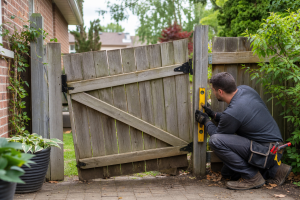
Hardware replacement or adjustment may be appropriate when the gate frame is still reasonably square, the supporting post does not move, and the problem is concentrated at one component. Common clues include a hinge that has become loose, a latch that no longer meets its catch, or a fitting that will not hold its position after adjustment.
A gate that drags lightly, closes inconsistently, or needs more force than before should be inspected rather than forced. Continuing to operate it under strain can put additional pressure on the hinges, fasteners, frame, and post. Professional wooden fence gate services can include repairs, maintenance, installation, and fine-tuning for smooth operation.
Inspect the gate structure before replacing parts

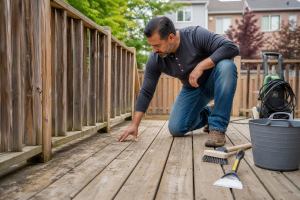
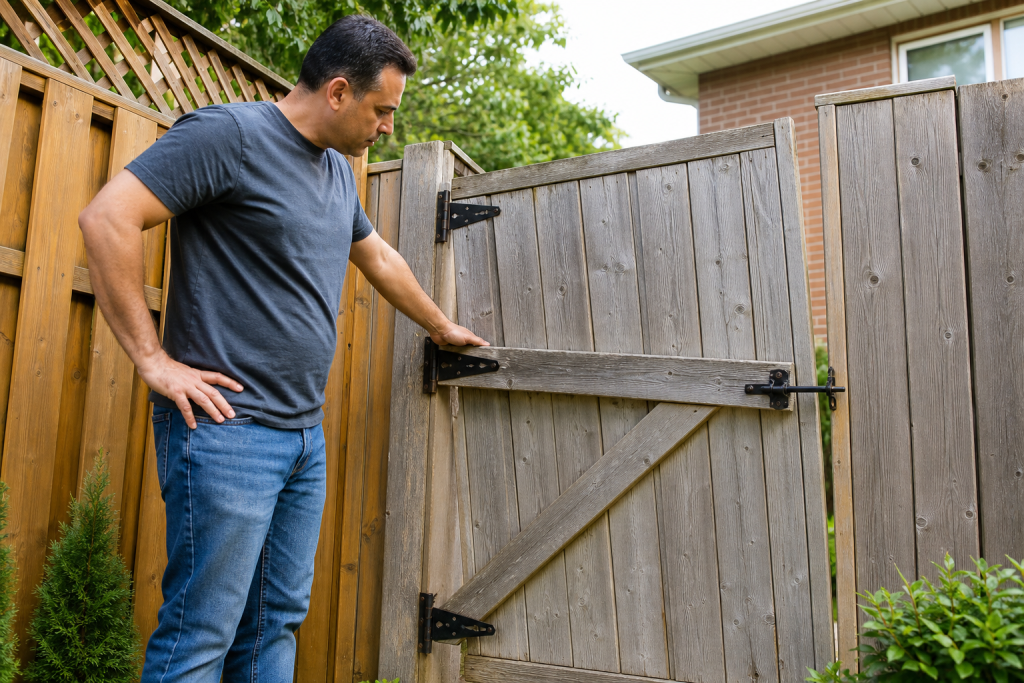
Before choosing gate hardware replacement, check whether the gate is moving independently or whether the structure around it is moving. Open and close the gate slowly while watching the hinge side, the opposite corner, the latch area, and the supporting post. If the post shifts or the frame twists, new hardware may only hide the underlying problem temporarily.
Pay particular attention to these inspection clues:
- Gate frame: Look for visible bowing, loose joints, cracked boards, or a corner that has dropped.
- Attachment points: Check whether fasteners are pulling away from the wood or whether the surrounding material is splitting.
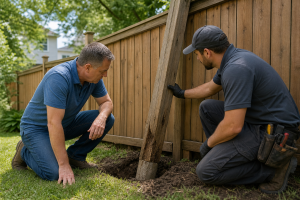
- Supporting post: Watch for leaning, movement at ground level, soft wood, or shifting when the gate moves.
- Footing and ground area: Note cracking, disturbed soil, drainage concerns, or other signs that the support may no longer be stable.
- Change over time: Record whether the problem appeared after strong wind, an impact, seasonal movement, or gradual wear.
Gate posts carry significant loads, especially when a gate is wide, heavy, or frequently used. If damaged hardware is pulling the frame out of alignment, gate post replacement may need to be considered instead of replacing hinges or latches alone. The same principle applies when a previous hardware repair worked briefly and the misalignment returned.
Compare the four repair or replacement options
There is no single correct response to a difficult gate. The sensible option depends on whether the problem is adjustment, component wear, structural movement, or extensive damage.
| Option | Most suitable when | Important limitation |
|---|---|---|
| Adjustment and alignment | The gate and post are stable, but the closing position or clearance has changed. | It will not correct a weakened frame or moving support. |
| Component replacement | A hinge, latch, fastener, or related fitting is worn, loose, damaged, or no longer holds adjustment. | The replacement must suit the gate and attach to sound material. |
| Structural repair | The frame, attachment area, post, or footing is contributing to movement. | It may involve more work than changing visible hardware. |
| Full gate replacement | The gate has extensive damage, persistent distortion, or wear that makes repair less practical. | The supporting posts and hardware still need to be checked. |
Adjustment and alignment
Adjustment is the least extensive option when the gate is fundamentally sound. It may involve correcting a fitting’s position, improving the closing alignment, or fine-tuning how the gate meets the latch. This can be sensible when the problem is recent and there is no visible structural damage.
Do not treat adjustment as a permanent fix if the gate continues to drop or shift. Repeated movement suggests that the source of the load has not been addressed.
Individual hardware replacement
Replacing a component makes sense when the existing part is visibly damaged or worn and the surrounding wood and structure remain sound. The assessment should consider how the component is attached, whether the fasteners still have solid material to hold, and whether the replacement restores the gate’s intended movement.
A new latch may improve security when the latch itself is the issue. It will not correct a gate that has dropped so far that the latch and catch no longer meet. Similarly, new hinges cannot compensate for a post that is moving under the gate’s load.
Structural repair
Structural repair addresses the part that is allowing the gate to move out of position. Depending on the findings, that may involve repairing the frame, strengthening an attachment area, stabilizing the supporting post, or addressing a compromised footing. The method should follow an inspection rather than a general assumption about the hardware.
This option is especially worth investigating when hardware becomes loose again, the gate has been struck, the post leans, or the gate is heavy enough to place consistent stress on its supports.
Full gate replacement
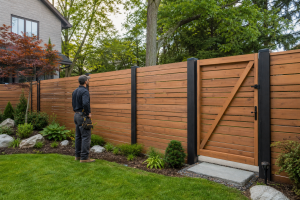
Replacement may be more practical when the gate has extensive rot, cracking, severe distortion, or damage across several connected areas. A new gate should still be assessed alongside its hinges, latch, post, and surrounding fence so the same alignment problem is not transferred to the replacement.
When to call for a professional assessment
A basic visual inspection can help you describe the problem, but it cannot always reveal hidden movement or determine whether a post and footing can support a repair. Professional help is sensible when the gate is heavy, unstable, difficult to secure, or unsafe to operate.
Request an assessment if:
- the gate has dropped, twists, or drags significantly;
- the supporting post moves when the gate opens or closes;
- hardware has been replaced or tightened before, but the problem returned;
- the wood around a hinge or latch is cracked, soft, split, or pulled away;
- the gate was damaged by a vehicle, storm, falling object, or other impact;
- you cannot tell whether the frame, post, footing, or hardware is responsible; or
- the gate no longer closes securely and the property needs a reliable barrier.
For timber gates, wooden fence gate services can cover repairs, maintenance, and adjustments that keep the entry secure and functional.
Pre-service checklist for a gate hardware assessment
Useful information can make an assessment more efficient and helps a provider understand whether the issue is isolated or recurring. Before requesting service, prepare the following:
- Gate material and approximate age: Note whether it is wood, composite, or another material, and whether it was installed recently.
- Operating symptoms: Describe whether the gate drags, sticks, swings open, fails to latch, leaves an uneven gap, or requires lifting.
- Visible damage: Record cracked boards, loose fasteners, bent fittings, split attachment points, a leaning post, or ground-level movement.
- Recent events: Mention strong weather, an impact, landscaping work, drainage changes, or any earlier repair.
- Recurrence: Explain whether the issue returned after tightening, adjustment, or component replacement.
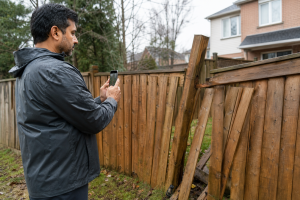
- Photographs: Take full views from both sides, close-ups of the hinges and latch, a photograph of the post, and an image showing the alignment problem.
- Access information: Note whether the gate is beside a narrow passage, shared boundary, driveway, or other restricted area.
Do not remove components before the assessment unless they create an immediate hazard. The position of a loose or failed fitting can provide useful information about how the problem developed.
What affects the repair or replacement estimate
A quote for gate hardware replacement depends on more than the visible price of a hinge or latch. The scope may change according to whether the work involves adjustment, several components, the gate frame, a post, a footing, or a complete replacement. Gate size, weight, material, access, and the extent of damage can also affect the work required.
For that reason, an on-site assessment is more reliable than a fixed price based on a short description. Ask what is included: adjustment, removal of damaged parts, replacement materials, structural repairs, alignment, cleanup, and any follow-up work. For general budgeting context, see chain link fence cost factors to weigh before you budget.
Frequently asked questions
Can gate hardware replacement fix a sagging wooden gate?
Sometimes, but not always. If the hinges or their fasteners are worn while the frame and post remain stable, replacement or adjustment may help. If the post, frame, or footing is moving, the structural issue should be addressed first.
How can I tell whether the gate post is causing the hardware problem?
Watch the post while the gate opens and closes, and check for movement at ground level or visible leaning. Hardware that becomes loose again after adjustment is another reason to inspect the post and its support.
Should I replace the hinges or the entire gate?
Replace the hinges when they are the damaged part and the gate structure is sound. Consider broader repair or gate replacement when the gate has extensive rot, cracking, distortion, or damage across several connected areas.
What should I photograph before requesting a gate repair estimate?
Take full views from both sides, close-ups of each hinge and the latch, the attachment areas, the supporting post, and the closed-gate alignment. Also photograph cracking, soft wood, leaning, gaps, or ground movement.
Why does new gate hardware keep becoming misaligned?
Recurring misalignment can indicate movement in the frame, post, footing, or gate itself. It may also mean that the attachment material is damaged or that the gate load is not being supported properly.
Choose the fix that addresses the cause
Gate hardware replacement is the right next step when a stable gate has worn, loose, or damaged components. When the gate continues to sag, shift, or lose alignment, investigate the frame, post, and footing before investing in more hardware.
For help distinguishing component wear from a broader wooden gate problem in Mississauga, Immediate Fence Repair provides fence and gate assessment, repair, maintenance, installation, and fine-tuning services across Mississauga and the GTA.