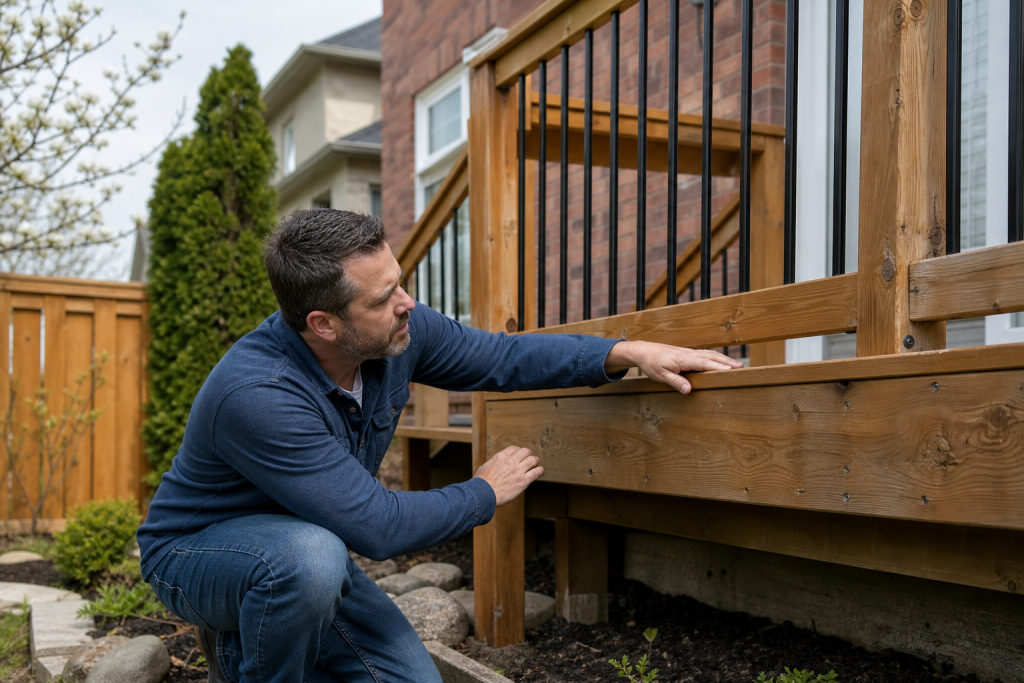
Seasonal deck maintenance in Mississauga should begin with an inspection, not a pressure washer or a fresh coat of finish. Check whether the deck is sound, identify loose or damaged components, and then choose the appropriate response: cleaning, repair, sealing, staining, painting, or professional assessment.
This approach matters because surface dirt can hide rot or loose boards, while paint or stain cannot correct a structural problem. A spring or fall check gives you a useful opportunity to document changes and deal with defects before they become more extensive.
Key Takeaways
- Inspect boards, stairs, railings, supports, fasteners, and the existing finish before cleaning.
- Cleaning should only occur after confirming the deck’s structural integrity.
- Address loose boards and damaged planks before applying any coating.
- Staining or painting should not substitute for necessary repairs.
- Professional help is essential for significant issues like rot or structural weakness.
Quick summary

- Inspect boards, stairs, railings, supports, fasteners, and the existing finish before cleaning.
- Clean dirt, mould, algae, and other build-up only after checking that the deck is structurally sound.
- Repair loose boards, damaged planks, unsecured railings, soft wood, and other defects before applying a coating.
- Use staining, sealing, or painting as surface protection for a suitable, properly prepared deck, not as a substitute for repairs.
- Request professional help when you find rot, structural weakness, recurring movement, or several problems at once.
Seasonal deck inspection checklist for Mississauga homeowners
Use the same basic inspection in spring and fall, adjusting the timing to your deck’s condition and the weather suitable for any planned work. Walk around the entire deck in good light and record anything that has changed since your last check.
- Walking surface: Look for raised, cracked, split, warped, or loose boards. Notice any movement or areas that feel different underfoot.
- Stairs and edges: Check that stair treads, stringer areas, and visible edges remain secure and usable.
- Railings: Examine posts, rails, and connections for looseness, damage, or movement. A railing problem should be treated as a repair concern, not simply painted over.
- Supports and structure: Look for visible soft wood, rot, damaged posts, or other signs that the supporting parts may be weakening.
- Fasteners and connections: Note missing, loose, or exposed fastening points and any boards that no longer sit properly.
- Surface build-up: Check for dirt, mould, algae, leaf residue, and other discolouration that may need cleaning.
- Existing finish: Look for fading, peeling, flaking, or patchy areas. These signs can indicate that preparation or repairs are needed before refinishing.
Take photographs of areas that need attention and separate cosmetic observations from anything that affects stability. This makes it easier to decide what can be cleaned, what needs repair, and where an assessment is sensible.
Check structure and safety before cleaning

Cleaning is not always the first physical task. If boards are loose, railings move, wood feels soft, or the deck appears unstable, surface cleaning may hide the issue rather than solve it. Scrubbing, pressure washing, sanding, staining, or painting should not be used to cover a defect that needs repair.
Start by identifying the condition of the deck’s boards, railings, stairs, and supporting components. Immediate Fence Repair’s deck maintenance information identifies wood rot, loose boards, and structural weaknesses as issues an inspection may uncover, along with damaged planks and railings that may require attention.
What does your deck need? Match the condition to the next step
| What you find | Likely next step | Why the order matters |
|---|---|---|
| Dirt, mould, algae, or mild discolouration on an otherwise sound surface | Clean and reassess the surface | Build-up affects appearance and may conceal damage, so inspect before and after cleaning. |
| Loose boards, damaged planks, or railing movement | Repair or replace affected components | A finish will not secure a loose board or make an unsecured railing sound. |
| Soft wood, visible rot, movement, or structural weakness | Request a professional assessment | The extent of the problem may not be clear from the surface alone. |
| Faded, peeling, or weathered finish on sound wood | Prepare the surface, then stain, seal, or paint as appropriate | Cleaning, sanding, priming, and repairs may be needed for the new finish to adhere properly. |
| Several conditions at the same time | Plan inspection, repairs, cleaning, and protection as one project | A coordinated sequence reduces the risk of coating over unresolved problems. |
Surface dirt, mould, algae, or discolouration
If the deck feels sound and the main issue is surface build-up, cleaning may be the appropriate first response. Remove leaves and loose debris, inspect the boards and connections, and then clean in a way that suits the material and condition of the deck.
Do not assume that dark patches or discolouration are purely cosmetic. If cleaning reveals soft areas, damaged boards, or deteriorated finish, stop treating it as a simple cleaning project and reassess the next step.
For homeowners who want help with more than a seasonal checklist, professional deck maintenance services can bring inspection, cleaning, repairs, sealing, staining, and maintenance planning together.
Loose boards, damaged planks, or railing problems
Loose boards and damaged planks should be addressed before staining or painting. The same applies to railings that move, have damaged connections, or no longer feel secure. A coating can improve the appearance of a repaired surface, but it cannot replace a damaged component or correct movement.
During a seasonal check, note exactly where the problem occurs and whether it is isolated or repeated across the deck. Recurring looseness, widespread damage, or uncertainty about the cause is a reason to request an assessment rather than continuing with cosmetic work.
Regular cleaning, timely staining or painting, and prompt repairs are all identified by Immediate Fence Repair as part of ongoing deck care. Its deck maintenance guidance also addresses the broader decision between repairing and replacing affected areas.
Rot, soft wood, or structural weakness
Soft wood, visible rot, unusual movement, or concerns about the deck’s supporting structure deserve more attention than ordinary weathering. These conditions may extend beyond one board, and the visible damage may not show the full area affected.
Do not apply stain, paint, or sealer to conceal soft or deteriorated wood. A professional assessment can help determine whether the appropriate response is a component repair, more extensive work, or replacement of affected sections. If the deck feels unstable or a railing is not secure, keep people away from the affected area until it has been assessed.
Faded, peeling, or weathered finish
A faded finish does not automatically mean the deck needs paint. First determine whether the wood and connections are sound, then remove build-up and address repairs. The right protective treatment depends on the existing surface, its condition, and the appearance and maintenance approach you want.
Staining and sealing can be suitable when the prepared surface and existing finish support that approach. Painting may be appropriate in other situations, but it requires careful preparation. Immediate Fence Repair describes a deck painting process that includes inspection, cleaning, sanding, priming, and repairs where needed before applying weather-resistant paint.
If painting is the selected option, review the weather-resistant deck paint process and make sure the surface is suitable and properly prepared. Do not use a coating to bypass repairs or hide rot.
A practical spring and fall maintenance routine
Spring check
- Walk the deck and inspect boards, stairs, railings, supports, and connections.
- Photograph loose, cracked, soft, stained, or peeling areas.
- Address structural or safety concerns before washing, sanding, or coating.
- Clean a sound surface when dirt, mould, algae, or residue is the main issue.
- After cleaning, reassess the finish and plan repairs or protective treatment.
Spring is a useful time to identify what seasonal weather has exposed, but there is no single deadline that suits every deck. The condition of the structure and the weather suitability for the planned work should guide the schedule.
Fall check
- Inspect for loose boards, damaged railings, soft areas, and finish failure before the deck receives more seasonal exposure.
- Clear debris and identify areas where moisture or organic build-up may remain against the surface.
- Complete appropriate repairs before considering stain, sealer, or paint.
- Document unresolved concerns so they are easy to reassess during the next seasonal inspection.
Fall maintenance is not a reason to rush into coating a questionable surface. If the deck needs several services, an assessment can establish the correct sequence and identify work that should take priority.
When to request professional deck maintenance in Mississauga
Professional help is worthwhile when you cannot tell whether a mark is surface discolouration or rot, when boards repeatedly become loose, when a railing moves, or when the deck has both finish failure and structural concerns. It is also practical when you want inspection, cleaning, repairs, and refinishing coordinated rather than handled as separate tasks.
Ask for an assessment before choosing a treatment if the deck feels unstable, has widespread soft wood, or needs more than a simple clean. A condition-based review can help determine whether the next step is cleaning, repair, sealing, staining, painting, or replacement of affected components.
Frequently asked questions
When should I inspect my deck in Mississauga for seasonal maintenance?
Inspect it during your spring and fall maintenance routines, and sooner if you notice movement, damaged boards, a loose railing, soft wood, or a change in the finish. Seasonal timing should remain flexible because the deck’s condition and suitable weather for the planned work matter more than an arbitrary date.
Should I stain or paint my deck after cleaning?
Only after inspection, cleaning, preparation, and any needed repairs. Staining, sealing, or painting is a surface-maintenance decision for a suitable deck, not a solution for rot, loose boards, or structural weakness.
How can I tell whether my deck needs repair or replacement?
Look beyond fading or dirt. Isolated surface wear may call for cleaning or refinishing, while loose boards, damaged planks, railing movement, soft wood, rot, or structural weakness call for repair or professional assessment. The extent and location of the damage determine whether affected components can be repaired or need replacement.
When should I request a professional deck maintenance assessment?
Request one when you are unsure what is causing deterioration, when safety-related components move, when rot or soft wood is visible, or when the project involves several services. An assessment can help establish a sensible order for inspection, repair, cleaning, and protective treatment.
Choose the next step based on your deck’s condition
The most reliable seasonal routine is simple: inspect first, separate structural concerns from surface wear, clean only when appropriate, complete repairs before applying a finish, and choose staining, sealing, or painting for a sound, prepared surface. Spring and fall checks are opportunities to catch changes early, not automatic instructions to apply the same treatment every year.
For a Mississauga assessment or project, Immediate Fence Repair is based at 25 Agnes St #309, Mississauga, ON L5B 3X7, Canada, and offers deck maintenance services including inspection, cleaning, repairs, sealing, staining, and painting.